


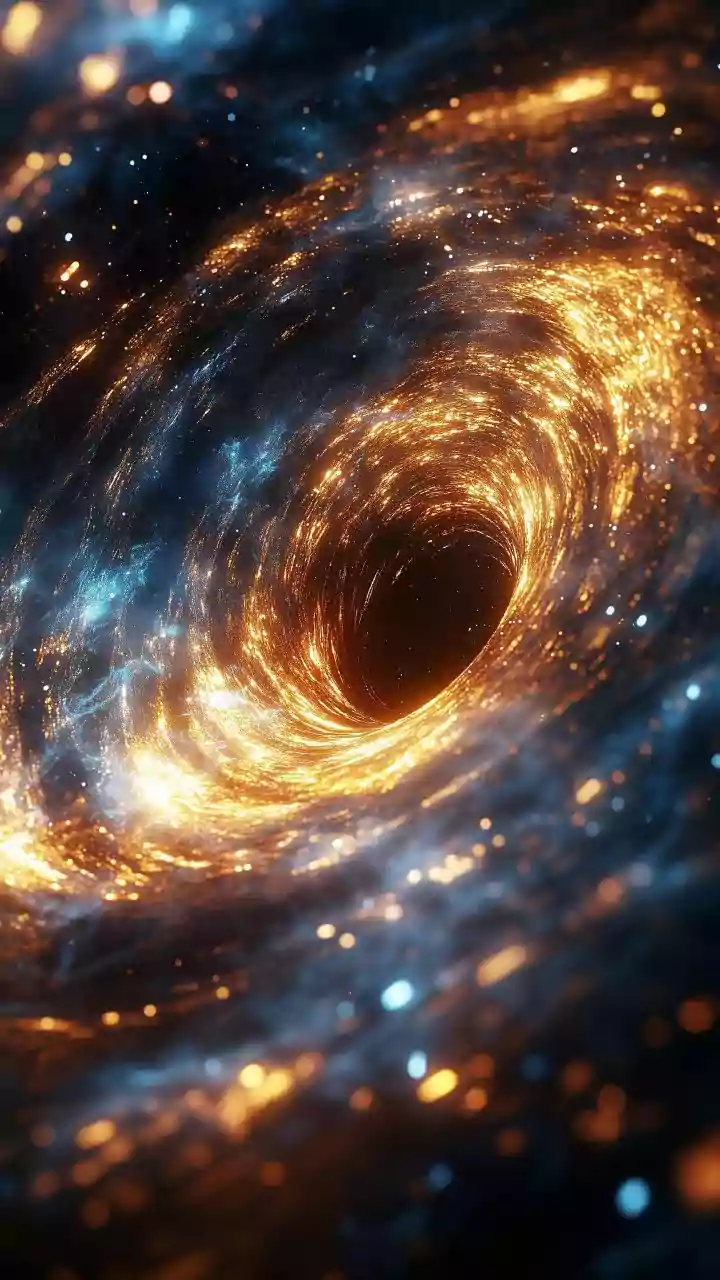



The Planet's Beating Heart
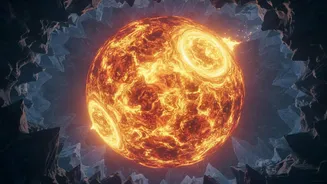
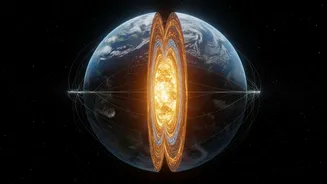
Deep inside Earth lies a dynamic and violent engine. Our planet has a solid iron inner core surrounded by a vast ocean of liquid iron and nickel known as the outer core. This superheated, swirling metallic sea is not just a passive layer; its constant
motion generates powerful electric currents. This process, called the geodynamo, creates Earth's magnetic field—the invisible shield that protects our atmosphere, and all life, from harmful solar radiation. For decades, scientists believed the large-scale circulation in this outer core was relatively stable, dominated by a slow, steady westward drift. But new evidence is showing that the heart of our planet is far more restless and unpredictable than we ever imagined.
An Eye in the Sky on the Deep Earth
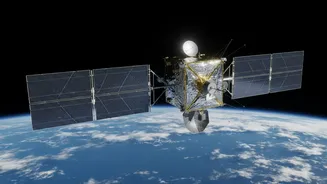
You can't exactly drill a hole to the core, so how do scientists observe it? The answer lies in tracking its effects. The movement of the molten iron core directly influences the magnetic field it generates. By precisely measuring tiny fluctuations in this field at the surface, we can infer what the liquid deep below is doing. This is where satellites come in. Missions like the European Space Agency's (ESA) Swarm constellation, a trio of highly sensitive spacecraft launched in 2013, are designed for this exact purpose. By flying in a specific formation, they can separate the magnetic signals from the core from other sources like the crust or the atmosphere, creating an unprecedentedly clear map of the geodynamo's behaviour.
A Sudden Reversal Under the Pacific
Using decades of data from Swarm and other satellites, scientists recently made a startling discovery. Around 2010, a huge patch of molten iron deep beneath the Pacific Ocean, which had been flowing weakly westward, suddenly and inexplicably reversed course and began moving strongly eastward. This was not a small eddy but a large-scale reversal that challenged the long-held assumption of a stable, westward-drifting core. This event shows that the core's flow can change dramatically in just a single decade, a geological blink of an eye. The discovery has sent ripples through the geoscience community, forcing a rethink of how the planet's internal engine operates.
Geomagnetic Jerks and Core Waves
This large-scale reversal is linked to phenomena known as "geomagnetic jerks." These are not earthquakes, but sudden, abrupt accelerations in the magnetic field's change that occur every decade or so. Scientists now believe these jerks are caused by hydromagnetic waves, known as Alfvén waves, that are released from deep within the core. Imagine buoyant, superheated blobs of molten material rising, generating powerful waves that race towards the core's surface. When these waves hit the boundary between the core and the mantle, they create sharp, rapid changes in the fluid flow, which we then observe from space as a geomagnetic jerk. The Pacific flow reversal is seen as a particularly dramatic expression of these powerful deep-Earth dynamics.
Why These Deep Changes Matter
While these events are happening thousands of kilometres below us, they are not just an academic curiosity. The magnetic field is our planet's first line of defence against harsh space weather. Changes in the core's flow can lead to weakening in the magnetic shield, such as the growing South Atlantic Anomaly, a region of reduced magnetic intensity that can affect satellites passing through it. Understanding these core dynamics is therefore crucial for predicting the future evolution of our magnetic field, which is vital for everything from global navigation systems to protecting our electrical grids and satellite infrastructure from the impact of solar storms.