



Why Rotational Strength Is a Game-Changer
Many popular core exercises like crunches and planks happen in one plane of motion. But life isn't linear. We twist, turn, and reach across our bodies constantly, from grabbing a grocery bag in the car to playing a sport like tennis or golf. These are
rotational movements, and they require a specific kind of strength. Rotational exercises train the muscles responsible for twisting and resisting twisting, primarily the obliques, but also deeper stabilising muscles in your trunk. Building this strength is crucial for a resilient, functional core that supports your spine, improves athletic performance, and helps prevent injuries in your daily life. It's the difference between having visible abs and having a truly powerful midsection.
Mastering the Bicycle Crunch
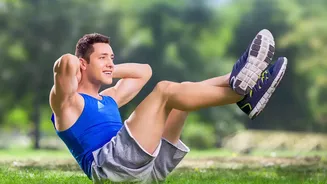
The bicycle crunch is praised as one of the best ab exercises because it targets the entire abdominal wall, including the rectus abdominis (the 'six-pack' muscles), the deeper transverse abdominis, and the obliques. To do it right, lie on your back with your lower back pressed firmly into the floor. Place your hands lightly behind your head, elbows wide, and bring your knees to a tabletop position. Lift your head and shoulders off the floor. Now, move slowly. As you extend your right leg straight out, twist your torso to bring your right elbow towards your left knee. The key is the twist comes from your core and ribcage, not from just moving your elbow. Pause for a moment, feeling the contraction in your side, before slowly returning to the center and switching sides in a controlled, fluid motion.
Common Bicycle Crunch Mistakes to Avoid
The effectiveness of the bicycle crunch is often lost to a few common errors. The most frequent is speed. Rushing through the reps uses momentum, not muscle, and accomplishes very little. Another major mistake is yanking on your neck. Your hands are there to gently support your head, not to pull it forward, which can cause strain. Focus on lifting with your chest and shoulders. Also, watch your lower back; it should stay connected to the mat. If it arches, you're losing core engagement and putting your spine at risk. Finally, don't forget to breathe. Holding your breath restricts oxygen flow and can cause cramping. Exhale as you twist and inhale as you return to the center.
Perfecting the Russian Twist
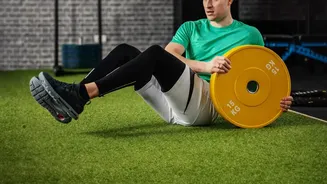
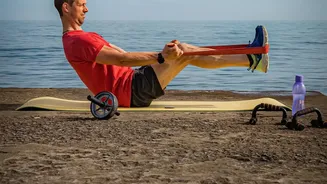
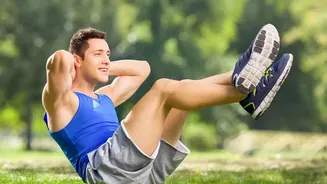
The Russian twist is another fantastic exercise for oblique strength and rotational control. To begin, sit on the floor with your knees bent and feet flat. Lean back slightly until you feel your abdominal muscles engage, keeping your back straight—not rounded. For beginners, keeping your feet on the floor provides stability. Clasp your hands in front of your chest. The movement should be initiated by your core: rotate your entire torso, shoulders and all, to one side. A common mistake is simply swinging the arms back and forth while the torso stays put. The goal is to rotate from the spine, moving your hands and chest together as one unit. Move slowly from side to side, maintaining control throughout the entire range of motion.
Russian Twist Pitfalls and How to Fix Them
Like the bicycle crunch, the Russian twist is often performed incorrectly. The number one error is a rounded lower back, which puts dangerous pressure on your lumbar spine. Always keep your chest up and your spine elongated. The second mistake is moving only the arms without engaging the torso. Think of your arms and torso as being locked together. If your legs start swaying from side to side, it's a sign that you're losing core control and relying on momentum. Slow down and reduce your range of motion until you can keep your lower body stable. Finally, don't add weight until you have mastered the bodyweight version. Adding a dumbbell or kettlebell to poor form is a recipe for injury.
The Golden Rule: Technique Over Reps
The central theme for both these exercises is prioritising perfect form over a high rep count. Fifteen slow, controlled, and deliberate bicycle crunches or Russian twists are far more beneficial than 50 rushed and sloppy ones. When you focus on control, you force your muscles to stay under tension for longer, which is what stimulates growth and strength. You also build a crucial mind-muscle connection, learning to feel the target muscles contract. This not only makes the exercises more effective but also significantly safer. True core strength isn't built by flailing; it's forged through precise, intentional movement.