




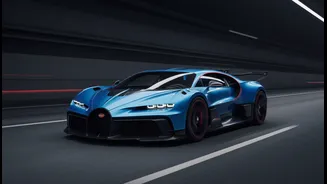
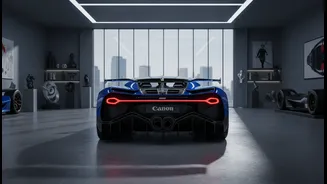


A Beast Born for the Circuit
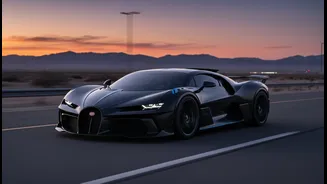
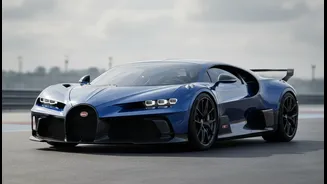
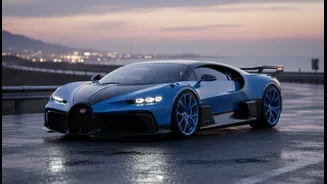
To understand the significance of a road-legal Bolide, one must first appreciate the original. Bugatti designed the Bolide as an answer to a single question: What if they built the ultimate track weapon around their legendary 8.0-litre W16 engine, with
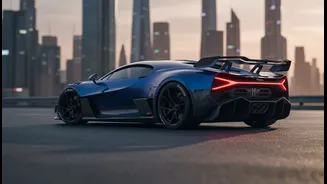
no regard for road regulations? The result was a hypercar limited to just 40 units, all of which sold out quickly at a price of around €4 million each. With nearly 1,600 horsepower in its production form, a weight of just over 3,000 pounds, and aerodynamics that generate immense downforce, the Bolide was created for one purpose: to dominate a racetrack. It was never intended to see a public road, handle a speed bump, or sit in traffic.
The Street-Legal Unicorn
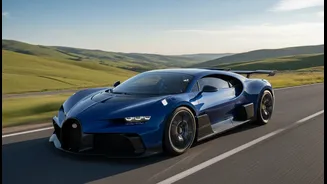
The bombshell news came from an unlikely source: not Bugatti itself, but Lanzante Limited, a renowned British engineering firm. Known for their expertise in making track-only supercars compliant with road laws, Lanzante announced at the 2026 Goodwood Festival of Speed that they would be converting a small number of Bolides for their owners. While the exact number of conversions hasn't been announced, Lanzante has confirmed it is working on at least two chassis, making this road-going version a subset of an already microscopic production run. This move transforms the Bolide from a track toy for the ultra-wealthy into a genuine, albeit terrifying, road-legal hypercar.
Taming the Monster for the Road
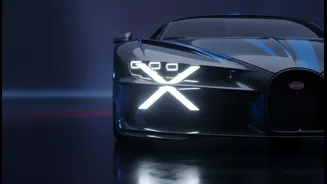
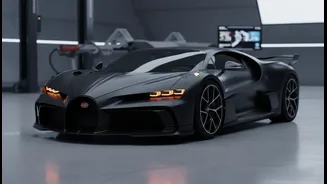
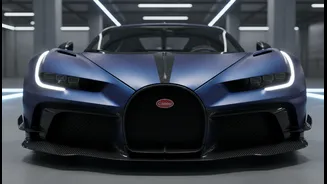
Making a car like the Bolide road-legal is a monumental engineering challenge. Lanzante's modifications, while aiming to preserve the car's character, are extensive. Since the original car had no need for conventional headlights, Lanzante engineered custom X-shaped LED units that integrate into the car's aggressive front end. The rock-hard, track-tuned suspension has been softened to cope with imperfect public roads. Perhaps the most practical change involves the tires. The original Michelin racing slicks, which cost a fortune and last for less than 60 kilometres, have been replaced with more durable road-going rubber. Fortunately, the W16 engine, being based on the one in the road-legal Chiron, did not require significant changes to meet emissions standards.
The Price of Automotive Immortality
While Lanzante has not disclosed the price of the conversion, it is expected to be astronomical. Owners who paid approximately $4.7 million for the base car are now commissioning a highly specialised, low-volume engineering project on top of that. The final cost will undoubtedly push the value of these few cars into a new stratosphere. However, for the target clientele, this is about more than just money. It’s about owning something truly unique—not just a car, but a piece of automotive history that pushes the boundaries of what is possible. The conversion makes an already collectible car far more valuable, turning it into a crown jewel for any collection.
A Statement of Ultimate Supremacy
Why go to such lengths for a car that will likely be too extreme for most public roads? Because in the world of hypercars, this is the ultimate flex. This project serves as a powerful statement for both Bugatti's engineering prowess and Lanzante's conversion capabilities. For the owner, it provides the unparalleled experience of driving a car with near-Le Mans levels of performance to, theoretically, the local shops. It's an act of beautiful absurdity that celebrates the passion and ambition at the heart of car culture. It ensures that the final chapter of Bugatti’s W16 engine story is not just a roar on a closed circuit, but a thunderclap heard on the open road.