





More Than Just Food: The 'Bhog' in Khichuri
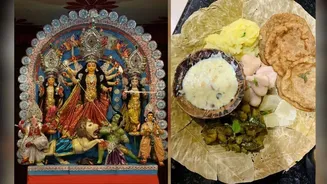
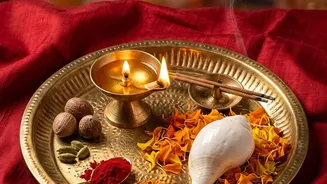
To understand Bhoger Khichuri, you must first understand 'bhog'. In Hindu tradition, bhog is the food offered to a deity during worship. Once offered, it becomes 'prasad'—a blessed offering distributed among devotees. This khichuri is considered a sattvik
food, meaning it is pure, simple, and prepared without onions or garlic, making it a suitable offering. Its significance runs deep; preparing and sharing it fosters a sense of unity and togetherness, breaking down social barriers during community feasts at puja pandals. The dish, therefore, is more than sustenance; it is a spiritual experience, believed to carry the blessings of the goddess herself.
The Soul of the Dish: Essential Ingredients
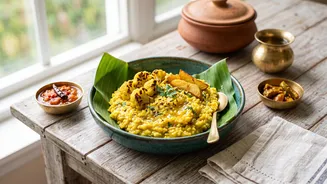
What separates Bhoger Khichuri from any other khichdi are its two foundational ingredients: Gobindobhog rice and Sona Moong dal. Gobindobhog is a short-grained, aromatic rice from West Bengal with a protected GI tag. Its natural, buttery fragrance and slightly sticky texture are crucial to the final dish. The moong dal isn't used raw; it is dry-roasted until it turns golden and aromatic, which imparts a distinct nutty flavour that is the hallmark of this recipe. These two elements, combined with a precise blend of spices and ghee, form the trifecta of its unforgettable taste.
The Method: Art of Slow Cooking and Spices
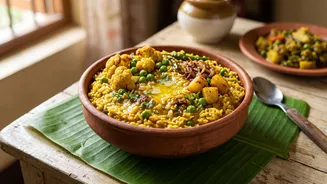
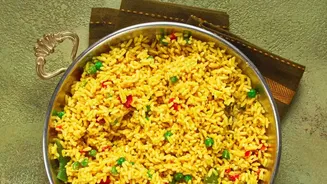
Authentic Bhoger Khichuri is never made in a pressure cooker. The process is a patient one, involving slow-cooking in a large, heavy-bottomed pot. The process begins by frying vegetables like potatoes and cauliflower in mustard oil until golden, then setting them aside. Next comes the 'phoron' or tempering, where whole spices like bay leaves, cinnamon, cloves, and cardamom are bloomed in hot ghee or oil. A paste of ginger and ground spices such as turmeric and cumin is then sautéed before the roasted dal and rice are added. Hot water is poured in, and the khichuri is left to simmer, with the fried vegetables added back midway through to cook until tender but not broken. A final flourish of ghee and a pinch of Bengali garam masala at the end elevates the dish to its sublime state.
The Perfect Companions: What to Serve It With
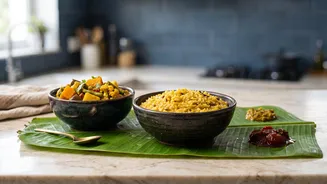
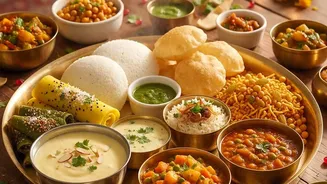
Bhoger Khichuri is rarely served alone. It is the centerpiece of a larger platter that creates a symphony of textures and flavours. The most classic accompaniment is 'labra', a semi-dry mixed vegetable dish cooked with panch phoron (a five-spice blend). Also essential are different kinds of 'bhaja' or fried items. 'Begun bhaja' (pan-fried eggplant slices) is a must, as are other fried vegetables like 'potol' (pointed gourd). A sweet and tangy tomato chutney often provides a contrasting note to the savoury khichuri. Together, this ensemble creates the complete 'bhog' thali, a meal that is both a feast for the senses and a spiritual offering.