






An Arbitrary, Yet Symbolic Date
The choice of August 15 for India's independence was not the result of a long-deliberated plan. The British government, under Prime Minister Clement Attlee, had initially set a deadline of June 1948 for the transfer of power. However, the last Viceroy,
Lord Mountbatten, decided to advance the date dramatically. Facing escalating tensions between the Congress and the Muslim League, he believed a swift withdrawal was necessary to avoid a total collapse of the interim government. When pressed to choose a specific date, Mountbatten selected August 15. His reasoning was personal and symbolic: it marked the second anniversary of Japan's surrender in World War II, a moment he had presided over as the Supreme Allied Commander in South East Asia. The Indian Independence Act was subsequently passed by the British Parliament in July 1947, formalizing this hastily chosen date.
A Midnight 'Tryst with Destiny'
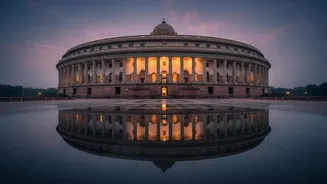
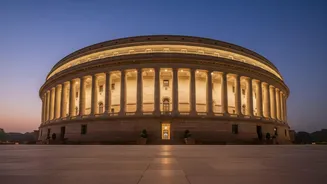
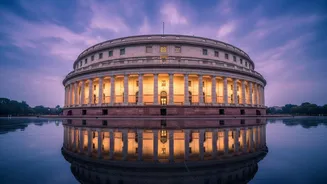
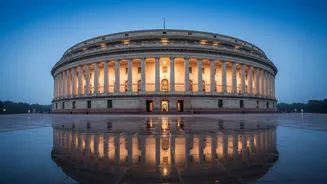
The transfer of power famously occurred at the stroke of midnight. On the night of August 14-15, the Constituent Assembly of India met in New Delhi. It was here that Jawaharlal Nehru, the first Prime Minister, delivered his iconic "Tryst with Destiny" speech. He declared, "At the stroke of the midnight hour, when the world sleeps, India will awake to life and freedom." This moment was the culmination of a decades-long freedom struggle. While Nehru spoke inside the assembly hall, massive, jubilant crowds gathered outside, celebrating the end of nearly 200 years of British rule. However, the now-familiar tradition of the Prime Minister hoisting the flag at the Red Fort did not happen on August 15 itself. Nehru first raised the flag there the next day, on August 16, 1947, beginning a practice that continues to this day.
A Dominion, Not Yet a Republic
A crucial but often overlooked fact is that India did not immediately become a republic. The Indian Independence Act of 1947 established India and Pakistan as two independent dominions within the British Commonwealth. This meant that for a transitional period, King George VI remained the head of state, represented by a Governor-General. Lord Mountbatten, at the request of Nehru, stayed on to become the first Governor-General of independent India. This was a pragmatic decision, allowing for a smoother constitutional transition while the new nation's foundational laws were being drafted. This interim status lasted until January 26, 1950, when India adopted its own Constitution and formally became a sovereign, socialist, secular, and democratic republic.
Freedom in the Shadow of Partition
No measured look at August 1947 can ignore the immense tragedy that accompanied independence: the Partition of British India. The creation of the two dominions was accompanied by unprecedented violence, displacement, and mass casualties as millions of Hindus, Muslims, and Sikhs found themselves on the wrong side of the newly drawn borders. While Delhi was celebrating, Mahatma Gandhi, the architect of the freedom movement, was not present. He was in Calcutta, undertaking a fast in an attempt to quell the horrific communal riots that had engulfed the region. The joy of freedom was inextricably and sorrowfully linked to the pain of division, a reality Nehru acknowledged in his midnight speech, noting that "our hearts are heavy with the memory of this sorrow."
Assembling a Cabinet for a New Nation
With freedom came the enormous responsibility of governance. Nehru's first Cabinet was a remarkable assembly of talent, reflecting a conscious decision to include a wide spectrum of political thought and expertise. On Mahatma Gandhi's advice, the cabinet included not just Congress stalwarts like Sardar Vallabhbhai Patel (Home Affairs) and Maulana Abul Kalam Azad (Education), but also figures from outside the party. Notably, Dr. B.R. Ambedkar, a fierce critic of the Congress and a champion for Dalit rights, was appointed as the nation's first Law Minister. Shyama Prasad Mukherjee of the Hindu Mahasabha also joined as a minister. This inclusive approach was a deliberate effort to build a government that represented the diversity of India and could tackle the immense challenges ahead, from integrating over 500 princely states to managing a massive refugee crisis and laying the foundations of a new democracy.