





What's Happening at Anak Krakatau?
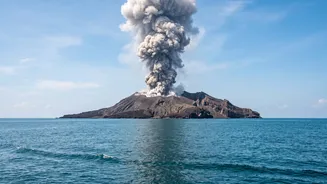
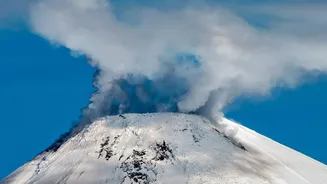
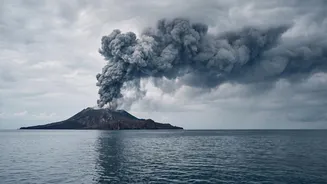
Since early September 2026, Mount Anak Krakatau, located in the Sunda Strait between Java and Sumatra, has been in an active eruptive phase. A significant continuous eruption lasting around 25 hours began late on September 4, spewing ash clouds tens of
thousands of feet into the air. The ash drifted over large parts of western Indonesia, forcing at least eight airports to temporarily halt operations. These closures have led to the cancellation or delay of over 1,500 flights, affecting more than 270,000 passengers. While the main eruptive episode ended on September 6, authorities have kept the volcano's alert level at III (Alert), the second-highest status, and warned that the probability of further eruptions remains high. Officials have reassured the public that there is no imminent tsunami risk associated with the current activity.
The Invisible Danger to Aircraft
Volcanic ash is not like the soft soot from a fire; it's abrasive, corrosive, and does not dissolve in water. It is composed of tiny, sharp particles of pulverized rock, minerals, and volcanic glass. To a jet engine, this is a catastrophic threat. Modern jet engines operate at temperatures high enough to melt these glass-like particles. When sucked into an engine, the ash melts and then re-solidifies on cooler components like turbine blades and fuel nozzles. This can quickly block the flow of air through the engine, leading to a loss of thrust and potentially a complete in-flight engine failure. Beyond the engines, the abrasive particles can sandblast cockpit windows, rendering them opaque, and clog critical flight sensors like those that measure airspeed and altitude.
The Global System for Tracking Ash
To prevent deadly encounters, a global network of nine Volcanic Ash Advisory Centers (VAACs) was established by the International Civil Aviation Organization. The region including Indonesia is monitored by the VAAC in Darwin, Australia. These centers use satellite data, ground reports, and complex atmospheric models to detect ash clouds, predict their movement, and issue advisories to airlines and air traffic control. For the Anak Krakatau eruption, the Darwin VAAC identified ash plumes reaching altitudes as high as 50,000 feet. Based on these advisories, aviation authorities order airport closures and reroute aircraft to ensure they stay well clear of the hazardous ash clouds.
A Child of a Destructive Giant
Anak Krakatau, which translates to “Child of Krakatau,” is a relatively young volcano that emerged from the sea in 1927. It grew in the caldera left behind by the cataclysmic 1883 eruption of its parent, Krakatau, one of the most destructive volcanic events in recorded history. That eruption produced the loudest sound ever documented and generated tsunamis that killed an estimated 36,000 people. More recently, in 2018, a flank collapse at Anak Krakatau triggered a tsunami that killed more than 400 people along the coasts of Java and Sumatra. Its history serves as a potent reminder of the power simmering in the Sunda Strait, which sits on the volatile Pacific Ring of Fire.