


Understanding Your Fabrics
The first step to better clothes care is knowing what you're working with. Garments are typically made from either woven or knit fabrics, and they behave very differently under stress. Woven fabrics, like those used in button-down shirts and trousers,
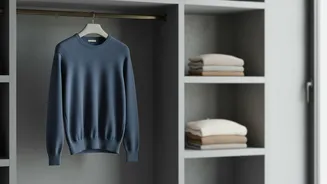
have a tight, grid-like construction that gives them structure. Knits, on the other hand, are made from a single, continuous thread looped together—think of a classic woolly jumper. This looping structure is what makes knitwear so comfortable and stretchy, but it’s also its greatest vulnerability. When you hang a heavy knit garment, gravity constantly pulls on these delicate loops. Over time, the weight of the garment itself is enough to stretch the fibres, particularly at stress points like the shoulders, leading to permanent distortion and those dreaded hanger bumps.
The Art of a Thoughtful Fold
For most knitwear, folding is the superior storage method. It neutralises the force of gravity and protects the garment's shape. But a quick, haphazard fold can introduce its own problems, creating deep creases that are difficult to remove. The goal is to fold your items neatly and store them in a way that avoids compressing them. For a sweater, lay it face down on a flat surface. Fold both arms straight into the centre, creating a rectangle. Then, fold the bottom half up to meet the shoulders. This simple method minimises stress on any one area. For even better protection, especially if drawer space is limited, you can try a hanging fold. Fold the sweater in half vertically, place the hanger hook in the 'armpit' of the folded garment, and then drape the body and the sleeves over the hanger's crossbar. This distributes the weight evenly without stretching the neckline or shoulders.
When Hanging is Unavoidable
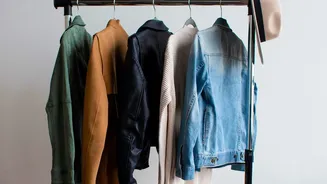
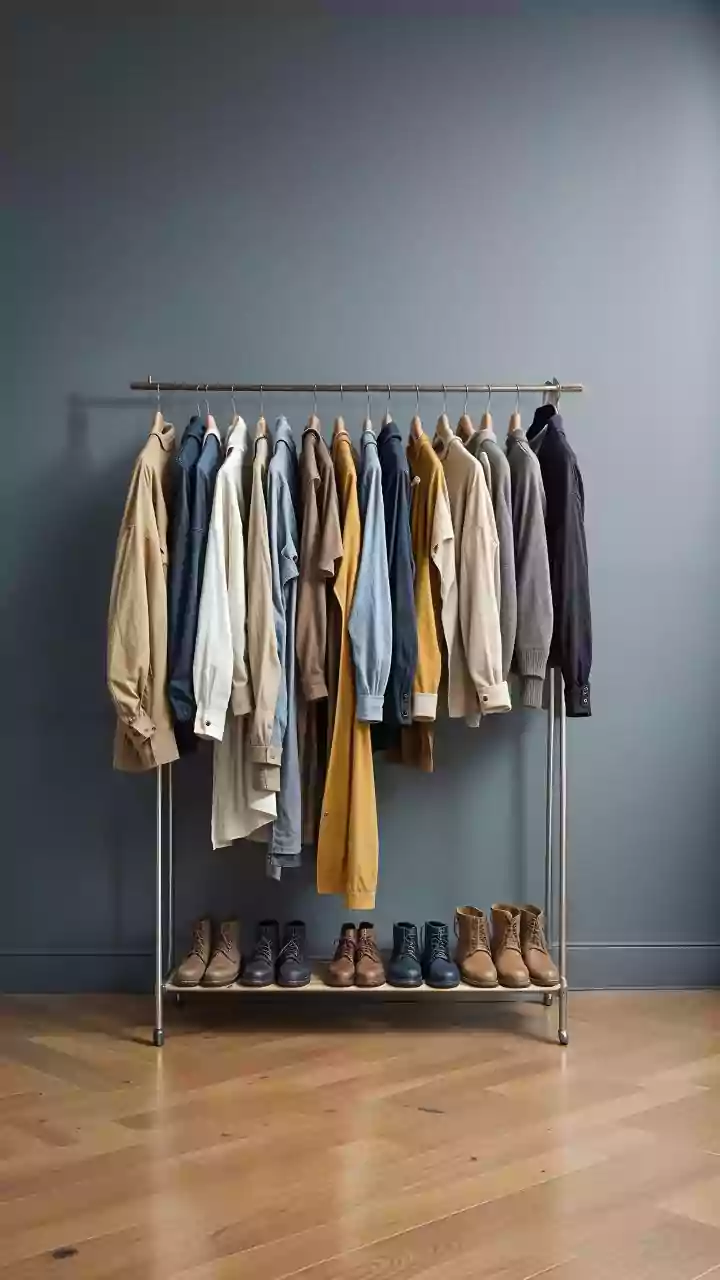
Some items, like blouses, blazers, and dresses, must be hung. This is where the type of hanger you use becomes critical. Thin wire and hard plastic hangers concentrate the entire weight of the garment onto two very small points. This pressure is what creates shoulder bumps and can even damage delicate fabrics. Padded hangers are an excellent solution because their wide, soft surface distributes the weight much more evenly, mimicking the natural curve of your shoulders. This prevents the fabric from pulling and stretching. Velvet or 'flocked' hangers are another strong option; their non-slip surface prevents clothes from sliding off, which also helps avoid stretching and distortion. Anything with structure, like a suit jacket or blazer, will always benefit from a sturdy, shaped hanger that supports its form.
No Special Hangers? No Problem
The spirit of this advice is to use what you have. You don’t need to rush out and buy a whole new set of hangers. If you only have wire or plastic hangers, you can create your own 'padded' versions. Simply wrap the shoulder areas of the hanger with fabric scraps, old (but clean) socks, or even bubble wrap to create a softer, wider surface. The goal is simply to broaden the point of contact and cushion the fabric from the hard, thin edge of the hanger. For items like trousers, using a hanger with a bar is often better than one with clips, which can leave impressions. By folding the trousers over the bar, you support their weight without creating pinch points.
What to Fold and What to Hang
Here's a simple cheat sheet. Always try to fold heavy or delicate knitwear, including sweaters, cardigans, and many t-shirts. Stretchy materials and athletic wear also keep their shape better when folded. Woven items like button-down shirts, blouses made from silk or rayon, blazers, and most dresses should be hung. Trousers and skirts also generally fare better on hangers. Denim is sturdy enough to be treated either way depending on your closet space, though hanging can help avoid stubborn creases. By making a conscious choice based on the fabric, you are actively working to extend the life of your wardrobe.