

An Irresistible Experience
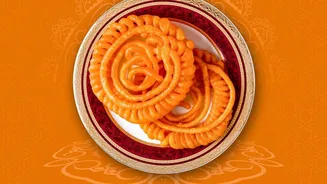
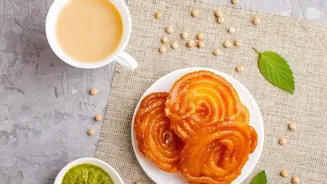
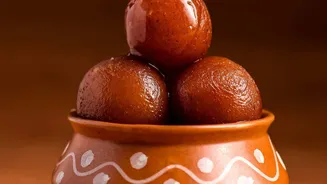
Few sweets command the universal affection that jalebi does. It is a street food star, a festive essential, and a comforting breakfast dish all at once. The appeal lies in its delightful contrast: a crunchy exterior that holds a chewy, syrup-soaked interior.
Made by deep-frying a fermented batter of maida (all-purpose flour) into intricate swirls and then drenching it in sugar syrup, its preparation is a performance in itself. That slightly sour tang from the fermentation cuts through the intense sweetness, creating a flavour profile that is complex and utterly addictive. Often infused with saffron and cardamom, the aroma alone is enough to evoke a sense of celebration and nostalgia.
A Sweet with a Passport
While deeply woven into the fabric of Indian culture, the jalebi is an immigrant that the subcontinent adopted as its own. Its origins trace back to West Asia, where it was known as 'zalabiya' or 'zolbiya'. Recipes for a similar latticed fritter soaked in honey and rose water appear in Arabic cookbooks as early as the 10th century. This delicacy travelled to India with Persian-speaking traders and artisans during the medieval period. Once here, it was wholeheartedly embraced. Early Indian literary mentions include the 15th-century Jain work "Priyamkarnrpakatha," which notes jalebi being served at a lavish dinner for wealthy merchants. Over centuries, it shed its foreign identity and became a quintessentially Indian sweet, a testament to the subcontinent's ability to absorb and transform culinary influences.
A Treat for Every Region and Reason
The jalebi's versatility is key to its enduring fame. It is a sweet for all occasions and seasons. In states like Gujarat, it’s a popular breakfast, famously paired with the savoury snack fafda. In North India, pairing hot jalebis with a bowl of cool, creamy rabri (thickened sweetened milk) is a match made in heaven, especially at weddings. It's an indispensable part of major festivals like Diwali, Holi, and Eid across the country, its bright colour and sweetness symbolising joy and prosperity. This adaptability extends to its form, with numerous regional variations. Bengal has its 'Chanar Jilipi' made from fresh cheese (chhena), while Madhya Pradesh is famous for the richer 'Mawa Jalebi' made with khoya. The south has its own flower-shaped cousin, the Imarti or Jangiri, made from urad dal.
The Jalebi Reinvented
The classic jalebi remains untouched in its popularity, but this timeless sweet is also finding new expressions, winning over a new generation of fans. Chefs and home cooks are experimenting with its form and flavour, proving its incredible versatility. You can now find modern variations like paneer jalebi, aloo jalebi, and even black jalebi made with khoya and potato starch in Old Delhi. The innovation doesn't stop there. Creative dessert makers are offering everything from chocolate-dipped and apple-filled jalebis to fusion creations like jalebi cheesecake and rabri-stuffed jalebis. These contemporary twists sit alongside the traditional recipes, ensuring that the jalebi is not just a relic of the past but a dynamic and evolving part of India's culinary present and future.