










An Epic Vision on Analogue Film
Christopher Nolan has built his career on defying convention. In an age of digital dominance, he remains a steadfast champion of photochemical film, practical effects, and creating spectacles that demand to be seen on the largest possible canvas. His
latest project, an ambitious adaptation of Homer's ancient Greek epic poem 'The Odyssey,' is the culmination of this philosophy. Starring Matt Damon as the beleaguered hero Odysseus, the film was shot entirely using 15-perf/70mm IMAX film cameras, a first in cinematic history. This commitment to the analogue format is driven by Nolan's belief that it offers unparalleled image quality and a truly immersive experience, something he feels is essential to transport audiences into the mythological world of gods and monsters.
What is 15/70mm IMAX?
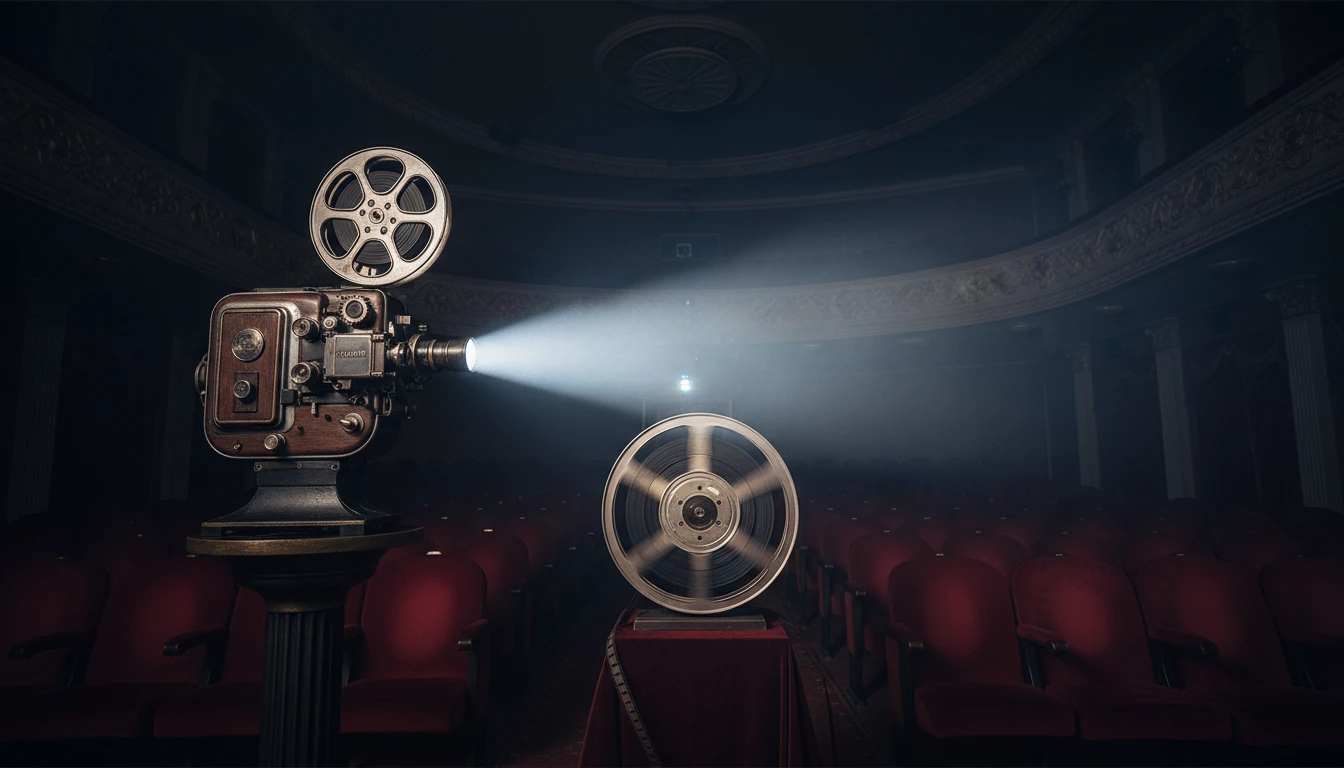
When you hear 'IMAX', you might think of any large screen, but the format Nolan used for 'The Odyssey' is the pinnacle of motion picture technology. Known as 15/70mm, it uses a massive film negative that is almost ten times the size of a standard 35mm frame. The film runs horizontally through a specialized projector, with each frame spanning 15 perforations (the small holes on the side of the film strip). This creates an image of breathtaking size and clarity, with an equivalent digital resolution estimated to be as high as 18K. Projected onto a screen that can be six stories tall with a unique 1.43:1 aspect ratio, the image fills your entire field of vision, eliminating the boundary between the viewer and the film. It is, as Nolan intended, the most immersive way to experience a movie.
The Rarity of True IMAX Projection
The very ambition that makes 'The Odyssey' a technical marvel is also what makes it so exclusive. The number of theaters equipped to project 15/70mm film is vanishingly small. Following the success of 'Oppenheimer,' which was shown in 30 such venues, IMAX undertook a global effort to find and refurbish decommissioned projectors to expand the network for 'The Odyssey'. Even with this effort, the final count stands at just 41 theaters worldwide. These projectors are enormous, complex machines, and new ones haven't been manufactured in decades. Most theaters branded as 'IMAX' today use digital projection systems, which, while high quality, do not offer the same resolution or the full 1.43:1 aspect ratio of the film prints. This scarcity means that for the vast majority of moviegoers, seeing 'The Odyssey' as its director intended is not an option.
A Pilgrimage for Film Fans
The extreme limitation has turned seeing 'The Odyssey' in its native format into a global event. Tickets for the 41 venues sold out almost instantly, with some appearing on resale sites for hundreds of dollars. Fans are planning trips across countries and continents, treating the screening not just as a movie, but as a destination. This creates a two-tiered viewing experience: the handful who witness the true spectacle and the millions who will see a compromised version. The debate has ignited online, with some celebrating the preservation of artistic purity and the creation of a special cinematic event, while others criticize it as an exclusionary practice that works against accessibility. It highlights a central tension in modern blockbusters: the push for ultimate visual fidelity versus the need to reach a mass audience.