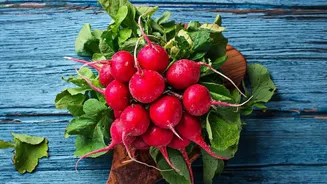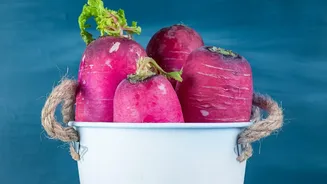





Understanding the Peppery Bite
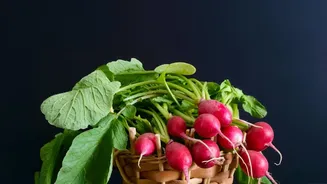
That pungent kick you get from a raw radish isn't just a random trait; it's chemistry. Radishes belong to the brassica family, alongside mustard and cabbage. They contain sulphur compounds called glucosinolates. When you slice or bite into the radish,
you break down its cell walls, triggering an enzyme that converts these compounds into isothiocyanates. These are the very same compounds that give mustard and wasabi their characteristic heat. The intensity can vary based on the radish's age and growing conditions; older radishes or those grown in hot weather tend to be spicier. Most of this spicy compound is concentrated in the colourful skin.
Tame the Bite with Smart Prep
Before you even think about cooking, you can significantly mellow a radish's flavour. The simplest method is to peel it. Since most of the pungent compounds are in the skin, removing it with a vegetable peeler will instantly reduce the heat. For a milder flavour, peeling is your best first step. Another effective technique is salting. Thinly slice your radishes, sprinkle them with salt, and let them sit for a bit. The salt draws out moisture and some of the sharp-tasting compounds, making the radish juicier and milder. A quick soak in ice water can also help crisp them up while subtly lessening the bite. For salads and raw preparations, slicing them as thinly as possible ensures that no single bite is overwhelmed by peppery flavour.
Cooking Unlocks a Milder Side
Heat is a powerful tool for transforming radishes. The spicy isothiocyanates are heat-sensitive and break down quickly when cooked. Roasting or sautéing radishes turns them from crisp and pungent to tender, buttery, and surprisingly sweet. To roast, simply toss them with a bit of oil and your favourite spices and cook in the oven until tender. For a quick stovetop option, sautéing sliced radishes in butter or ghee brings out a mellow, almost turnip-like sweetness. They can be added to stir-fries or sheet pan dinners, where they soak up the flavours of other ingredients beautifully.
Your Guide to Flavour Pairing
The key to celebrating radish is pairing it with flavours that complement its nature. Fat is radish's best friend. The creaminess of butter, ghee, or full-fat yogurt (dahi) provides a rich counterpoint that softens the peppery edge. A classic French preparation involves simply serving raw radishes with good quality butter and a sprinkle of salt. Acidity also works wonders. A squeeze of lemon or lime juice, or a splash of vinegar, can brighten the flavour and make the pungency less dominant. This is why radishes shine in tangy salads and pickles. Don't forget sweetness. A drizzle of honey or a touch of jaggery can balance the bite, especially in dressings or glazes. Finally, fresh herbs like coriander, mint, and dill provide a cooling contrast that lifts the entire dish.
Ideas for Your Indian Kitchen
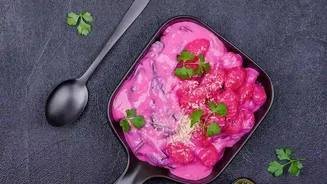
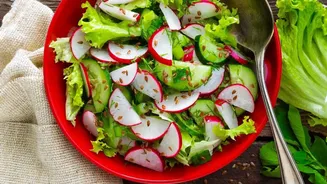
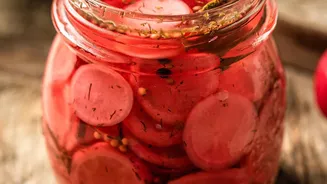
Pink radishes are wonderfully versatile in Indian cooking. For a simple and refreshing side, make a 'mooli raita' by grating raw, peeled radishes into thick dahi and seasoning with roasted cumin powder and salt. For a quick salad or 'kachumber', toss thinly sliced radishes with cucumber, tomatoes, onions, and a generous squeeze of lime. Shredded radish also makes an excellent filling for parathas, similar to how white radish (daikon) is used; cooking it briefly with spices before stuffing will ensure a milder flavour. You can also create a quick pickle ('achaar') by tossing sliced radishes in mustard oil, salt, turmeric, and coarsely ground mustard seeds, then letting it sit for a few hours. This method uses acidity and spices to transform the radish's raw bite into a tangy condiment.