







More Than Just a Tourist Attraction
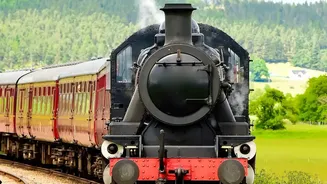
For visitors, the 'Toy Train' is the quintessential Darjeeling experience, a nostalgic joyride offering breathtaking views of the Himalayas. The most popular of these are the tourist services, often powered by vintage steam locomotives, that run the scenic
route between Darjeeling and Ghum—India's highest railway station. However, this iconic railway is not solely for sightseeing. It remains a functional part of the Indian Railways network, operating daily passenger services that connect Darjeeling with New Jalpaiguri (NJP) in the plains. For some local communities along the 88-kilometre route, the train is a vital, low-cost mode of transport for daily commutes and for carrying goods to market, continuing a role it has played for over a century.
A Marvel of 19th-Century Engineering
The story of the Darjeeling Himalayan Railway (DHR) begins in the late 1870s. With Darjeeling's status as a British hill station and a major tea-producing centre growing, a reliable transport link to the plains was essential. Franklin Prestage, an agent for the Eastern Bengal Railway, envisioned a narrow two-foot gauge railway line that would run alongside the existing Hill Cart Road. Construction began in 1879 and the full line to Darjeeling was opened in July 1881. The steep terrain posed a formidable challenge. The engineers devised ingenious solutions like 'Z-reverses' (zig-zags) and spiral loops, including the famous Batasia Loop, to allow the small engines to conquer the sharp gradients. This innovative approach to mountain railway construction is a key reason for its global recognition.
A Journey Etched in Time
A trip on the DHR is a slow, deliberate immersion into the landscape. The train climbs from about 100 metres above sea level at NJP to over 2,200 metres at its peak near Ghum. The journey, which can take over seven hours, threads through bustling towns, quiet forests, and verdant tea plantations. The tracks are so intimately woven into the community that the train passes mere inches from shops and homes, with children waving as it chugs by. Key stations like Sukna, Kurseong, and Sonada mark the ascent, each with its own history. The route culminates in the ride from Ghum to Darjeeling, passing over the Batasia Loop which offers a stunning panoramic view of the town with the Kanchenjunga range in the background on clear days.
A Living World Heritage Site
In 1999, UNESCO declared the Darjeeling Himalayan Railway a World Heritage Site, citing it as an outstanding example of a hill passenger railway that influenced developments globally. It was the first of what would become a collection known as the Mountain Railways of India. This status recognises not just the vintage locomotives and coaches but the entire system: the tracks, the stations, and the brilliant engineering solutions that are still in use today. The designation acknowledges the DHR as a living heritage, a functional entity that has maintained most of its original features. This brings both prestige and responsibility, requiring a delicate balance between modernisation and preservation.
Navigating the Challenges of Today
Keeping a 19th-century railway operational in the 21st century is not without significant challenges. The DHR is located in a fragile Himalayan environment, making it vulnerable to disruptions from landslides, especially during the monsoon season. Maintenance costs for the antique steam engines and infrastructure are high, and the railway is not a profitable venture for Indian Railways. Furthermore, the line faces competition from faster road transport, and suffers from illegal encroachment and waste dumping along its tracks, which has drawn concern from UNESCO. Despite these hurdles, there is a strong commitment from railway authorities and heritage societies to preserve this unique railway, ensuring its steam whistle continues to echo through the Darjeeling hills for years to come.