






Choosing a mattress can feel overwhelming, but understanding its core makes it easier. The spring system inside, often overlooked, is what truly defines how a bed feels and performs. The two most common types are connected and pocket springs.
The Foundation: What Are Connected Springs?
Connected
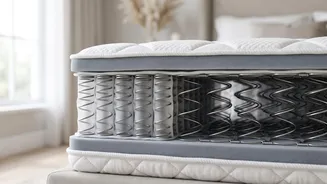
springs are the most traditional and widely used system, often known as Bonnell coils or continuous coils. Imagine a network of hourglass-shaped springs all wired together to form a single, unified structure. When you press down on one part of the mattress, the surrounding springs also react because they are all linked. This interconnected design creates a firm, even, and often bouncy surface. Because the manufacturing process is simpler and well-established, mattresses with connected springs are typically the most budget-friendly option, often found in entry-level and orthopaedic models praised for their uniform firmness.
The Modern Approach: What Are Pocket Springs?
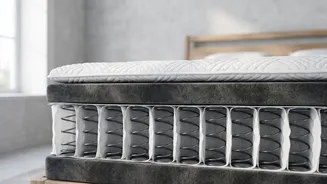
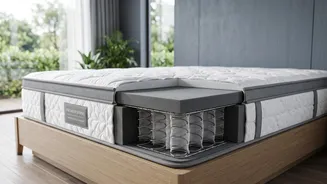
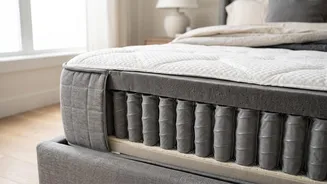
Pocket springs represent a more modern approach to mattress construction. In this system, each steel spring is individually encased in its own fabric pocket. Unlike connected coils, these springs are not wired to each other; they are only joined by their fabric sleeves. This fundamental difference allows each spring to move independently. When you lie on a pocket spring mattress, only the springs directly beneath you compress, which allows the mattress to contour more closely to your body's unique shape and weight. This design is more complex to manufacture, which generally places pocket spring mattresses at a higher price point.
Support and Contouring: A Tale of Two Feels
The way these two systems provide support is dramatically different. Connected springs offer generalized, firm support across the entire mattress surface. Because the springs move as a single unit, the mattress has a more rigid, traditional feel that's often preferred by back and stomach sleepers who need a consistently flat and stable surface to keep their spine aligned. Pocket springs, by contrast, offer targeted or 'point-elastic' support. Since each spring reacts individually, the mattress can better adapt to your body's curves, providing more give at the shoulders and hips for side sleepers and relieving pressure points. This contouring ability provides what many describe as a more sophisticated and personalised level of comfort.
Motion Isolation: The Dealbreaker for Couples
If you share a bed, motion isolation is a crucial factor. This is where the biggest difference between the two spring types becomes clear. With connected springs, any movement—like a partner tossing, turning, or getting out of bed—creates a ripple effect that travels across the mattress surface. For light sleepers, this can lead to significant disturbances. Pocket springs are the clear winner for motion isolation. Because each spring is independent, movement is absorbed locally instead of being transferred. If your partner moves on their side of the bed, you are far less likely to feel it on yours, leading to a more peaceful, uninterrupted night's sleep.
Durability and Price: The Practical Trade-Offs
When it comes to durability, both systems can be long-lasting, but quality is key. Connected spring systems are known for their robust, durable nature, but lower-quality versions can be prone to sagging or developing a 'dip' in the middle over time. Pocket spring mattresses, when made with high-quality steel coils and durable fabric pockets, tend to wear more evenly and may have a longer lifespan. The most significant trade-off is price. Connected spring mattresses are consistently more affordable, making them an excellent choice for guest rooms or those on a tighter budget. Pocket spring mattresses are an investment, with their advanced technology and superior comfort features reflected in a higher price tag.