
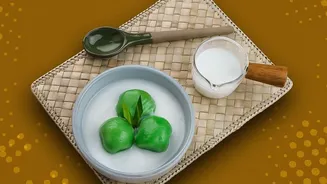
Onde-Onde: A Peranakan Jewel
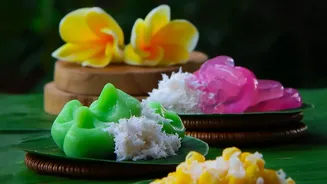
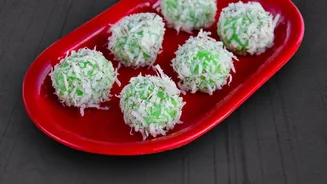
These delightful little green balls are a perfect introduction to the world of Nyonya kuih, a cornerstone of Peranakan culture which blends Chinese and Malay culinary traditions. Onde-onde are made from glutinous rice flour dough infused with the juice
of pandan leaves, giving them their vibrant colour and a subtle, fragrant aroma. The real magic, however, happens inside. Each ball is filled with a small amount of gula melaka, or palm sugar, which melts during the boiling process. After being cooked, the spheres are rolled in freshly grated coconut, adding a final layer of texture and flavour. The experience of eating one is a delightful surprise: a soft, chewy exterior gives way to a burst of warm, liquid caramel sweetness that floods the palate. It’s a treat that perfectly symbolises the fusion of local ingredients and intricate techniques passed down through generations.
Kuih Dadar: The Fragrant Rolled Crepe
Also known as kuih ketayap, this popular snack showcases another side of Malay and Peranakan ingenuity. It consists of a thin, soft crepe, also coloured and flavoured with pandan juice, wrapped around a generous filling of grated coconut sweetened with gula melaka. Unlike the liquid centre of onde-onde, the filling here is moist and chewy, cooked until the sugar caramelises and coats every strand of coconut. The crepe itself is delicate, made from a simple batter of flour, egg, and coconut milk, which lends it a rich, creamy undertone. Often found at morning markets and roadside stalls, kuih dadar is a beloved treat for breakfast or afternoon tea, representing a comforting and nostalgic taste of home for many Malaysians.
Cendol: The Ultimate Roadside Refresher
While versions of this iced dessert exist across Southeast Asia, Malaysia has a passionate claim to the modern rendition. Cendol is a delightful concoction served in a bowl or glass, perfect for combating the tropical heat. Its core components are simple yet harmonious: a mound of shaved ice, a generous splash of creamy coconut milk, and a drizzle of dark, smoky gula melaka syrup. The signature element is the green, worm-like jellies made from rice flour and pandan, which give the dessert its name and a pleasant, chewy texture. Though its origins trace back centuries in Java, Malaysians perfected it by adding shaved ice, a luxury made possible by the ice trade in colonial port cities like Melaka and Penang. Often sold by street vendors, variations may include toppings like sweetened red beans or a scoop of durian.
Sago Gula Melaka: Simple, Elegant Pudding
This dessert proves that sometimes the simplest combinations are the most profound. Sago Gula Melaka is a pudding made from sago pearls—small, starchy balls derived from the pith of palm stems. The pearls are boiled in water until they become translucent and gelatinous, forming a thick, comforting pudding. The magic comes when it's served chilled, drenched in fresh, creamy coconut milk and a liberal amount of rich gula melaka syrup. The contrast between the cool, creamy coconut milk and the deep, caramel notes of the palm sugar, all absorbed by the neutral sago pearls, is what makes it so irresistible. While it can be found in restaurants, it is also a classic home-style dessert, showcasing how a few key ingredients from the “tree of life” can create something truly special.