





The Woman Known as 'Turmeric Trinity'
Trinity Saioo, a teacher from Mulieh village, began a journey in 2003 that would reshape her community's future. A farmer herself, she noticed that the locally grown 'Lachein' variety of turmeric fetched low prices. She decided to experiment with a different,
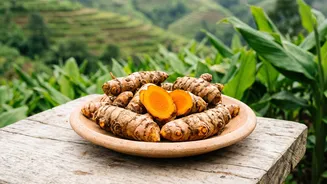
indigenous variety: Lakadong turmeric. The results were staggering. Her income doubled, a success she was determined to share. Recognised for her tireless work in leading hundreds of women farmers, she was awarded the Padma Shri in 2020, India's fourth-highest civilian honour, earning the nickname 'Turmeric Trinity' for her transformative impact.
Meghalaya’s Golden Spice: Lakadong Turmeric
What makes Lakadong turmeric so special is its exceptionally high curcumin content, the compound that gives turmeric its potent anti-inflammatory and antioxidant properties. While regular turmeric varieties contain about 2-4% curcumin, Lakadong boasts a remarkable 7-12%. This high potency, along with its distinct aroma, flavour, and deep colour, makes it one of the most sought-after turmeric varieties in the world. Grown organically in the unique climatic conditions and fertile soil of the Jaintia Hills, this spice recently earned a Geographical Indication (GI) tag, protecting its identity and linking it exclusively to its origins in Meghalaya.
The Initiative: From Subsidy to Empowerment
Seeing the potential to uplift her fellow villagers, many of whom were illiterate and unaware of the superior variety, Saioo took action. She approached the Spices Board of India to help farmers get subsidies for the expensive Lakadong seed tubers. But her work went far beyond securing financial aid. She organised farmers, primarily women, into Self-Help Groups (SHGs) and cooperatives like the Ieng Skhem Spice Producer Industrial Co-operative Society. This collective structure gave them bargaining power, breaking their dependence on middlemen who often exploited them.
Training in Organic Cultivation and Quality
A core part of Saioo's initiative was training. She guided farmers in sustainable, organic cultivation methods passed down through generations, eschewing chemical fertilisers and pesticides. This not only preserved the purity of the spice but also ensured its premium quality. The training covered everything from proper planting techniques to post-harvest management, including sorting, drying, and grinding the rhizomes to preserve curcumin content. By focusing on quality control, the farmers could produce a premium product that commanded a much higher price in the market, with reports of incomes tripling.
Challenges and the Path Forward
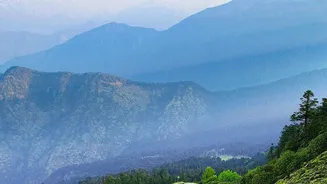
The journey wasn't without obstacles. Initially, convincing farmers to switch from their traditional crop was difficult, especially given the high cost of Lakadong seeds. Furthermore, farming in the hilly terrain presents logistical challenges. In recent years, climate change has introduced new threats, with unpredictable rainfall and increased pest attacks affecting crop yields. Despite these hurdles, the movement continues to grow. Saioo has guided over 900 farmers, and her leadership was instrumental in the launch of the state's 'Mission Lakadong', which aims to significantly increase production and build robust supply chains.