






A Prize Decades in the Making
The Mars Sample Return (MSR) program is one of the most complex robotic missions ever conceived. A joint effort with the European Space Agency (ESA), its goal is to retrieve rock and soil samples currently being collected by the Perseverance rover, which
has been exploring Mars's Jezero Crater since 2021. These samples, drilled from an ancient river delta, are believed to hold the best clues to whether life ever existed on the Red Planet. The plan involves a multi-stage relay: a new lander would touch down, collect the cached sample tubes, and launch them into Mars orbit via a small rocket—the first-ever launch from another planet. From there, an orbiter would capture the container and ferry it home.
A Mission of Mounting Costs
The mission's breathtaking complexity is matched only by its price tag. Initial estimates have ballooned, with an independent review board in 2023 projecting the total cost could reach between $8 billion and $11 billion. The report stated that the program was established with unrealistic budget and schedule expectations from the beginning. These escalating figures caused alarm within the U.S. Congress, which provides NASA's funding. Lawmakers grew concerned that MSR's budget could cannibalize funding for other vital science missions. In early 2026, these concerns culminated in a congressional budget that eliminated funding for the MSR program as it was currently designed, effectively hitting the pause button.
The Crucible of Confirmation
This is the essence of the "confirmation review." Before a mission of this scale can proceed to final design and construction, it must pass a series of formal reviews that establish firm cost and schedule baselines. An Independent Review Board (IRB), convened by NASA, evaluated the program's technical plans, schedule, and funding profile. The IRB's scathing 2023 report found the mission's 2028 launch date impossible and its budget incongruent with available funding. In response, NASA has been forced to re-evaluate the entire mission architecture, seeking more innovative and affordable designs. The program's future now depends on whether NASA can present a revised plan that satisfies both scientific goals and fiscal realities.
The Scientific Stakes
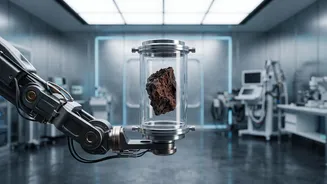
The reason NASA and scientists worldwide are fighting to save the mission is the unprecedented scientific payoff. Bringing samples to Earth would allow for analysis with sophisticated instruments far too large and complex to send to Mars. It would revolutionize our understanding of Martian geology, its past climate, and its potential for harbouring ancient life. Scientists could test for biosignatures with a level of certainty impossible with remote rovers. Furthermore, these curated samples could be studied for decades, much like the Apollo Moon rocks, allowing future generations with new technologies to unlock further secrets. For this reason, the National Academies of Sciences, Engineering, and Medicine has repeatedly named MSR the highest-priority mission in planetary science.
The Choice Ahead
The path forward is uncertain. The 2026 budget crisis has left the mission in limbo, though not formally cancelled. NASA is exploring alternative, lower-cost designs and partnerships, but the political will to fund a multi-billion-dollar retrieval remains in question. Meanwhile, the precious samples collected by Perseverance sit waiting on the Martian surface. The confirmation review process has become a battleground for the future of planetary exploration, pitting the desire for groundbreaking discovery against the hard limits of a federal budget. The outcome will not only determine the fate of a few dozen rock samples but also signal America's commitment to ambitious, long-term scientific endeavors in space.