



Mogra (Arabian Jasmine)
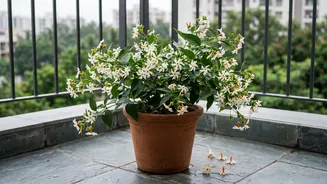
No list of fragrant Indian plants is complete without Mogra, or Arabian Jasmine. Its iconic, sweet scent is deeply woven into Indian culture, used in everything from garlands to perfumes. This sun-loving plant thrives on balconies that receive at least
five to six hours of direct sunlight. For potted Mogra, use a well-draining soil mix and a container that isn't too large; the plant actually flowers more profusely when slightly root-bound. Water when the top inch of soil feels dry, and feed it with a phosphorus-rich fertilizer during the growing season (spring to monsoon) to encourage a bounty of its beautiful white blooms. Regular pruning after a flowering cycle will promote bushier growth and more flowers.
Raat ki Rani (Night-blooming Jasmine)
True to its name, the 'Queen of the Night' releases its powerful, intoxicating fragrance after sunset. A single plant can perfume an entire balcony and the surrounding area. Raat ki Rani (Cestrum nocturnum) is a hardy shrub that does exceptionally well in pots. It requires about four to six hours of sunlight for good flowering but appreciates some shade from the harsh afternoon sun in peak summer. Use a well-draining soil mix, and water when the top soil feels dry, reducing frequency in winter. This plant responds well to pruning, which helps maintain a compact, bushy shape and encourages more of its tiny, tubular, and intensely fragrant flowers. It's generally a low-maintenance choice for most Indian climates.
Parijat (Night-flowering Jasmine)
Parijat, or Harsingar, is a plant steeped in mythology and beloved for its delicate, sweet-smelling flowers. The small white blooms have distinctive bright orange stems and open at night, carpeting the ground below the plant by morning. While Parijat can grow into a large tree in the ground, it can be successfully grown in a large container on a balcony. It needs a spot with several hours of sunlight. The key is to use a large pot with good drainage and to water it deeply but infrequently, allowing the soil to dry out a bit between waterings. This plant requires less water and care once established, making it a rewarding addition for its unique beauty and divine fragrance.
Gandharaj (Gardenia)
Known as the 'King of Fragrances,' Gandharaj produces large, creamy-white flowers with a rich, complex scent that is truly unforgettable. Growing this beauty in a pot requires some attention, but the payoff is immense. Gardenias prefer acidic, well-draining soil, so using a potting mix designed for acid-loving plants is recommended. They need a spot with bright, indirect light, as direct, scorching afternoon sun can damage the leaves. Consistent moisture is crucial; the soil should be kept moist but never waterlogged. Regular feeding during the growing season with an acid-based fertilizer will support healthy growth and a spectacular floral display.
Miniature Roses
Don’t underestimate the power of a rose. While large bushes may not be practical, many miniature and patio rose varieties are perfectly suited for balcony containers and pack a fragrant punch. Look for varieties specifically bred for fragrance. They require a sunny spot, needing at least six hours of direct sunlight to bloom well. Good air circulation is also important to prevent fungal diseases. Use a rich, well-draining potting mix and fertilize regularly during the growing season with a balanced rose food. Water deeply whenever the top layer of soil feels dry. Deadheading, or removing spent blooms, is essential to encourage the plant to produce more flowers throughout the season.