






From Fields to Floaters
For years, India’s solar story has been written across vast, sun-drenched fields and, more recently, on urban rooftops. The next chapter, however, is being written on water. Floating solar, or ‘flotovoltaics’, involves mounting solar panels on buoyant
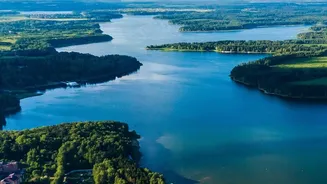
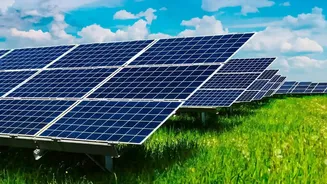
platforms anchored in reservoirs, lakes, and other stationary water bodies. Instead of clearing land, these projects leverage unused water surfaces to generate electricity. This approach is particularly suited to a country like India, where land is a scarce and often contested resource. By taking solar farms offshore, so to speak, the nation can pursue its ambitious renewable energy goals without creating new pressure on agricultural or forested land. The basic technology is the same, but its application on water unlocks a new scale of possibilities.
A New National Goal
The government has set a significant new ambition through the Pradhan Mantri Surya Sarovar Yojana, which aims to install 5,000 megawatts (MW) of floating solar capacity by 2030. This represents a monumental leap from the roughly 700 MW currently installed. The scheme is not just about panels; it mandates the inclusion of co-located energy storage systems, targeting a total of 10,000 MWh of storage capacity. This ensures that the power generated can be stored and supplied to the grid when needed most, addressing the intermittent nature of solar energy. With financial assistance of ₹1 crore per megawatt post-commissioning and additional support for feasibility studies, the government is actively de-risking these complex projects to attract investment and accelerate adoption across all states.
The Untapped Potential of Water
So, why the big push for floating solar? The advantages for India are manifold. First, it addresses the critical issue of land scarcity. Second, placing panels on water bodies has a natural cooling effect, which can increase the efficiency and energy output of the solar modules compared to their land-based counterparts. Third, the solar arrays shade the water surface, which helps to reduce evaporation from reservoirs—a crucial benefit in a water-stressed country. Many of these projects are planned on the reservoirs of existing hydropower or thermal power plants. This creates a powerful synergy, allowing the new floating solar farms to use existing transmission infrastructure, which saves costs and streamlines grid connection.
Pioneering Projects Take Shape
This ambitious target is being built on the success of pioneering projects across the country. One of the largest is NTPC's 100 MW floating solar plant on the reservoir of its thermal power station in Ramagundam, Telangana, which spans 500 acres. Another major development is the Omkareshwar project in Madhya Pradesh, set to be one of the world's largest floating solar parks with a planned capacity of 600 MW. Phases of this enormous project are already operational. These large-scale plants, along with others in states like Kerala and Andhra Pradesh, serve as crucial test beds, providing valuable data and operational experience that will inform the national scale-up. They demonstrate that floating solar is not just a theoretical concept but a practical solution already delivering clean power to the grid.
Navigating the Hurdles
Despite the immense potential, the path to 5,000 MW is not without challenges. The primary hurdle is cost. Floating solar projects have higher upfront capital expenditure compared to ground-mounted solar due to the need for specialized floating platforms, robust mooring and anchoring systems, and marine-grade electrical components. There are also complex technical considerations, such as designing systems that can withstand wind, waves, and fluctuating water levels. Furthermore, while the environmental footprint is smaller than land-based projects, careful assessment is needed to understand the long-term impact on aquatic ecosystems, including water quality and fish life. Overcoming these hurdles will require continued innovation, economies of scale, and robust regulatory frameworks to ensure these projects are both economically viable and environmentally sustainable.