





An Observatory Worth Saving
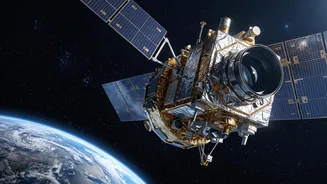
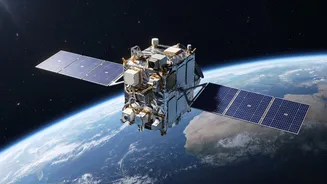
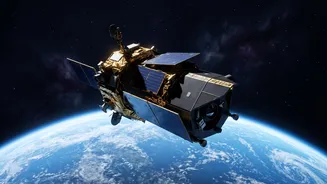
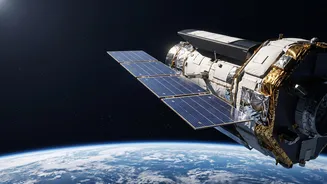
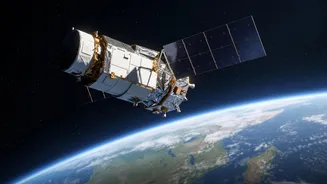
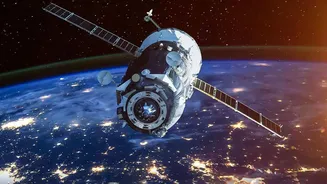
Launched in 2004, the Neil Gehrels Swift Observatory was designed for a two-year mission but has far surpassed all expectations. For more than two decades, it has been humanity's premier tool for detecting gamma-ray bursts—the most powerful explosions
in the universe, often linked to the birth of black holes. Its ability to rapidly pivot and study fleeting cosmic events has provided invaluable data on everything from exploding stars to neutron star collisions. However, Swift has no onboard propulsion system to maintain its orbit. Over the years, atmospheric drag has been slowly pulling it closer to Earth, a process that accelerated recently due to increased solar activity heating and expanding the upper atmosphere. With its orbit decaying faster than expected, NASA predicted the $500 million observatory would burn up on re-entry later this year without intervention.
A Bold Commercial Partnership
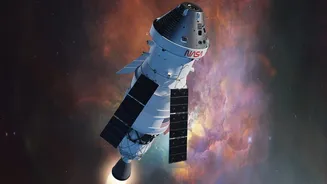
Faced with a hard deadline, NASA took a calculated risk. In September 2025, the agency awarded a $30 million contract to Katalyst Space, an Arizona-based startup, for a first-of-its-kind rescue. The plan was for Katalyst to design, build, and launch a servicing spacecraft in under a year—an unprecedented timeline. The craft, named Lightweight In-Space Navigation and Kinematics (LINK), was designed to chase down Swift, grab it with robotic arms, and physically push it into a higher, more stable orbit. This was an exceptionally bold plan, as Swift was never designed to be serviced or captured in space. A successful mission would have extended the observatory's life into the 2030s and proven a new model for commercial satellite servicing.
What Went Wrong?
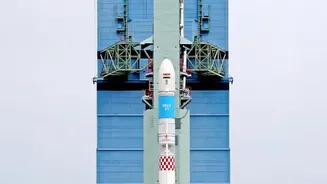
The LINK spacecraft launched July 3 from Kwajalein Atoll aboard a Northrop Grumman Pegasus XL rocket. Initially, the mission seemed to be going to plan. However, in late July, before it could even reach the observatory, LINK ran into critical trouble. The spacecraft experienced issues with its attitude control system, which is responsible for orientation. An electrical power system problem disabled two of its three reaction wheels—devices that control spin—and its thruster system had only partial functionality. This caused the LINK spacecraft to enter an uncontrollable, multi-axis spin, resulting in sporadic communications.
Calling Off the Rescue
For weeks, Katalyst engineers worked to salvage the mission, even uploading new software to try and stabilize the tumbling spacecraft. Despite their efforts, they could not fully resolve the attitude control problems. On August 19, NASA and Katalyst officially announced that the primary goal of capturing and boosting Swift would be abandoned. While acknowledging the disappointment, NASA officials defended the high-risk, high-reward nature of the mission. "This is not the outcome we were working toward, but it does not change why this mission was worth attempting," said NASA Administrator Jared Isaacman in a statement. The failure means Swift is now doomed to a fiery end when it re-enters Earth's atmosphere later in 2026.
A Valuable Lesson, Not a Total Loss
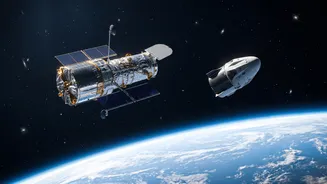
Though the primary mission failed, NASA has stated it is not a complete loss. The LINK spacecraft's mission has been re-tasked. Instead of a physical rescue, Katalyst will now attempt to conduct rendezvous and proximity operations with Swift. This will allow engineers to gather valuable data on how to approach and maneuver around an object in orbit, which can be applied to future satellite-servicing missions. Ghonhee Lee, Katalyst's chief executive, noted that the team was proud of the milestones reached in the high-stakes attempt. For NASA, the mission served as a crucial test case for rapidly developing commercial space solutions, with lessons that will inform future projects, including potential servicing missions for other aging assets like the Hubble Space Telescope.