


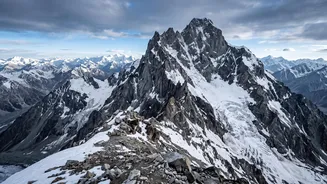
An Avalanche of Ice and Rock
On the morning of August 26, a massive section of a glacier on Langtang Lirung peak, near the Nepal-Tibet border, collapsed. This was no ordinary avalanche. The sheer force of the falling ice and rock registered as a magnitude 5.2 seismic event. The debris
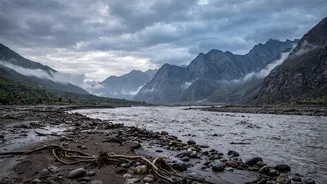
crashed into the river system below, likely the Lende Khola, a tributary of the Bhote Koshi River. This initial impact created a monstrous surge of water, mud, and boulders that barrelled downstream through the districts of Rasuwa, Nuwakot, and Dhading, wiping out settlements, markets, bridges, and hydropower projects. The disaster was compounded when debris temporarily dammed the river, forming a new lake that subsequently overflowed, causing further destruction and hampering rescue efforts.
The Unfolding Human Tragedy
The scale of the human cost has been staggering. As of August 30, the death toll in Nepal had surpassed 900, with over 4,000 people reported missing. The floodwaters moved with such terrifying speed that water levels in the Trishuli River, miles downstream, rose by as much as nine metres in just 30 minutes. This left communities with almost no time to react. Entire villages were cut off, and crucial infrastructure, including the main overland trade route to China, was destroyed. The disaster has affected at least 50,000 people, including thousands of children, leaving them without homes, safe water, or access to essential services. The event has been declared a national disaster, with rescue and relief operations facing immense challenges in the rugged, inaccessible terrain.
A Climate Change Fingerprint
While scientists are careful to analyze the specific chain of events, the broader context is clear: the Himalayas are warming at roughly twice the global average. This rapid warming has profound consequences. Glaciers are melting at an accelerated rate, and the permafrost—the frozen 'glue' holding mountain slopes together—is thawing. This makes the mountainsides unstable and far more prone to catastrophic rock and ice avalanches like the one that triggered this flood. These events, along with Glacial Lake Outburst Floods (GLOFs), are becoming more frequent and unpredictable. A 2018 report mapped over 25,000 glacial lakes in the region, many of which pose a potential threat as they expand. This disaster serves as a brutal demonstration of what scientists have been warning about for years.
A Wake-Up Call for the Region
This tragedy in Nepal carries urgent implications for the entire subcontinent, including India. The Himalayan glaciers feed major river systems like the Ganga and Brahmaputra, which are lifelines for over a billion people downstream. The instability of these water sources—swinging from destructive floods to future scarcity—threatens regional water security, agriculture, and energy production. The event has also exposed critical gaps in early warning systems. Many monitoring stations in Nepal were destroyed by the very flood they were meant to track. Experts and officials are stressing the urgent need for robust, cross-border data sharing and cooperation between Nepal, China, and India to monitor these fast-developing threats and provide timely warnings to downstream communities.