

What is the 'Rocket Revolution'?
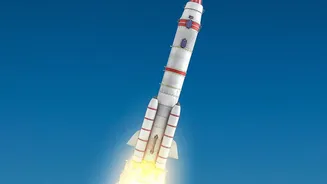
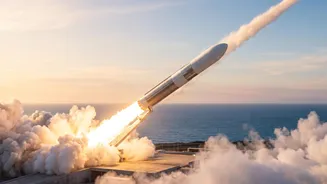
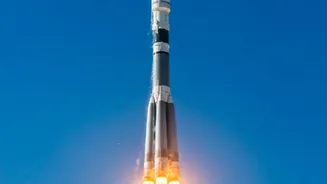
For decades, space launch was a one-and-done affair. A rocket would blast off, deliver its payload, and its expensive components would be discarded forever. The 'Rocket Revolution' is the fundamental change to that model. At its core, this revolution
is about reusability, a concept pioneered by private companies like SpaceX. By designing rockets whose most expensive parts can return to Earth, land autonomously, and be flown again, the entire economic equation of space access changes. This shift dramatically lowers launch costs, increases the frequency of missions, and opens the door for ambitious projects that were once the stuff of science fiction, from massive satellite internet constellations to large-scale scientific missions. This new era isn't just about reusing hardware; it's about a broader transformation involving new manufacturing techniques like 3D printing, cleaner fuels, and a surge of commercial startups and university teams entering the field.
Why This Theme, Why Now?
The World Space Week Association selects a theme each year to capture a pivotal trend in space exploration. 'Rocket Revolution' was chosen for 2026 because the transformation is no longer theoretical—it is happening now. The past few years have seen commercial companies achieve what was once the sole domain of national superpowers, including landing rocket boosters and even mastering complex engine technologies. This has stimulated a vibrant new space ecosystem. The theme aims to celebrate these technological leaps and inspire a new generation toward careers in science, technology, engineering, and mathematics (STEM). The week itself commemorates two key dates: the launch of the first artificial satellite, Sputnik 1, on October 4, 1957, and the entry into force of the Outer Space Treaty on October 10, 1967, which established principles for peaceful space exploration.
India's Growing Stake in the Revolution
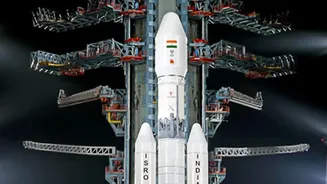
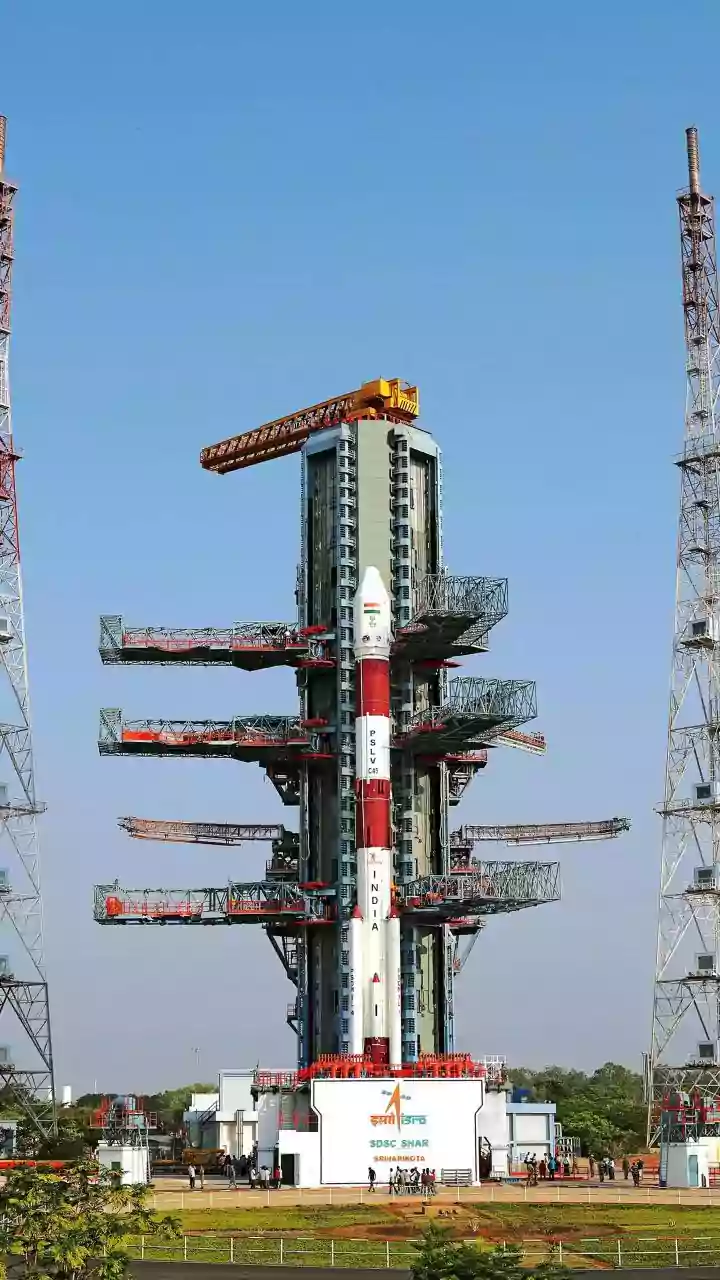
India is not just a spectator in this global revolution; it is an active and innovative participant. The Indian Space Research Organisation (ISRO) has been diligently working on its own Reusable Launch Vehicle (RLV) program. Its winged vehicle prototype, named 'Pushpak', has successfully completed a series of critical autonomous landing experiments, proving its ability to land on a runway like an aircraft after being released at high altitude. The next phase involves an orbital re-entry experiment, a major step toward a fully reusable two-stage-to-orbit launch vehicle. Beyond ISRO, a dynamic private ecosystem is emerging. Startups like Agnikul Cosmos, which launched India’s first privately built semi-cryogenic rocket, and Astrobase Space Technologies, which is developing a powerful 3D-printed methalox engine, are pushing the boundaries of innovation. These companies are focused on making space access even more affordable and on-demand, positioning India as a key player in the future commercial space launch market.
Celebrating Around the Globe and in India
World Space Week is marked by thousands of events across more than 90 countries. This year, in line with the 'Rocket Revolution' theme, many activities are hands-on, encouraging students and enthusiasts to build and launch model rockets. In India, the celebration is widespread. ISRO centres like the Vikram Sarabhai Space Centre (VSSC) are organizing lectures at schools across Kerala to spread awareness about space technology. Universities are also deeply involved. SRM Institute of Science and Technology, for instance, is hosting a week of activities including rocketry workshops, design competitions, and expert lectures. The Indian Institute of Space Science and Technology (IIST) has already hosted exposure visits for science clubs, offering a firsthand look at its research labs and insights into careers in the space sector. These events, from high-level scientific discussions to local model rocket launches, all serve the same goal: to bring the excitement of the new space age to the public.