
The Ultimate Food Challenge
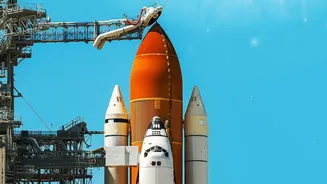
For decades, astronauts have relied on pre-packaged meals, from pureed food in tubes during the Mercury missions to the varied thermostabilized dishes enjoyed on the International Space Station (ISS) today. These meals are prepared and tested on Earth,
then shipped up as cargo. This system works well for missions in low-Earth orbit, where resupply is frequent. However, a crewed mission to Mars is a different beast entirely. A journey spanning several years means that the sheer mass and volume of required food would be enormous, taking up valuable space and adding to launch costs. Furthermore, the nutritional value of pre-packaged food degrades over time; vitamins and other essential nutrients can break down, posing a health risk to the crew. There is also the psychological toll, as the monotony of eating the same packaged food for years on end can impact crew morale.
From Plastic Waste to Protein
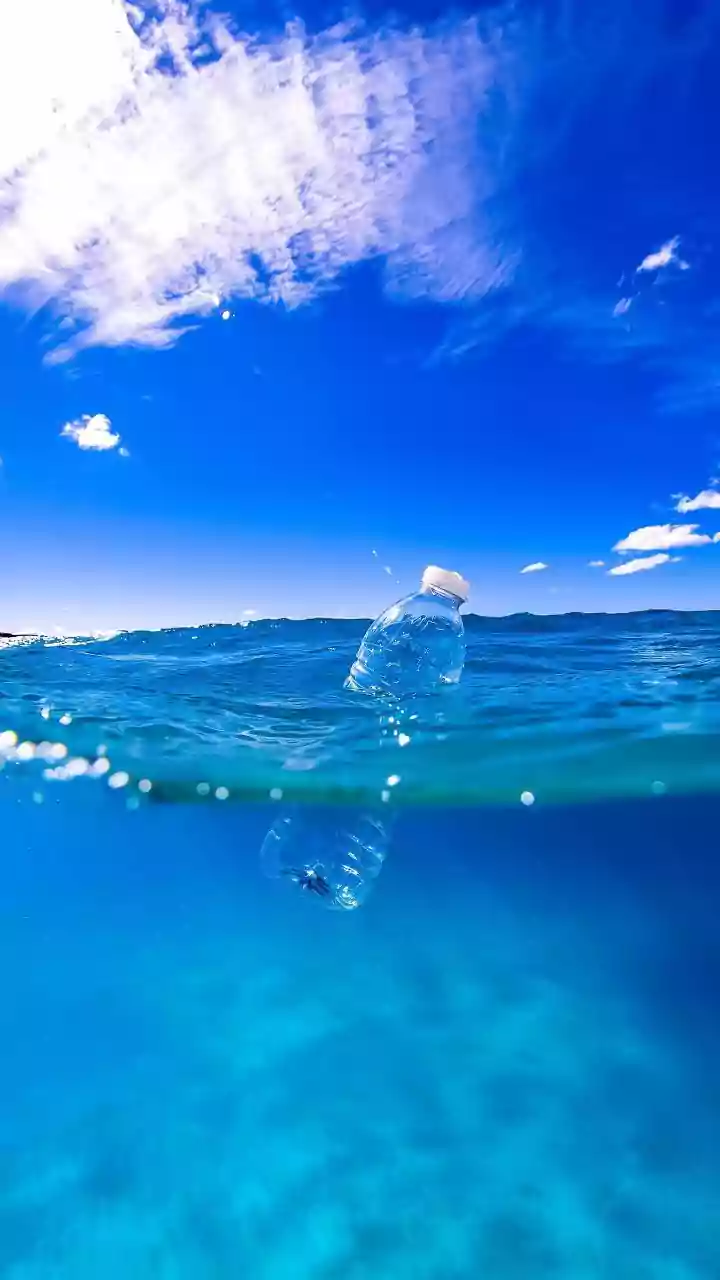
To solve this problem, NASA is looking to a concept straight out of science fiction: turning waste into food. Researchers at Southern Illinois University Carbondale have developed a novel system called µBites (pronounced micro-bites) that does just that. The project uses genetically engineered microbes, specifically different strains of yeast, to convert waste materials into edible, protein-rich food. The innovation lies in its dual-purpose approach. Not only does it produce food, but it also recycles materials that would otherwise become waste on a long mission, including common PET plastic from things like water bottles and agricultural biomass left over from other potential space-farming efforts. The idea is to create a closed-loop system where everything is reused, a critical requirement for becoming Earth-independent on a distant planet.
A Recipe for Space Cookies
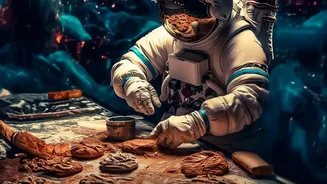
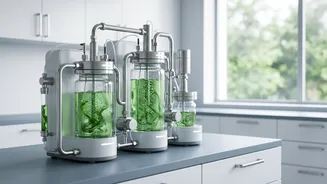
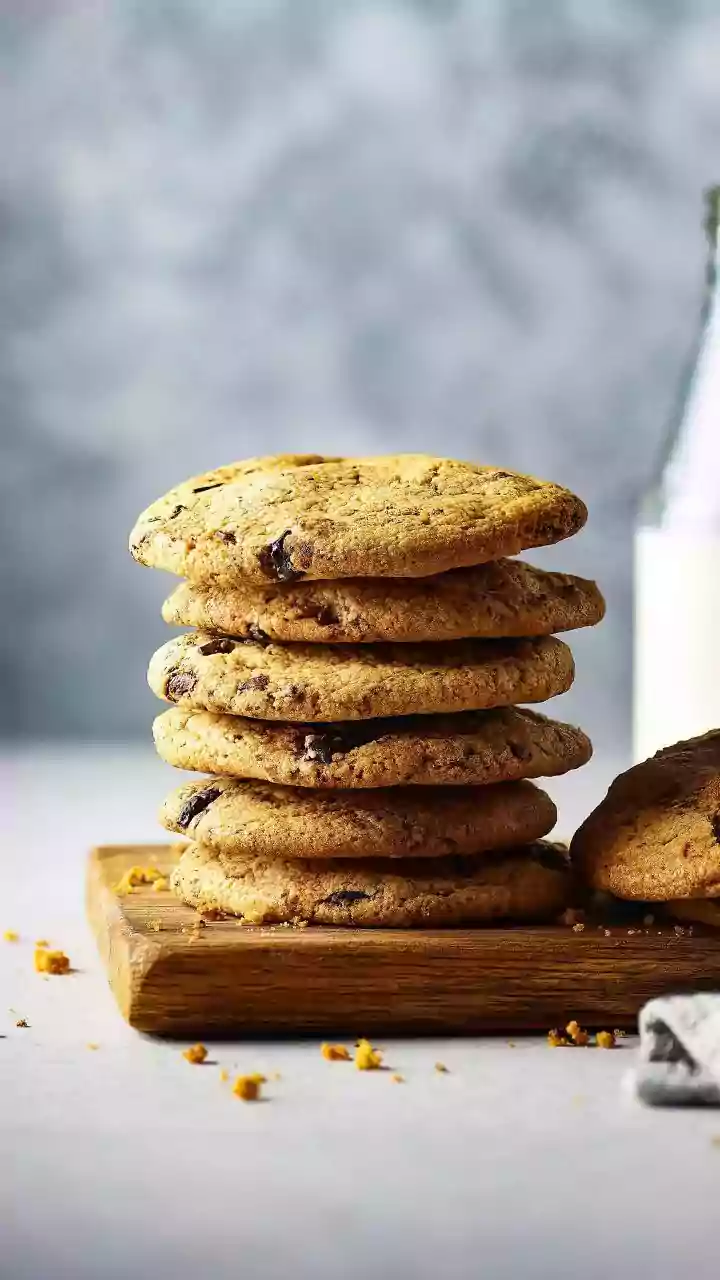
So how do you turn a plastic bottle into a cookie? The process is a fascinating blend of chemistry and microbiology. First, the waste material is broken down into its basic chemical components using a process involving high temperature, pressure, and oxygen. This creates a 'slurry' of smaller, carbon-rich molecules that the microbes can consume. Next, specialized, genetically programmed yeasts are introduced. These tiny biological factories get to work, consuming the molecules and transforming them into new substances. The researchers have designed different yeast strains for specific jobs. One strain produces protein and fats, while another is engineered to create vanillin, the molecule that gives vanilla its flavour. Another can produce beta-carotene, a pigment that the human body converts into Vitamin A. After the microbes have done their work, this nutrient-rich paste is mixed with traditional ingredients like fiber and starch, then extruded through a 3D printer to create the final product: a cookie-like disc.
NASA’s Quest for Future Food
This innovative food system was developed as part of NASA's Deep Space Food Challenge, a competition designed to spur the creation of novel technologies to feed astronauts on long-duration missions. The µBites project was one of many teams to receive initial funding to develop its concept. While it did not win the final grand prize—which went to a system for growing vegetables, mushrooms, and even insects in a self-contained biodome—NASA encouraged the team to continue its groundbreaking research into microbial food production. The challenge highlights NASA’s strategy of investing in a wide array of high-risk, high-reward technologies. By backing concepts as diverse as autonomous greenhouses and plastic-eating microbes, the agency is building a portfolio of potential solutions for the complex problem of sustaining human life far from Earth.
More Than Just Astronaut Food
Although µBites were conceived for the extreme environment of space, the technology has significant potential for applications on Earth. The portable, on-demand nature of the system could be invaluable in disaster relief zones where food supply chains are broken. It could also provide a sustainable source of nutrition for people living in remote or harsh environments, such as desert or Arctic research stations, where traditional agriculture is impossible. The core idea of upcycling waste into valuable products is a cornerstone of the circular economy. As we face growing challenges with plastic pollution and food security on our own planet, turning a common waste material into a source of protein offers a powerful glimpse into a more sustainable future. While no one has officially tasted the cookies yet pending institutional approval, the research represents a major step forward in food technology.