





A Full System Dress Rehearsal
The first uncrewed flight, officially named Gaganyaan-1 or G1, is designed to be a comprehensive test of the entire system from launch to landing. Its primary purpose is to validate the performance, safety, and reliability of all components in a real
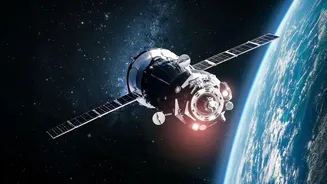
space environment before astronauts are on board. The spacecraft will be launched into a Low Earth Orbit of around 400 kilometres. Instead of a human crew, the capsule will carry a humanoid robot named Vyommitra, which will simulate human functions and monitor the cabin environment. This mission will provide invaluable data, ensuring every piece of technology works as intended under the extreme conditions of spaceflight.
The Human-Rated Launch Vehicle
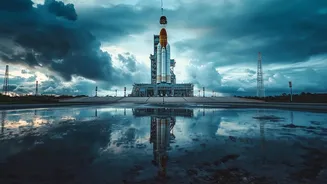
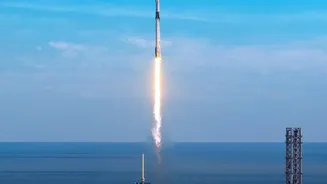
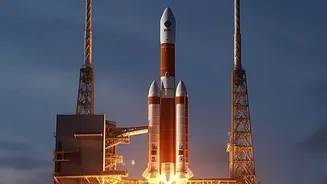
At the heart of the mission is the powerful, human-rated LVM3 rocket (Launch Vehicle Mark-3). While ISRO has used the LVM3 for numerous satellite launches, the Gaganyaan version has been specifically modified for human safety. The uncrewed mission will be the ultimate test for this vehicle, proving it can deliver the Orbital Module into the correct orbit with the precision and stability required for a crewed launch. A key component being validated is the Crew Escape System (CES), a mechanism designed to jettison the crew capsule to safety in case of a launch anomaly. Successful test flights have already validated the CES in simulated conditions, but this orbital flight will test it as part of an integrated launch sequence.
The Orbital Module's Critical Test
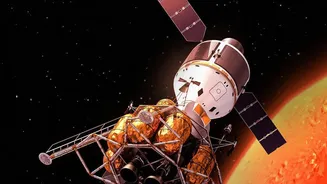
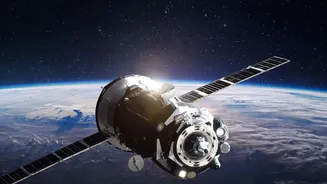
The Gaganyaan spacecraft, known as the Orbital Module, consists of two main parts: the Crew Module and the Service Module. The Crew Module is the habitable space where astronauts will eventually sit, while the Service Module contains propulsion, power, and other support systems. This first mission will test the performance of both modules in orbit. Key tests include the functioning of the propulsion systems, which are used for orbital manoeuvres, and the crucial separation of the Crew Module from the Service Module before re-entry. ISRO has already conducted ground tests of the umbilical connectors that link the two modules, ensuring they disconnect cleanly at the right moment.
Simulating Life in Space
Even without astronauts, the mission will thoroughly test the Environmental Control and Life Support System (ECLSS). This system is responsible for maintaining a habitable atmosphere inside the Crew Module by regulating temperature, pressure, oxygen levels, and removing carbon dioxide. The humanoid robot, Vyommitra, will play a key role here, mimicking human breathing and allowing ISRO to measure the ECLSS's performance in managing the cabin environment. It will also test control panels and communicate with the ground station, providing a complete simulation of a crewed presence. An engineering model of the full ECLSS will be flown to gather data for the final version.
The Fiery Return to Earth
One of the most dangerous phases of any spaceflight is re-entry, and this mission will put the Crew Module's design to the ultimate test. After separating from the Service Module, the capsule will plummet through the atmosphere at incredible speeds. The Thermal Protection System, a heat shield on the module's base, must withstand temperatures of thousands of degrees Celsius to protect the spacecraft. The module's navigation, guidance, and control systems will be monitored to ensure it maintains the correct angle of attack during this fiery descent, a crucial factor for a safe landing.
Perfecting the Splashdown and Recovery
After re-entry, a complex sequence of parachutes must deploy to slow the Crew Module from hypersonic speeds to a gentle splashdown in the Indian Ocean. ISRO has conducted several Integrated Air Drop Tests to validate this deceleration system. The G1 mission will test the entire sequence in a real-world scenario. Once in the water, another critical system, the Crew Module Up-righting System (CMUS), will be tested. This system uses flotation bags to ensure the capsule remains upright in the sea, a vital safety measure for the eventual recovery of the astronauts. The mission will conclude with a full recovery operation by naval teams, rehearsing the final step of bringing the capsule and its future occupants home safely.