
Know Before You Go: Navigating the Festival
Durga Puja is a multi-day festival, with the main celebrations in 2026 taking place from October 17th to the 21st. The key to a great experience is planning by zone. Don't try to cross the city from north to south in one evening; dedicate each outing
to a specific area. Your best friend for travel will be the Kolkata Metro, which runs special late-night services during the festival and is the most reliable way to bypass street-level crowds and traffic. For a smoother journey, get a smart card to avoid long ticket queues. Finally, wear comfortable shoes. Pandal-hopping involves a lot of walking.
Day 1: North Kolkata's Nostalgia and Heritage
Begin your journey in North Kolkata, the soul of the city's old-world charm. Start your morning at Kumartuli, the potters' quarter where the magnificent idols are born. From there, dive into the world of 'Bonedi Bari' Pujas—celebrations held in the historic mansions of Kolkata's aristocratic families. Key stops include Sovabazar Rajbari, which started its puja in 1757, and the Jorasanko Daw Bari. These heritage homes offer a glimpse into centuries-old rituals. In the evening, explore the famous community pandals like Bagbazar Sarbojanin, one of the oldest and most traditional, and College Square, famous for the reflection of its lights on the adjacent lake. To dodge the biggest crowds, try visiting between 8 AM and 11 AM or after 1 AM.
Day 2: South Kolkata's Artistic Spectacle
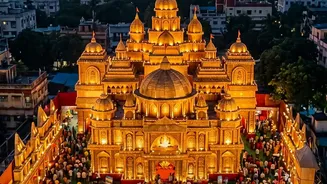
South Kolkata is the playground of contemporary themes and artistic innovation. This is where you'll find massive, elaborate pandals that often replicate world monuments or explore bold concepts. A good plan is to use the Metro's Blue Line, getting off at stations like Kalighat or Jatin Das Park to explore clusters of pandals. Must-visit names in the south include Ekdalia Evergreen, known for its grand, traditional presentation; Suruchi Sangha, famous for its artistic themes; and Chetla Agrani. Another essential stop is Maddox Square, which has a more relaxed, carnival-like atmosphere where friends gather and chat for hours. This area gets extremely busy after sunset, so pacing yourself is key.
Day 3: A Feast for the Senses
Durga Puja is as much a food festival as a religious one. Today, let your taste buds lead the way. Between pandal visits, dive into Kolkata's legendary street food. You can't leave without trying phuchka (a tangy, spicy water-filled sphere), kathi rolls (parathas wrapped around fillings), and Mughlai paratha (a fried parcel stuffed with egg or minced meat). Many community pandals also serve 'bhog'—a traditional lunch of khichuri, mixed vegetables, and chutney, often free of charge. For a sweet ending, no Bengali celebration is complete without mishti doi (sweet yogurt) or rosogolla. These food stalls are an integral part of the Puja experience, turning the streets into a massive food trail.
Day 4: A Bittersweet Farewell
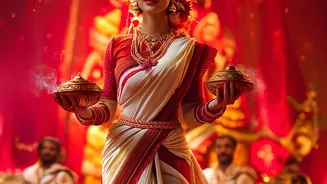
The festival culminates on Vijaya Dashami with the 'visarjan' or idol immersion. The day begins with 'Sindoor Khela', a ritual where married women smear vermilion on each other. In the afternoon, processions full of music and dance carry the idols to the Hooghly river. This ceremony marks the goddess's return to her heavenly abode. For a memorable view, head to one of the main ghats like Babughat. The atmosphere is electric and emotional, filled with chants of 'Asche bochor abar hobe' (It will happen again next year). For a more comfortable experience, you can even book a spot on a river cruise to watch the immersions from the water.