





From 'Mission' to 'Business'
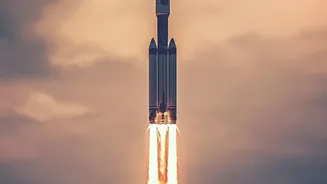
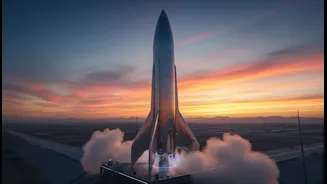
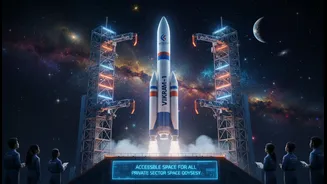
Skyroot Aerospace’s successful maiden orbital launch of Vikram-1 on July 18, 2026, was a monumental achievement for India's private space sector. It made India only the third country, after the US and China, with a privately developed orbital rocket.
The mission, named 'Aagaman' (Arrival), signalled that a new player had entered the global space-launch market. However, the company's founders, Pawan Kumar Chandana and Naga Bharath Daka, have their sights set on a much larger goal: transitioning from one-off historic missions to a high-frequency, commercially viable launch service. Their stated ambition is to build the capacity for monthly launches, turning rocket launches from a national spectacle into a predictable and regular business.
The Crucial Test of Repeatability
In the launch industry, the first flight is history, but the second, third, and tenth flights are business. This is the essence of repeatability. It is the ability to manufacture and launch rockets with identical quality and reliability, time after time. A single successful launch, while immensely complex and praiseworthy, is fundamentally an experiment. To attract satellite companies, which invest millions in their payloads, Skyroot must prove that Vikram-1’s performance wasn't a fluke. Customers need assurance that their expensive hardware won't be lost due to inconsistencies in manufacturing or operations. This confidence is only built through a string of successful, identical flights that demonstrate the rocket's design and the company's processes are robust and predictable.
Why Cadence Is King
A high launch cadence—the frequency of launches—is the ultimate goal. Skyroot's CEO has expressed the aim to first build the capacity to produce one rocket per month. This is critical for several reasons. Firstly, it allows the company to serve the burgeoning small satellite market, where clients often want dedicated launches to specific orbits on their own timelines, rather than waiting to hitch a ride on a larger rocket. Secondly, frequency drives down costs. Just like any manufacturing line, the more you build, the more efficient the process becomes, streamlining the supply chain and reducing per-unit costs. This pricing advantage is essential to compete with established international players like SpaceX and Rocket Lab.
The Road to a Monthly Launch
Achieving a monthly launch cadence is a formidable industrial challenge. It goes far beyond the rocket itself. Skyroot must now scale its manufacturing processes without compromising quality, a significant hurdle for any aerospace company. This involves managing a complex supply chain for thousands of components, many of which require extreme precision. The company is reportedly planning at least one more test flight of Vikram-1 to validate its systems and gather more data before beginning full commercial operations. Each launch provides invaluable data that feeds back into making the next vehicle better and the process smoother. This iterative process of launching, learning, and refining is the only way to move from a prototype to a reliable production model capable of frequent flight.
India's Space Ecosystem at a Turning Point
Skyroot is not operating in a vacuum. Its progress is a direct result of India's strategic decision to open the space sector to private players, with agencies like IN-SPACe created to facilitate and regulate their activities. A reliable and frequent Vikram-1 service would be a cornerstone of this new ecosystem, creating opportunities for dozens of other Indian startups focused on building satellites and developing space-based applications. The success of one company in achieving routine space access can energize the entire industry, attracting investment, talent, and, most importantly, global customers. Vikram-1's 'Aagaman' marked the arrival of a new capability; now, the hard work of making that arrival a permanent, sustainable presence begins.