






The Anti-Vacuum Hero
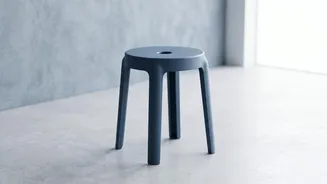
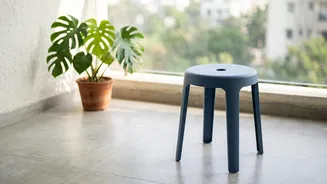
The most critical reason for the hole is a simple matter of physics. Plastic stools are designed to be stacked high to save space. When you nest smooth, flat surfaces together, they can trap air, creating a vacuum seal between each stool. Without a hole,
separating a tightly packed stack would become a frustrating struggle against air pressure. The opening acts as a vent, allowing air to pass through freely and breaking the suction, which makes unstacking them effortless. For businesses or venues handling hundreds of stools, this feature is an essential time-saver.
A Handle in the Perfect Spot
Beyond physics, the hole serves a very straightforward purpose: it’s a handle. While you could grab a stool by its sides, slipping your fingers through the central hole provides a much more secure and balanced grip. This makes carrying the stool, especially when moving several at once, far more convenient. It’s a simple ergonomic touch that enhances the stool’s portability, transforming an otherwise clunky object into something you can easily grab and go. The placement is key, as a central grip point offers better control than holding it by a corner or edge.
Built for Structural Strength
It might seem counterintuitive, but removing material can sometimes make an object stronger—or at least, less prone to breaking. A solid, flat sheet of plastic can be rigid and brittle. A circular hole helps to distribute the stress placed on the seat when someone sits down. Shapes with sharp corners can concentrate stress, leading to cracks. A round hole, however, allows the load to be spread more evenly across the structure, preventing weak points from forming and improving the stool's overall durability and lifespan.
Smarter Manufacturing and Drainage
The hole also plays a role in the manufacturing process. During injection moulding, the hole can help manage pressure as the molten plastic cools and solidifies, preventing warping or defects. It also represents a small but significant saving in material. While the plastic saved on one stool is tiny, it adds up to a substantial cost reduction for manufacturers producing thousands or millions of units. Lastly, the hole offers a practical benefit for outdoor use. If a stool is left in the rain or needs to be washed, the hole provides an instant drainage point, preventing water from pooling on the seat.