




A Tale of Two Landings
The fifteenth flight of the Starship system on November 13, 2026, was a study in contrasts. On one hand, it achieved a monumental success: for the first time ever, the Starship upper stage returned from orbit after nearly a full day in space and was caught
by the launch tower's 'Mechazilla' arms. This was hailed as 'the holy grail of spaceflight' and a massive step toward a fully reusable rocket system. On the other hand, the first part of the mission did not go to plan. The Super Heavy booster, which propelled Starship toward orbit, was also supposed to return and be caught. Instead, its landing was automatically aborted, and the massive booster diverted for a splashdown in the Gulf of Mexico, where its flight was terminated.
The Ambitious 'Chopstick' Catch
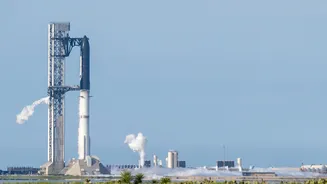
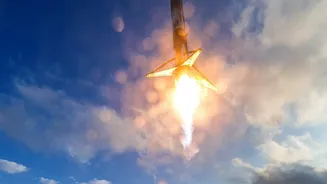
To understand the failure, one must first appreciate the goal. Unlike its workhorse Falcon 9 rockets, which land on legs, the Super Heavy booster is designed to be caught mid-air. The system, nicknamed 'Mechazilla', uses two giant arms on the launch tower to grab the booster by its grid fins just as it hovers for landing. This maneuver saves the weight of landing legs, allowing for more payload, and dramatically speeds up turnaround time for the next launch. By catching the booster directly at the launch site, SpaceX aims to refly it within hours, a key step in making spaceflight more like commercial aviation.
What Went Wrong with the Booster?
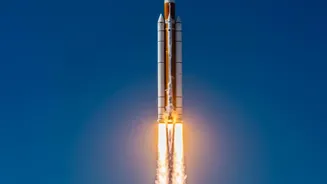
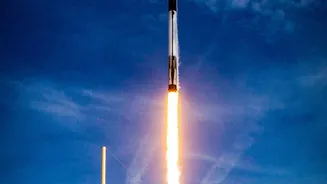
During Flight 15, the Super Heavy booster successfully lifted off, separated from the Starship upper stage, and began its 'boostback burn' to reverse course and fly back to the launch site. However, SpaceX has since stated that this burn ended early. Early indications suggest a 'low fuel mass alarm' was the culprit, though the root cause is still under investigation. This alarm prompted the booster’s autonomous guidance, navigation, and control (GNC) system to do exactly what it was designed to do in an off-nominal situation: it triggered an abort. The GNC correctly identified that the booster would not be in the right position for a safe catch and diverted it to its contingency splashdown zone in the Gulf.
The Investigation and SpaceX's Philosophy
Immediately following the abort, the SpaceX team began reviewing telemetry from the flight. The investigation will focus on why the low fuel mass alarm was triggered. Possibilities include a genuine fuel shortfall, an issue with one of the 33 Raptor engines (one did shut down early after staging), or simply a sensor error. This event highlights SpaceX’s 'hardware-rich' development philosophy. The company prefers to build and fly rockets frequently, pushing them to their limits to gather real-world data, rather than spending years on ground simulations. Failures like the booster abort are not seen as disasters but as valuable learning experiences that provide crucial data for the next iteration. Even in failure, the booster's ability to safely execute the abort and divert was seen as a partial success for the system's safety logic.
What Happens Next?
While the booster abort is a setback for SpaceX's goal of rapid, full reusability, it's unlikely to cause a major delay. The historic success of catching the Starship upper stage—a far more difficult feat, given its return from orbital velocity—is the mission's defining outcome. Engineers now have an intact, flight-proven Starship to inspect and learn from. The focus will be on pinpointing the cause of the booster's fuel alarm and implementing a fix. Given SpaceX’s rapid production and testing cadence, another flight test attempting the double catch will likely not be far off. For a program intended to build a city on Mars and deploy thousands of satellites, solving these challenges is simply part of the process.