




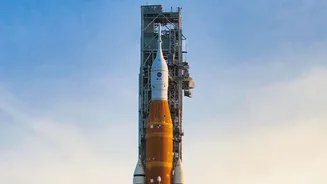

The historic return of humans to the lunar surface will have to wait. NASA has officially changed the objectives for its Artemis III mission, shifting it from a celebrated Moon landing to a complex dress rehearsal in low-Earth orbit.
From Lunar Surface to Earth Orbit
For years, Artemis
III was billed as the marquee event: the mission that would finally put astronauts—including the first woman—back on the Moon for the first time since 1972. That is no longer the case. In a significant strategic shift, NASA has redefined the mission, which is now slated to launch in mid-2027. Instead of traveling to the Moon, the four-person crew will remain in low-Earth orbit for a mission lasting about two weeks. The primary goal is now to test the hardware and procedures that will be critical for an eventual lunar landing, which has been pushed to the Artemis IV mission in 2028 at the earliest. NASA is framing this change not as a failure, but as a crucial risk-reduction step to ensure the complex machinery of a lunar mission works perfectly closer to home before attempting the real thing.
A Highly Complex orbital Ballet
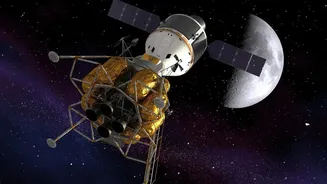
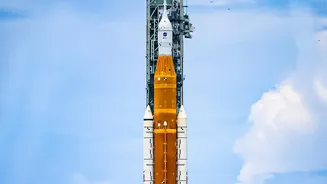
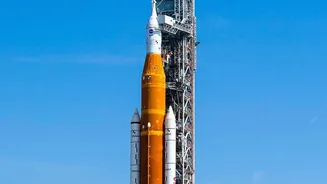
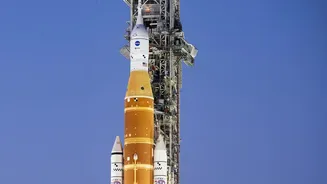
The new Artemis III is one of the most logistically complex missions NASA has ever attempted. It involves three separate spacecraft, launched by three different heavy-lift rockets, all coordinating within a tight timeframe. The mission will begin with Blue Origin launching a test version of its Blue Moon lander on a New Glenn rocket. Shortly after, NASA will launch the four astronauts in the Orion capsule atop its own Space Launch System (SLS) rocket. The Orion crew will then perform a rendezvous and dock with the Blue Moon lander, even entering the vehicle to test its life support and control systems. After that, the crew will undock and await the third launch: a test version of SpaceX's Starship. The Orion will then rendezvous and dock with the Starship vehicle for a shorter test before preparing to return to Earth.
Why The Sudden Change of Plans?
The mission was reshaped primarily because the commercial lunar landers are not yet ready for the immense challenge of a crewed Moon landing. Both SpaceX's Starship and Blue Origin's Blue Moon are still deep in development. An uncrewed landing is a prerequisite for a crewed one, and those tests have not yet occurred. Furthermore, a successful landing requires a host of unproven technologies, including the in-space transfer of cryogenic propellant for Starship, a maneuver that has never been done on this scale. By changing Artemis III to an orbital test, NASA can verify essential capabilities—like rendezvous, docking, and crew interaction with the landers—in the relative safety of Earth orbit. This allows the private companies more time to mature their systems while still allowing NASA to move forward with a crewed flight that gathers vital data.
The New Race to the Moon
This revised plan effectively sets up a competition between SpaceX and Blue Origin. The Artemis III mission will serve as a realworld audition for their lander 'pathfinders'. The astronauts will test the Blue Moon lander's systems extensively, while the docking with Starship will be a more limited evaluation of its flight characteristics. The crew will not enter the Starship test article, as it won't be equipped with a full lifesupport system for this mission. NASA has stated that it will use whichever lander is ready first for the Artemis IV landing mission in 2028, adding a competitive edge to the program. While the delay is a setback to the original timeline, NASA leadership insists this new, accelerated approach with multiple commercial partners gives them the best chance to beat China to the lunar surface.