





Vada Pav: The Heartbeat of Mumbai
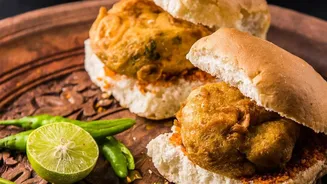
Often called the “Indian burger,” Vada Pav is the quintessential Mumbai street food. It’s a beautifully simple concept: a spiced mashed potato patty (the batata vada) is coated in a chickpea flour batter, deep-fried to golden perfection, and then sandwiched
inside a soft bread roll called a pav. The magic lies in the accompaniments. It's typically slathered with a combination of chutneys—often a dry garlic and red chilli chutney, a tangy tamarind one, and a fresh green chilli and coriander one. Born in the 1960s to feed Mumbai's bustling mill workers, it was designed to be an affordable, convenient, and filling meal that could be eaten on the go. Its creator, Ashok Vaidya, started selling them from a stall outside Dadar railway station, and it quickly became an inseparable part of the city's identity. More than just a snack, Vada Pav is a cultural symbol of Mumbai's fast-paced, inclusive spirit, beloved by everyone from students to business tycoons.
Misal: A Fiery Maharashtrian Feast
While the headline mentions “Misal Vada,” it’s important to clarify that the star here is Misal, a fiery and complex dish from Maharashtra. Misal is a spicy curry made from sprouted moth beans (matki). The dish is famous for its layered textures and bold flavours. The sprouted curry base, known as 'usal', is often served with a thin, spicy gravy called 'rassa' or 'kat'. It's then generously topped with 'farsan' (a crunchy fried snack mix), finely chopped raw onions, fresh coriander, and a wedge of lemon for squeezing. It's almost always served with pav on the side, which is used to soak up the flavourful gravy. So where does the vada come in? While not a standard component, some variations include a batata vada (the same kind found in Vada Pav) placed in the Misal, adding another layer of texture and substance to this already hearty meal. With famous regional versions from Kolhapur, Pune, and Nashik, each with its own unique spice level and taste, Misal is a true culinary adventure in a bowl.
Medu Vada: The South Indian Doughnut
Journey south, and the vada transforms completely into Medu Vada. This snack is a savoury, doughnut-shaped fritter with a delightfully crispy exterior and a soft, fluffy interior. The name itself gives a clue to its texture; in Kannada, 'medu' means soft. Unlike the potato-based Vada Pav, Medu Vada is made from a batter of urad dal (black lentils) that has been soaked and ground into a fine paste. This batter is then flavoured with ingredients like green chillies, ginger, cumin seeds, black pepper, and curry leaves before being shaped and deep-fried. While its exact origin is debated, it is widely associated with towns in Karnataka like Maddur. Medu Vada is a staple breakfast item or evening snack across South India and is almost always served with a bowl of hot sambar (a lentil-based vegetable stew) for dipping and a side of creamy coconut chutney.
A Tale of Three Vadas
So, what truly sets these three apart? It’s all in the ingredients, form, and flavour. Vada Pav is a carb-on-carb delight, a potato-filled sandwich that’s comforting and convenient. Misal Pav is a complete meal in a bowl; it’s a spicy, soupy curry where the main event is the sprouted lentils, and the pav is a utensil for scooping. Medu Vada, on the other hand, is a standalone fritter defined by its unique lentil base and doughnut shape, designed for dipping. The flavour profiles are worlds apart. Vada Pav is savoury and mildly spiced. Misal is known for its fiery heat and complex, tangy notes. Medu Vada is savoury and airy, with its taste complemented by the tangy sambar and cooling chutney. From a handheld snack to a fiery curry to a crispy fritter, these three dishes beautifully illustrate how one simple word—vada—can represent the rich and varied tapestry of Indian cuisine.