





The Rajasthan Experiment
An investigation by the newspaper Dainik Bhaskar has sent ripples through India's jewellery market. Their team reportedly conducted an experiment in Jodhpur to test a worrying claim: that gold could be adulterated with rhenium powder, a dense industrial
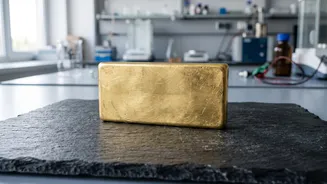
metal, without being detected by conventional purity checks. Investigators allegedly mixed one gram of rhenium powder with 7.83 grams of 24-carat gold. The resulting ornament was then taken to various testing centres and showrooms. Shockingly, the adulterated piece reportedly passed multiple tests, with X-ray fluorescence (XRF) machines at some showrooms identifying it as high-purity gold and a hallmarking centre allegedly certifying it as 22-carat (916) pure. However, the actual gold content was calculated to be only around 81.7%, closer to 20-carat purity.
Why Rhenium is a Problem
Rhenium is a rare, silvery-white metal with one of the highest melting points and densities of all elements. Its density is approximately 21 g/cm³, even higher than pure gold's 19.3 g/cm³. This is precisely what makes it a sophisticated adulterant. Standard purity checks often rely on density and weight. Because rhenium is so heavy, it can be mixed with gold to increase an ornament's total weight without setting off alarms in some testing machines. The investigation suggested the supply chain for this powder could trace back to China, with agents claiming it can be mixed in proportions up to 25% without being flagged by common testing methods. While rarer than gold, rhenium is significantly cheaper, creating a huge financial incentive for fraud. A buyer could lose thousands of rupees on a single piece, paying for 22-carat gold but receiving a much less valuable item.
How Gold Purity is Supposed to Work
To protect consumers from such fraud, the Bureau of Indian Standards (BIS) oversees a mandatory hallmarking system in most districts. When you buy hallmarked jewellery, you should find three marks: the triangular BIS logo, the purity grade (e.g., '22K916' for 91.6% purity), and a six-digit alphanumeric Hallmark Unique Identification (HUID) code. This HUID system, fully implemented since April 2023, is crucial. Each code is unique to a single piece of jewellery and is recorded in the BIS database. Consumers can use the 'BIS Care' mobile app to instantly verify the HUID, which should show details like the jeweller, the hallmarking centre, and the declared purity. This system is designed to provide end-to-end traceability and hold both the jeweller and the assaying centre accountable.
Are There Gaps in the System?
The Rajasthan experiment suggests that despite these robust measures, vulnerabilities may exist. The primary concern is the reliability of the XRF machines, or 'karatmeters', used in many showrooms and even some testing centres. These machines analyse the metal composition, but their effectiveness can depend on their calibration and the specific metals they are programmed to detect. The report claims that some machines failed to identify rhenium, instead misreading the composition and showing a higher gold content. This is not the first time concerns have been raised. Jewellers in other parts of India have previously voiced fears about adulterants like ruthenium, iridium, and osmium, which also have high densities and can complicate traditional testing methods.
How to Protect Yourself
While the news is concerning, consumers are not powerless. The HUID code remains your strongest tool. Always insist on hallmarked jewellery and verify the HUID using the BIS Care app before you pay. A mismatch in the app's data versus the item in your hand is a major red flag. Always buy from a BIS-registered jeweller and demand a proper invoice that clearly states the weight, caratage, and HUID number. If you have doubts about an item, you can get it tested at any BIS-recognised Assaying and Hallmarking Centre for a nominal fee. If a discrepancy is found, you can lodge a complaint with BIS, which can lead to the jeweller being required to provide compensation.