




A Groundbreaking Test in Sriharikota
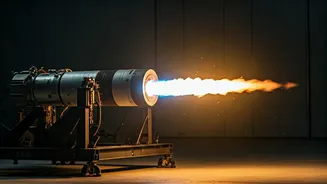
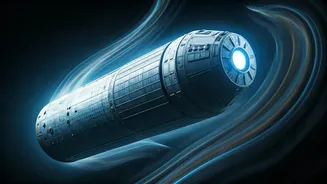
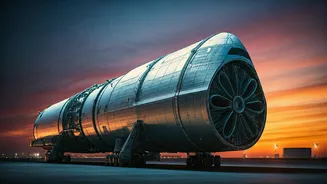
The Indian Space Research Organisation (ISRO) has successfully conducted the first ground test of the solid motor for its experimental Sub-Orbital Launch Vehicle for Experiments (SOLVE). This important test was carried out on July 3, 2026, at the Satish
Dhawan Space Centre in Sriharikota. ISRO confirmed that the motor performed exactly as expected, with all key parameters meeting the mission's requirements. This isn't just another routine firing; it's a foundational step that strengthens the technological backbone of the entire Gaganyaan programme, which aims to make India the fourth nation to independently launch humans into orbit.
What is the SOLVE Rocket?
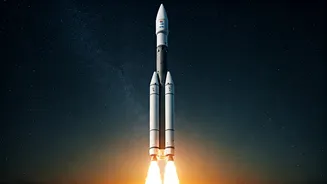
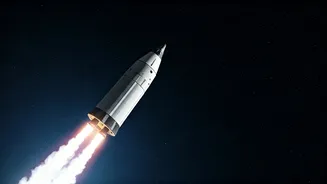
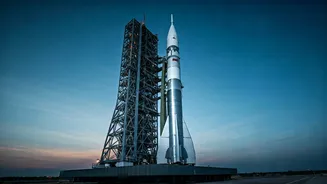
Think of SOLVE as a specialised tool for a very important job. It's a sub-orbital rocket, meaning it's not designed to go all the way into orbit. Instead, its purpose is to serve as a dedicated test platform for critical Gaganyaan systems. Specifically, SOLVE will be used to validate the crew module's parachute-based deceleration system. ISRO has ingeniously derived the solid motor for SOLVE from the reliable strap-on boosters used in its workhorse Polar Satellite Launch Vehicle (PSLV). However, it has been significantly modified with a slow burn-rate propellant and a new steering system to perfectly simulate the conditions needed for these specific tests.
Testing the Most Critical Moment
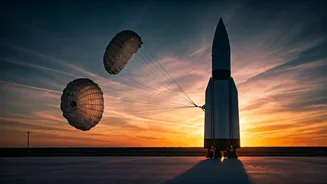
The most perilous part of any human spaceflight mission is arguably the return. To ensure the safety of its astronauts, ISRO must be absolutely certain that the crew module can return to Earth safely. This is where SOLVE comes in. During future test missions, SOLVE will carry a replica of the Gaganyaan crew module to an altitude of 10 to 17 kilometres. Once it separates from the rocket, a complex sequence of 10 different parachutes will deploy to slow the module's descent before it splashes down safely in the sea. Developing this dedicated test vehicle gives ISRO the flexibility to conduct repeated tests under various conditions, ensuring the recovery system is flawless.
The Big Picture: India's Gaganyaan Dream
This successful test is another confident stride in the marathon of preparations for Gaganyaan. The ambitious mission plans to launch a crew of two to three Indian astronauts into a 400 km orbit for a three-day mission before bringing them back safely. To achieve this, every single component must be 'human-rated', meaning it meets the highest standards of safety and reliability. The launch vehicle for the final mission will be the human-rated LVM3 rocket, a re-configured version of ISRO's most powerful launcher. Before astronauts board the capsule, ISRO has planned a series of precursor missions, including several uncrewed flights, to prove the readiness of every system.
What Comes Next on the Road to Space?
With the successful ground test of the SOLVE motor complete, the next phase will involve flight tests. These missions will see the SOLVE rocket actually launch the crew module to test the parachute system in real-world conditions. This achievement builds upon a series of other critical tests for Gaganyaan, including the qualification of the powerful CE20 cryogenic engine that will power the main LVM3 rocket's upper stage. Each successful test, from engine firings to parachute validations, pieces together the complex puzzle of human spaceflight. This step-by-step approach underlines ISRO's meticulous and safety-first approach to turning a national ambition into a historic reality.