





Fact: Oils Protect, Soften, and Add Shine
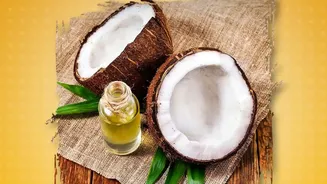
The most significant, scientifically-backed benefit of hair oiling lies in its ability to protect and condition the hair strand itself. Certain oils, most notably coconut oil, have a molecular structure that allows them to penetrate the hair shaft. This
is crucial because it helps reduce protein loss that occurs during washing and styling. Think of it as reinforcing your hair from the inside out, making it more resilient to daily wear and tear. One study found coconut oil could reduce protein loss from both damaged and undamaged hair. Other oils, which may not penetrate as deeply, act as 'sealing' oils. They coat the outside of the hair shaft, smoothing the cuticle layer. This has several benefits: it reduces friction between strands (leading to fewer tangles and less breakage), locks in moisture to fight frizz, and creates a glossy, shiny appearance. This protective barrier also helps shield hair from heat damage during styling.
How to Use Oils for Conditioning
To get the most out of hair oil’s conditioning properties, application is key. For deep protection, a pre-shampoo treatment, or 'pre-poo', is highly effective. Apply an oil like coconut oil to dry hair from the mid-lengths to the ends at least 30 minutes before washing. This gives the oil time to penetrate and guard the hair shaft from swelling with water and losing protein. For managing frizz and adding shine to styled hair, a sealing oil like argan or jojoba oil is a great choice. Use a very small amount—just a few drops warmed between your palms—and smooth it over the ends and any flyaways. The key is to start with less and add more only if needed, especially for those with fine hair, to avoid a greasy look. You should generally avoid applying heavy oils directly to the scalp unless you have a very dry scalp, as it can lead to buildup.
The Grey Area: Hair Growth Claims
This is where the marketing often outpaces the science. Most oils cannot make hair grow faster or reverse genetic hair loss. Your hair growth rate is primarily determined by genetics and overall health. However, there is one notable exception that has gained significant attention: rosemary oil. A 2015 clinical trial compared rosemary oil to 2% minoxidil (a well-known hair loss treatment) for people with androgenetic alopecia (pattern baldness). After six months, both groups showed a significant increase in hair count with no statistical difference between them. The rosemary oil group also reported less scalp itching. While this is a promising result, experts caution that it is just one study and it was compared to a lower strength of minoxidil, not the 5% version commonly used today. Other oils, like castor oil, are popularly believed to promote growth, but there is no strong scientific evidence to support this claim.
Focus on Scalp Health, Not Miracles
While oils may not be a miracle cure for baldness, they can contribute to a healthier scalp environment, which is the foundation for healthy hair growth. The act of massaging oil into the scalp can help improve blood circulation, which delivers more nutrients to the hair follicles. Some oils also possess anti-inflammatory or antimicrobial properties that can help soothe a dry, itchy scalp and maintain a healthy scalp microbiome. For instance, some research suggests coconut oil can help reduce dandruff and increase good bacteria on the scalp. By creating better conditions for the hair follicle, you are supporting the hair's natural growth cycle. This indirect benefit is often mistaken for direct growth stimulation. So, while an oil won't magically sprout new hairs, a healthy, well-nourished scalp is always a good thing for the hair you have.