




Meet the Lion Nebula
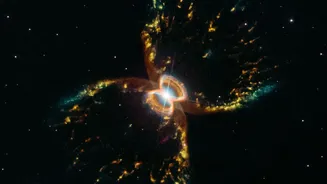
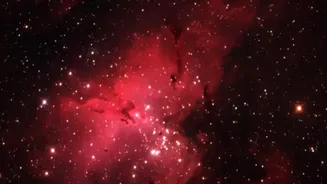
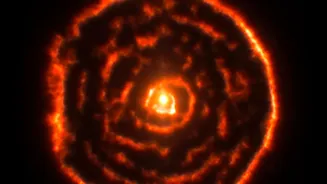
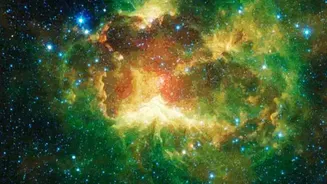
First, let's get acquainted with the subject. The nebula in question is technically named NGC 2392, but it earned the 'Lion Nebula' nickname because of its resemblance to a lion's head, complete with a flowing mane. It’s a planetary nebula, which is a slightly
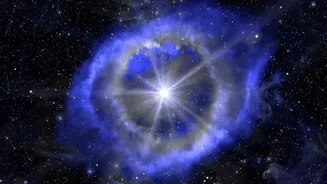
misleading name. It has nothing to do with planets; rather, it’s the glowing, expanding shell of gas and dust shed by a dying star similar to our own Sun. At the center of the nebula sits the stellar remnant, a hot, dense white dwarf. For thousands of years, this star has been puffing its outer layers into space, creating the complex structures Webb has now imaged so clearly. The entire event is temporary on a cosmic scale, expected to disperse in about 10,000 years.
The Science of the Glow: What Is Ionised Gas?
The reason nebulae like this glow so brilliantly is due to a process called ionisation. At its simplest, ionised gas is just a gas that has been supercharged with energy. The white dwarf at the heart of the Lion Nebula is incredibly hot, and it unleashes a torrent of powerful ultraviolet radiation. This radiation streams into the surrounding clouds of gas—mostly hydrogen—and is energetic enough to knock electrons away from their atoms. An atom that has lost an electron is called an ion. This process creates what astronomers call an H II region, a cloud of ionised hydrogen. When these electrons eventually recombine with the ions, they release light, creating the beautiful glow we see in telescope images.
Webb's Infrared Advantage
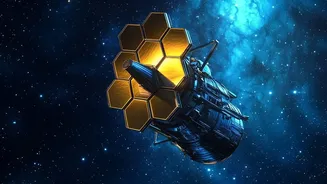
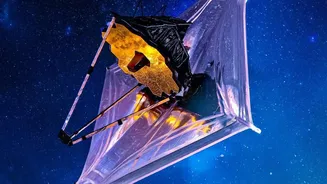
While the Hubble Space Telescope gave us beautiful views of the Lion Nebula in the past, the James Webb Space Telescope sees the universe in a different light—literally. Webb is designed to detect infrared light, which allows it to peer through clouds of cosmic dust that would obscure Hubble's visible-light view. This capability is crucial for understanding what’s happening inside a nebula. Using its Near-Infrared Camera (NIRCam) and Mid-Infrared Instrument (MIRI), Webb can highlight features that were previously hazy or hidden. Different filters on these instruments can be tuned to specific wavelengths of light emitted by different types of ionised elements, allowing scientists to create a detailed chemical and physical map of the nebula.
What the New Portrait Actually Shows
So, what new information does this portrait provide? Webb's image clearly distinguishes the different parts of the nebula and how they are interacting. The central 'face' of the lion is a bubble of ionised gas that is expanding outward, driven by the intense radiation from the central star. This expanding bubble acts like a snowplough, destroying dust in its path and creating the cavernous shells and rings we can now see in sharp detail. The 'mane' is a surrounding shell of dust being illuminated by the star. Webb's infrared vision highlights a haze of ionised gas and also reveals compact clumps of dust that have managed to survive the onslaught. These dense clumps are fascinating because they shield the material behind them, creating long, comet-like tails and preserving pockets of the original material shed by the star.
From a Pretty Picture to Deeper Physics
Understanding this process is about more than just one nebula. Studying how the radiation from a star ionises and shapes its surroundings is fundamental to understanding the life cycle of stars and the evolution of galaxies. The forces at play in the Lion Nebula—where energetic radiation pushes, heats, and sculpts gas and dust—are the same forces that can trigger the formation of new stars in other, larger nebulae or, conversely, blow away the raw material needed for star birth. Each new, detailed image from Webb is a snapshot in time that allows astronomers to test and refine their models of stellar evolution. It turns a beautiful, static image into a dynamic physics laboratory, providing crucial data on how stars interact with and enrich the interstellar medium with heavier elements over billions of years.