



Meet Andromeda: Our Galactic Neighbor
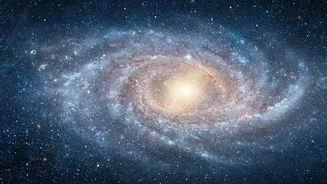
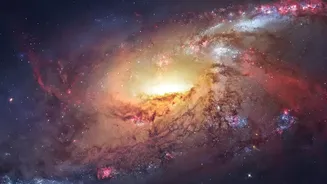
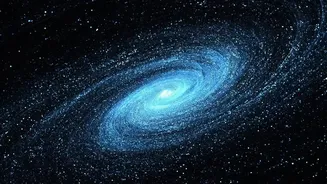
At just 2.5 million light-years away, the Andromeda galaxy, also known as M31, is our closest major spiral neighbor. It’s a behemoth, stretching over 220,000 light-years across and containing an estimated one trillion stars, making it significantly larger
than our own Milky Way. For centuries, it has been a favorite target for astronomers, offering a unique opportunity to study a galaxy like our own from the outside. Under dark skies, it's even visible to the naked eye as a faint, fuzzy patch of light. Andromeda and the Milky Way are on a collision course, destined to merge into a single giant galaxy in about 4 to 10 billion years, making the study of its current state all the more compelling.
A New Cosmic Blueprint
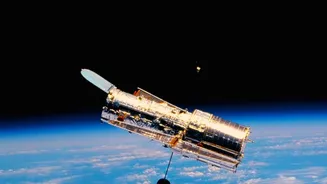
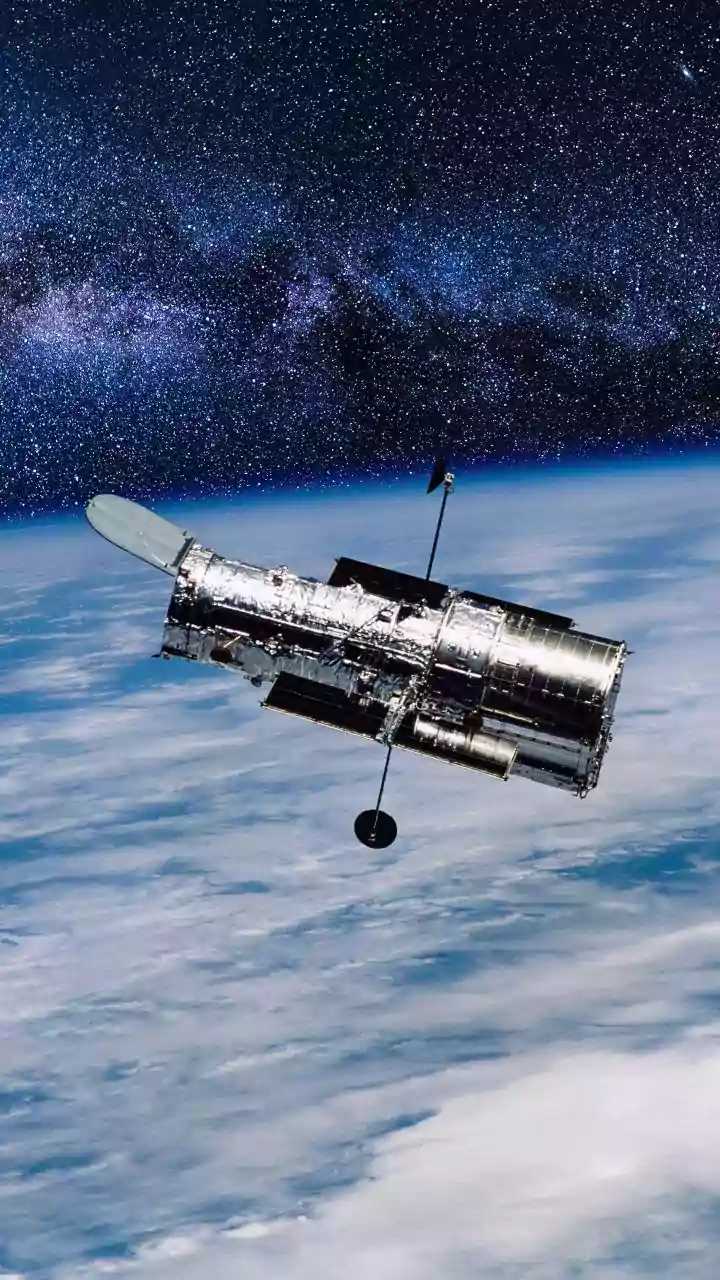
To understand how Andromeda is evolving, scientists embarked on an ambitious project called the Panchromatic Hubble Andromeda Treasury (PHAT). Using the Hubble Space Telescope, they mapped about two-thirds of the galaxy's sprawling disk, capturing images in six different wavelengths from ultraviolet to near-infrared. This comprehensive survey allowed astronomers to resolve and measure about 200 million individual stars. By analyzing the color and brightness of these stars, scientists can create a 'fossil record' of the galaxy's history. Massive, young stars burn hot and appear blue, but have short lifespans, while older, less massive stars are redder and live much longer. This means that regions shining with blue light are active stellar nurseries, where new stars have recently been born.
Rings of Fading Fire
The detailed mapping revealed a surprising picture. Instead of star formation being spread evenly across the galaxy, most of the recent activity is concentrated in distinct, ring-like structures. One of the most prominent is a massive ring of dust and gas located about 32,000 light-years from the galactic center. This is where Andromeda has been busiest building stars in its recent past. However, the data also shows that the star-making party is winding down. The new maps allowed scientists to trace star formation rates over the last 500 million years, revealing a steady decline. About 500 million years ago, Andromeda was creating stars at a rate of about one solar mass per year, but that has now dropped to just one-fifth of that amount. This slowdown is particularly sharp in the last 40 million years and is largely driven by the fading activity within that prominent star-forming ring.
The Story of a Galaxy Winding Down
This research paints a picture of a galaxy in transition, moving from a highly active state toward a quieter middle age. Around two billion years ago, Andromeda likely experienced a massive burst of star formation, probably triggered by a merger or interaction with another galaxy. The current slowdown seems to be a natural winding-down period following that intense era of creation. Scientists also investigated whether this decline was caused by a run-in with M32, one of Andromeda's small satellite galaxies. They found a zone of reduced star formation near M32, suggesting its gravitational influence may have disrupted gas clouds and created a dead zone, though more research is needed to confirm the link. By providing such a detailed history, these maps help astronomers refine their models of how all spiral galaxies, including our own, form and evolve over billions of years.