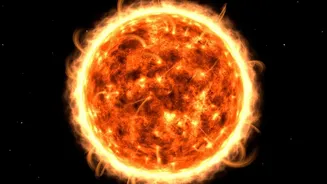



Our Sun gives life, but it also throws celestial tantrums. These solar storms can threaten our technology-dependent world. Now, a groundbreaking study using data from India’s Aditya-L1 mission reveals a crucial detail that could change everything.
India’s Unblinking Eye on the Sun
Launched
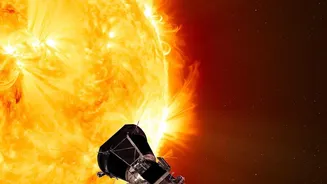
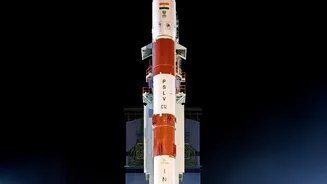
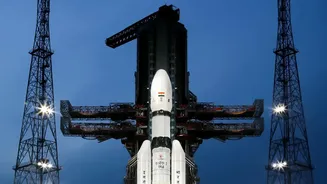
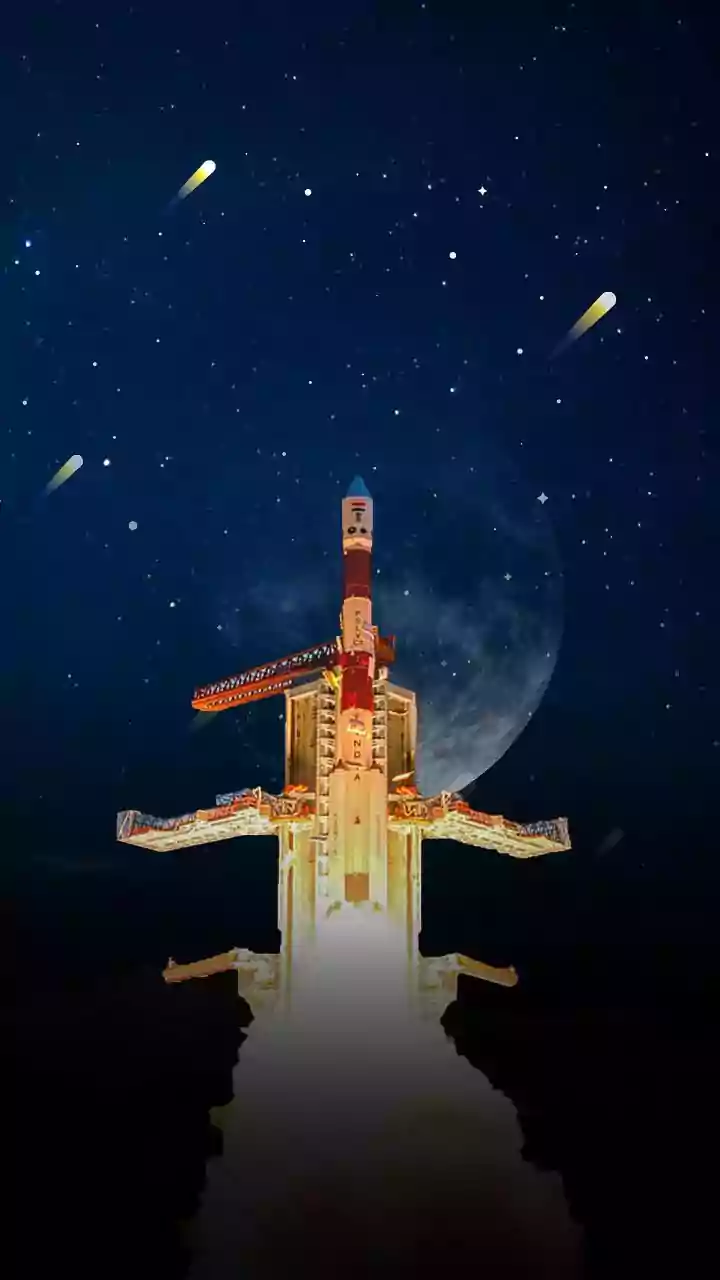
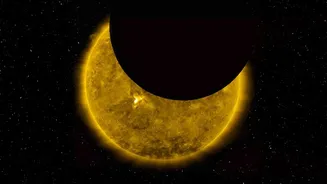
in September 2023, the Aditya-L1 is ISRO’s first dedicated solar observatory, a testament to India's growing prowess in space science. It is strategically positioned at the first Lagrange point (L1), about 1.5 million kilometres from Earth. This unique vantage point allows it to watch the Sun continuously, without the interruption of eclipses or Earth’s day-night cycle. Its primary mission is to observe the Sun's atmosphere and understand the dynamics of solar activity. The spacecraft is equipped with seven advanced instruments, but one, the Visible Emission Line Coronagraph (VELC), is at the heart of this new discovery. Designed by the Indian Institute of Astrophysics (IIA), VELC is engineered to study the Sun’s outermost layer, the corona, where violent eruptions are born.
When the Sun Erupts
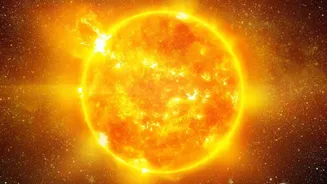
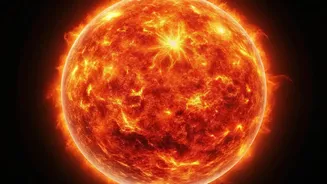
The Sun frequently releases enormous bursts of magnetised plasma called Coronal Mass Ejections, or CMEs. Think of them as giant, superheated clouds of gas and magnetic fields, travelling at immense speeds through space. While many CMEs miss Earth entirely, those that are aimed our way can have serious consequences. When a CME collides with Earth’s magnetic field, it can trigger a geomagnetic storm. These storms can disrupt and damage the very technology we rely on, from GPS navigation and telecommunications satellites to the power grids that light up our cities. For decades, scientists have worked to predict the arrival and intensity of these storms, but a key piece of the puzzle was missing.
It’s Not Just What, But How It Expands
For a long time, scientific models often assumed that CMEs expanded uniformly, like a perfect bubble pushing out in all directions. However, a new study published in 'The Astrophysical Journal Letters' by scientists at the IIA challenges this long-held belief. By analysing a CME that occurred on August 5, 2024, they made a remarkable finding. Combining data from Aditya-L1's VELC instrument with images from NASA's Solar Dynamics Observatory and 3D modelling, the team discovered that the eruption did not expand symmetrically. Instead, it expanded unevenly, developing an asymmetric shape with a distinct tilt. This is a crucial distinction. The shape of a CME matters because it affects how the eruption interacts with the solar wind—the constant stream of particles flowing from the Sun. An unevenly shaped eruption will experience different levels of drag, altering its speed and trajectory as it journeys toward Earth.
A Better Forecast for Space
This discovery, made possible by VELC’s unique ability to measure the velocity of plasma moving both toward and away from the observer, marks a significant step forward for space weather forecasting. Traditional coronagraphs primarily capture a two-dimensional image of a CME moving across the sky. But VELC uses spectroscopy to detect shifts in the wavelength of light—known as the Doppler effect—to build a three-dimensional picture of the eruption's movement. The study showed that a model assuming a uniform, bubble-like expansion could not explain the observed data. However, a model that incorporated an uneven, tilted expansion was a near-perfect match. By understanding the true shape and expansion dynamics of CMEs right from their birth near the Sun, scientists can create more accurate models to predict their arrival time and potential impact on Earth. This gives satellite operators, airlines, and power grid managers more reliable warnings to take protective measures.