







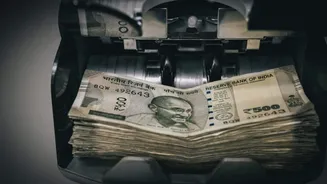

What the New Data Reveals
In a recent disclosure to the Lok Sabha, the Finance Ministry shared that 576 individuals reported a gross total income exceeding ₹100 crore in the Assessment Year 2025-26. This figure marks a significant increase of nearly 39% from the 415 individuals who
crossed this threshold in the previous year and represents a more than four-fold jump from the 142 individuals recorded five years ago in AY 2021-22. This data, based on income tax returns (ITRs), provides a rare, official glimpse into the very top of India's income pyramid. However, the ministry was quick to clarify that this data reflects annual income, not accumulated wealth, and that there is no statutory definition of a "billionaire" under Indian income tax law.
Income vs. Wealth: The Crucial Distinction
The ministry's clarification gets to the heart of a commonly misunderstood concept: the difference between income and wealth. Income is a flow—it's the money earned over a specific period, like a salary, business profit, or capital gains from selling an asset. Wealth, or net worth, is a stock—it is the total value of all assets (cash, property, stocks, bonds) minus all liabilities (debts, loans) at a single point in time. A person can have a very high income in one year (for instance, a startup founder after selling their company) without possessing the vast, diversified, and long-term asset base of a billionaire. Conversely, a billionaire's wealth might be tied up in company shares that generate a relatively modest taxable income in a given year. The government stopped officially tracking net worth when the Wealth-tax Act was abolished in 2016, making income tax data the primary tool for observing the financial elite.
Who Are the ₹100-Crore Earners?
While the data doesn't name names, we can infer the profiles of these high-income individuals. Past trends suggest that most are non-salaried. This group likely includes successful promoters who have sold stakes in their companies, top-tier financial traders who have had a stellar year, and partners at major law and consulting firms. It may also include a small number of ultra-successful professionals like celebrity actors, star athletes with massive endorsement deals, and a handful of top corporate CEOs whose compensation includes significant stock options exercised during the year. These individuals are part of what financial institutions might call High Net Worth Individuals (HNIs) or Ultra-High Net Worth Individuals (UHNWIs), a classification based on investable assets. However, their one-year income burst doesn't automatically place them in the same category as legacy billionaires whose wealth has compounded over decades.
Implications for Tax Policy and Inequality
This distinction between income and wealth is critical for policy debates around taxation and inequality. Taxing income is relatively straightforward through mechanisms like Pay As You Earn (PAYE) and capital gains tax. Taxing wealth is far more complex and politically contentious. The abolition of the Wealth Tax in 2015 was due to high collection costs and low yield. The current system relies on a progressive income tax structure and surcharges on high incomes to address inequality. This new data on the growing number of high-income earners provides policymakers with a clearer picture of income concentration at the top. It fuels the ongoing discussion about whether the current income tax regime is sufficient to address wealth disparity, especially when research suggests the wealthiest may report lower taxable incomes relative to their vast wealth.
A Sharper View of India's Economic Elite
Ultimately, the Finance Ministry's data does more than just provide a headline number; it encourages a more sophisticated understanding of India's economic elite. It separates the transient high-income earner from the established billionaire. The rapid growth in the ₹100-crore club, which has quadrupled in five years, suggests a dynamic economy where significant liquidity events, such as business sales and stock market gains, are creating substantial annual incomes for a growing number of individuals. While debates on inequality often reference billionaire lists, this income tax data offers a different, and equally important, metric. It tracks the flow of money at the highest level, providing a valuable, evidence-based counterpoint to discussions that often rely solely on estimates of net worth.