









A National Challenge in Numbers
Every year, thousands of families across India face the agony of a loved one going missing. The numbers are staggering and represent a persistent national challenge. According to the National Crime Records Bureau, hundreds of thousands of individuals
remain untraced, a figure that includes a large number of women and children. Behind each statistic is a story of uncertainty and a search effort that often stretches the resources of law enforcement agencies. These investigations traditionally rely on human intelligence, witness accounts, and physical evidence, methods that are crucial but can be slow and limited in scope when facing a problem of this magnitude. It is within this context that experts are now looking towards technology for a breakthrough.
The Expert Championing the Cause
At the forefront of this push is G. Deepak Raj Rao, a Professor at the esteemed National Forensic Sciences University. With a two-decade career spanning digital forensics, cyber security, and crime investigation, Rao is a credible voice in the field. His work involves training officials from the police, judiciary, and corporate sectors, giving him a unique insight into the practical challenges of modern investigations. His recent advocacy for using Artificial Intelligence is not a call for a far-off futuristic solution, but a practical proposal to augment and accelerate the work that police and investigators are already doing on the ground. By backing AI, Rao is lending his significant expertise to a technological solution for a deeply human problem.
How AI Can Join the Search
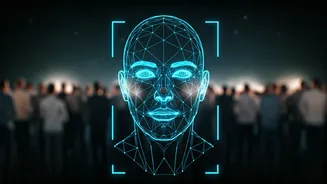
The term 'AI in search' often brings to mind web browsers, but in this context, the 'search' is far more literal. Rao argues that AI systems can process information at a scale and speed that is simply impossible for humans. One of the primary applications is the analysis of massive volumes of CCTV footage. Instead of an investigator manually watching hours of video from multiple cameras, an AI can scan thousands of hours in real-time, looking for a match, detecting movement patterns, and generating immediate alerts. Furthermore, in a world of digital footprints, AI can scan social media platforms for a missing person's last known activity, location tags, and online relationships to identify persons of interest or signs of distress. This transforms disparate data points into actionable leads.
Speed and Scale When Every Minute Counts
In the search for a missing person, particularly a child, the first 24 to 48 hours are considered critical. Rao emphasizes that AI's greatest advantage is its ability to produce results within minutes, whereas conventional methods might take days. This speed can be life-altering. In situations where police personnel are overstretched or are covering vast geographical areas, an AI tool can help prioritize search efforts by analysing terrain, weather conditions, and the individual's last known location and behavioural patterns. By quickly narrowing down the search area and providing investigators with a focused plan, AI acts as a powerful force multiplier, ensuring that limited human resources are deployed where they are most likely to yield results.
The Hurdles and Ethical Questions
Despite its immense potential, integrating AI into investigations is not a simple plug-and-play solution. Rao himself points out one of the major challenges: the absence of a common platform to connect information across different systems. For instance, a person admitted to a hospital in one state could be the individual police are searching for in another, but the data systems don't communicate. Beyond these logistical hurdles lie significant ethical considerations. The use of AI for surveillance raises valid concerns about privacy and data protection. Ensuring that these powerful tools are used responsibly, without bias, and with proper oversight will be just as important as developing the technology itself. The goal is to assist, not to create a system of unchecked surveillance.