







The Mountain's Blue Blanket
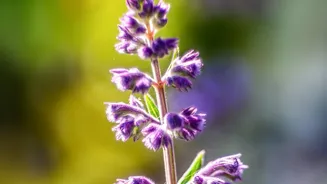
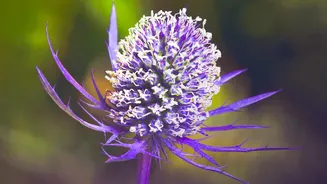
The flower at the heart of this story is the Neelakurinji, scientifically known as Strobilanthes kunthiana. It’s a shrub found in the shola forests of the Western Ghats, a UNESCO World Heritage Site. Its claim to fame is its unusual life cycle: it blooms
only once every 12 years in a mass flowering event that carpets entire hillsides in a vibrant purplish-blue hue. In fact, the Nilgiri Hills, which literally translate to 'Blue Mountains', are said to have earned their name from this very phenomenon. After it flowers, the plant dies, releasing seeds that will lie dormant for over a decade before sprouting to begin the cycle anew. This unique survival mechanism, known as gregarious flowering, ensures the continuation of the species.
A Flower of Deep Significance
The Neelakurinji is more than just a beautiful plant; it is deeply woven into the local culture and ecology. For the indigenous Paliyan tribal community of Tamil Nadu, the blooming cycle has traditionally been used to calculate their age. In ancient Tamil Sangam literature, the landscape was divided into five types, with 'Kurinji' representing the mountainous regions where the flower grows. Ecologically, the mass blooming provides an abundant source of nectar for honey bees, leading to a unique and prized honey. The event supports the entire local ecosystem, making the flower’s survival crucial for the region's biodiversity.
The Perils of Popularity
The very fame of the Neelakurinji has become its greatest threat. During blooming seasons, lakhs of tourists flock to areas like Munnar and the Nilgiris to witness the spectacle. Unfortunately, this has led to significant problems. Many visitors, wanting a souvenir, pluck the flowers or uproot the plants entirely, which prevents the natural seeding process required for the next generation to grow. The fragile shola grasslands get trampled, and the influx of people and vehicles disturbs wildlife and leaves behind plastic waste. These sensitive blooming areas are often corridors for wild elephants, and increased human presence has heightened the risk of human-wildlife conflict.
A New Legal Shield
In response to these growing threats, the Ministry of Environment, Forest and Climate Change has taken a decisive step. The Neelakurinji (Strobilanthes kunthiana) has been placed under Schedule III of the Wildlife (Protection) Act, 1972, officially listing it as a protected plant. This is not just a warning; it comes with serious consequences. Anyone caught plucking, uprooting, or destroying the plant can face a fine of ₹25,000 and imprisonment for up to three years. Furthermore, the cultivation of Neelakurinji and possessing the plant are also prohibited under the new order. Forest departments in Tamil Nadu and Kerala are now enforcing these rules strictly, restricting access to blooming sites and warning that trespassers will be penalised.
Preserving the Bloom for the Future
This legal protection is a critical move to ensure the survival of one of India's most unique natural heritage events. The last major bloom occurred in 2018, with the next one widely anticipated around 2030. By classifying the Neelakurinji as a protected species, authorities hope to curb the destructive behaviour that has damaged its habitat in the past. The goal is to find a sustainable way to manage tourism, allowing people to appreciate the magical blue carpets from a safe distance without harming the ecosystem. Conservationists have welcomed the move, highlighting that it provides a much-needed legal backbone to protection efforts that were previously based on temporary warnings.