






A Lifeline Across the Void
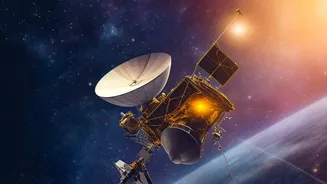
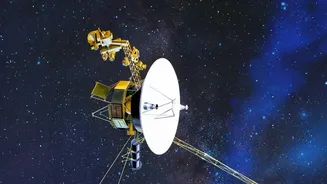
In a remarkable display of long-distance engineering, NASA has successfully prolonged the mission of Voyager 2, a spacecraft now cruising through interstellar space over 21 billion kilometres from Earth. Mission engineers at the Jet Propulsion Laboratory
(JPL) executed a clever power-saving manoeuvre that will allow the probe's remaining science instruments to continue operating longer than anticipated. This fix, nicknamed the “Big Bang,” involved carefully rerouting power from a safety system designed to protect the spacecraft from voltage fluctuations. By redirecting this small amount of reserved power, they have ensured that Voyager 2’s three active science instruments can collect data from the cosmos for at least another year, potentially until 2027. Without this intervention, the team would have been forced to shut down one of the instruments later this year.
The Race Against Fading Power
The Voyager probes are not immortal. Launched in 1977, both spacecraft are powered by radioisotope thermoelectric generators (RTGs), which convert the heat from decaying plutonium into electricity. This nuclear power source was essential for a mission venturing so far from the Sun. However, after nearly five decades, the plutonium is decaying, and the power supply on each probe is diminishing by about 4 watts per year. This steady decline has turned mission management into a delicate balancing act. Engineers must periodically shut down non-essential systems and even science instruments to conserve enough energy to keep the probes functioning and their fuel lines from freezing in the intense cold of deep space.
Two Twins on Different Paths
While the recent success focuses on Voyager 2, its twin, Voyager 1, is facing even greater challenges. As humanity's most distant object, currently over 25 billion kilometres away, it operates with even tighter power margins. In April 2026, an unexpected power dip forced mission controllers to switch off one of its key instruments, the Low-energy Charged Particles experiment (LECP), to prevent the spacecraft from triggering its own emergency shutdown. NASA now plans to apply the same power-saving fix to Voyager 1 in the coming months. Because Voyager 1 is farther and has less power, the procedure is considered riskier, which is why the team tested it on Voyager 2 first. There is even a slim hope that the manoeuvre could free up enough energy to one day switch the LECP instrument back on.
Why Keep Fighting for 1970s Tech?
One might wonder why NASA invests so much effort into maintaining nearly 50-year-old technology. The answer is simple: the Voyagers are irreplaceable. They are the only spacecraft to have ever entered interstellar space, the region between the stars beyond the protective bubble of our Sun, known as the heliosphere. Voyager 1 crossed this boundary in 2012, followed by Voyager 2 in 2018. Their instruments are sending back the first-ever direct measurements of the interstellar medium, providing invaluable data on cosmic rays, plasma density, and the galactic magnetic field. This is science that no other mission can currently perform, offering humanity its only firsthand taste of the galaxy beyond our solar neighbourhood.
A Legacy Etched in the Stars
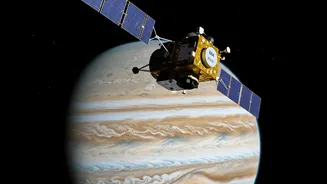
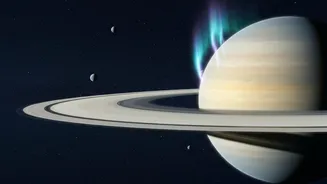
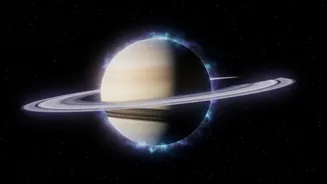
The Voyager mission was originally designed for a five-year “Grand Tour” of the outer planets. Taking advantage of a rare planetary alignment, the probes delivered our first close-up views of Jupiter and Saturn, and Voyager 2 became the only spacecraft to ever visit Uranus and Neptune. After completing this primary mission in 1989, their journey continued into the vast emptiness. Beyond their scientific instruments, the probes carry the Golden Records—gold-plated copper discs containing sounds and images selected to portray the diversity of life and culture on Earth. Conceived by a committee chaired by the late astronomer Carl Sagan, these records are a message in a bottle, destined to wander the Milky Way for billions of years, a testament to the curiosity of the species that sent them.