







Consistency Over Intensity
After a period of indulgence, it's tempting to jump into a high-intensity workout routine to 'make up' for it. However, this all-or-nothing approach often leads to burnout or injury. Research suggests that regular, moderate exercise can be more beneficial
for long-term health, including improved blood pressure and sustainable fat loss, compared to infrequent, intense sessions. The key is to build a habit that feels manageable and enjoyable. By choosing comfortable repetitions, you focus on creating a sustainable practice that strengthens your body gradually and safely, transforming fitness from a punishment into a positive part of your daily life.
The Foundation: Core Breathing
Before you even attempt an exercise, it's crucial to connect with your core through breath. Proper diaphragmatic breathing, or 'belly breathing', is the foundation of a strong core. This technique involves engaging the diaphragm, a large muscle at the base of your lungs, which in turn activates the deep abdominal and pelvic floor muscles. To practice, lie on your back with your knees bent. Place one hand on your belly and the other on your chest. As you inhale through your nose, allow your belly to rise while your chest remains relatively still. Exhale slowly. This not only calms the nervous system but also creates the internal pressure needed to stabilize your spine during movement.
Exercise 1: The Dead Bug
The Dead Bug is a fantastic exercise for developing core stability without straining the back. Lie on your back with your arms extended towards the ceiling and your knees bent at a 90-degree angle over your hips. Keeping your lower back gently pressed into the floor, slowly lower your right arm and left leg toward the ground simultaneously. Go only as low as you can without arching your back. Return to the starting position with control and repeat on the opposite side, lowering your left arm and right leg. The movement should be slow and deliberate, focusing on keeping the torso completely still. Aim for 10-12 repetitions on each side.
Exercise 2: The Glute Bridge
This exercise strengthens not just the glutes but the entire posterior chain, which is a vital part of your core. Lie on your back with your knees bent, feet flat on the floor hip-width apart, and your arms by your sides. Engage your core and glutes to lift your hips off the floor until your body forms a straight line from your shoulders to your knees. Avoid over-arching your back. Hold for a moment at the top, squeezing your glutes, before slowly lowering your hips back down to the starting position. This move helps counteract the effects of prolonged sitting. Aim for 3 sets of 15 repetitions.
Exercise 3: The Bird-Dog
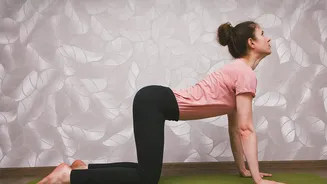
The Bird-Dog enhances balance and stability by challenging your core to prevent rotation. Start on all fours, with your hands directly under your shoulders and your knees under your hips. Engage your abdominals to keep your back flat. Extend your right arm straight forward and your left leg straight back simultaneously, maintaining a level pelvis. Imagine balancing a cup of water on your lower back. Hold for a few seconds before returning to the start. Repeat with the left arm and right leg. That's one repetition. Aim for 10 reps, moving with control.
Exercise 4: The Modified Plank
The plank is a classic core-strengthener, but starting with a modified version protects your lower back. Begin on your forearms and knees, ensuring your elbows are directly under your shoulders and your body forms a straight line from your head to your knees. Focus on pulling your belly button in toward your spine to engage your deep abdominal muscles and prevent your hips from sagging. Hold this position for 20-30 seconds, breathing steadily. As you get stronger, you can work your way up to a full plank on your toes and increase the duration.