


A Thin and Feeble Atmosphere
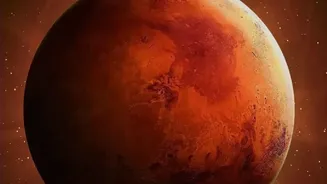
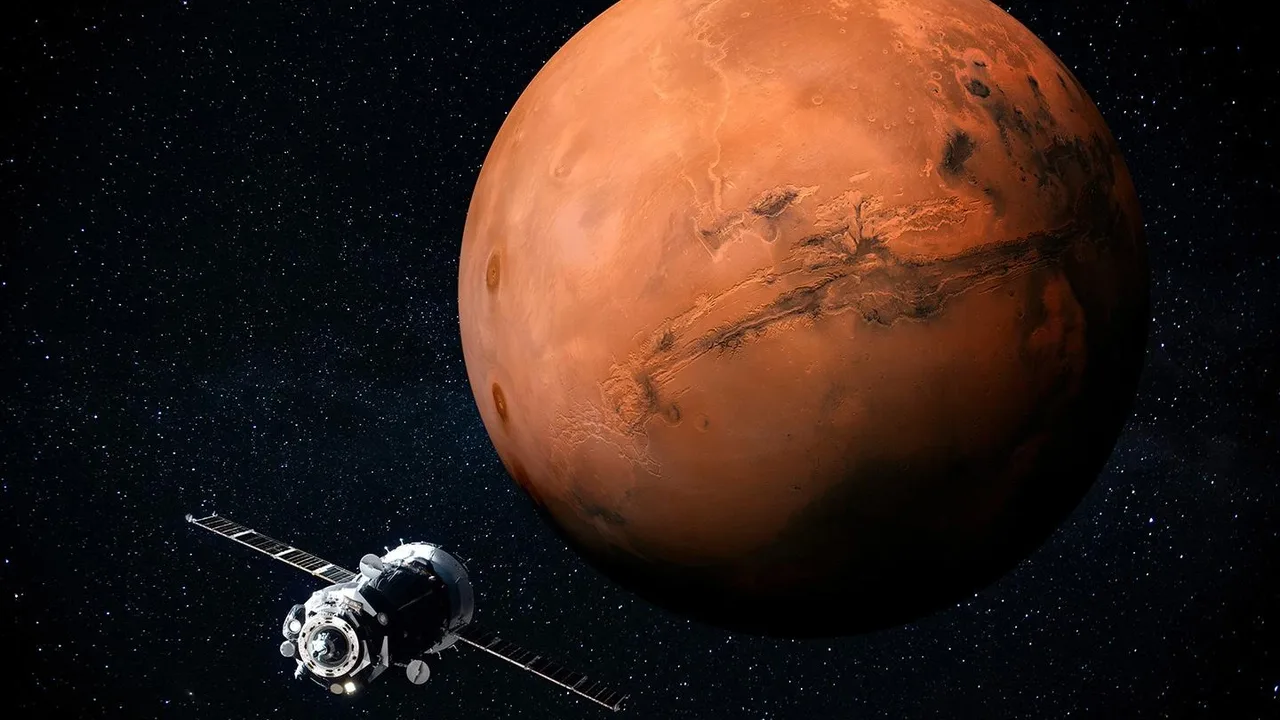
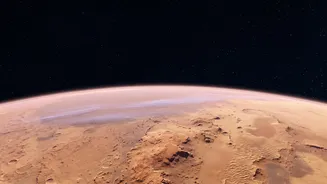
The primary culprit behind Mars's temperature volatility is its incredibly thin atmosphere. It's about 100 times less dense than Earth's, consisting of 95% carbon dioxide. While our planet's thick atmosphere acts like a cosy blanket, trapping the sun's
heat and keeping temperatures stable overnight, Mars has no such luxury. Its thin atmospheric layer simply cannot hold onto solar energy. As soon as the sun sets, any warmth absorbed by the surface radiates away into space almost instantly, causing temperatures to plunge dramatically. This explains the huge difference between day and night temperatures, which can swing by over 100 degrees Celsius in a single Martian sol, or day.
A Lopsided Journey Around the Sun
Unlike Earth's nearly circular path, Mars follows a noticeably elliptical, or egg-shaped, orbit around the sun. This means its distance from the sun varies significantly throughout its year, which lasts 687 Earth days. This orbital eccentricity has a profound effect on its seasons. The planet's seasons are also uneven in length. Mars is closest to the sun during summer in its southern hemisphere, making those summers short and intensely hot. Conversely, it's farthest from the sun during the northern hemisphere's summer, resulting in longer, cooler summers there. This lopsided seasonal intensity contributes massively to the planet-wide temperature extremes, making southern winters especially long and frigid.
The Power of Dust and Ice
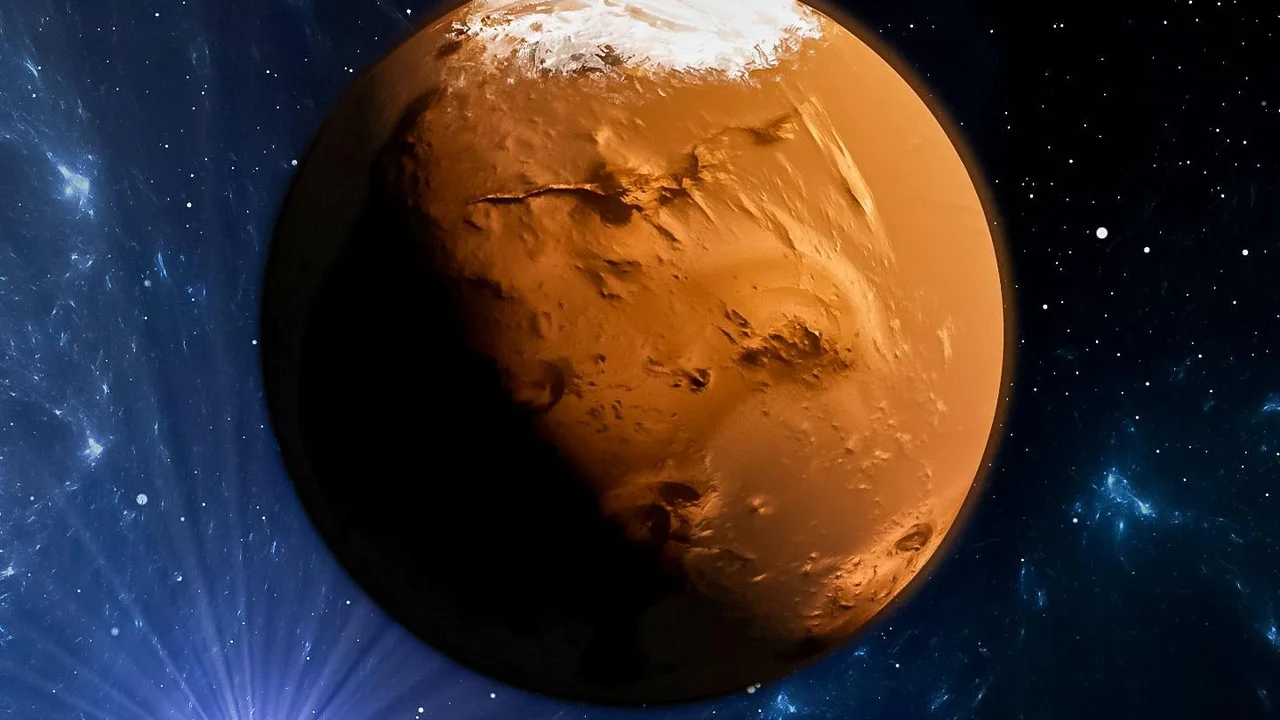
Two other features of the Martian landscape play a crucial role: dust storms and polar ice caps. Mars is prone to colossal dust storms that can sometimes grow to engulf the entire planet for months. These massive dust clouds block sunlight from reaching the surface, causing temperatures to drop. The planet’s polar caps are also a key climatic driver. Composed mainly of frozen carbon dioxide (dry ice) with a base of water ice, these caps grow and shrink dramatically with the seasons. In winter, up to a third of the atmosphere's carbon dioxide can freeze and deposit onto the polar caps, thinning the already sparse atmosphere and further reducing its ability to retain heat. In spring, this CO2 sublimates—turning directly from solid to gas—thickening the atmosphere and fueling strong winds.
Putting the Temperatures in Context
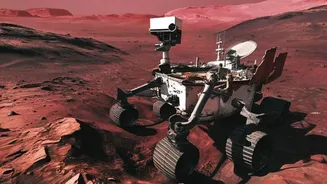
It's important to remember that these temperature readings are not universal across the planet. That pleasant 22°C (or 70°F) is a rare high, recorded on a summer afternoon near the equator. At the very same moment, the temperature at the poles could easily be below -100°C. In fact, winter temperatures at the poles can dive as low as -153°C. Even at the equator, the delightful daytime warmth vanishes after sunset, with temperatures plummeting to around -73°C overnight. This extreme range highlights the harsh reality of the Martian environment, a significant challenge that scientists and engineers must solve for future robotic and human exploration missions.