






The Blueprint for a Balanced Smoothie
Before tailoring a smoothie to a specific meal, it's crucial to understand the building blocks of any good meal replacement. A truly satisfying smoothie isn't just fruit and liquid; it's a balanced blend of macronutrients. Think of it as a complete meal in a glass.
To achieve this, you need four key components: a quality protein, a healthy fat, a source of fiber and complex carbohydrates, and a liquid base. Protein keeps you full and supports muscle maintenance. Healthy fats provide long-lasting energy and help your body absorb vitamins. Fiber slows digestion, preventing blood sugar crashes and keeping you satisfied for hours. Getting this combination right is the difference between a snack and a proper meal.
For Breakfast: The Sustained Energy Smoothie
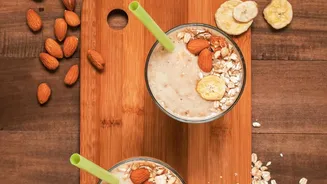
When replacing breakfast, your smoothie's primary job is to fuel your morning and keep you focused until lunch. This requires a strong emphasis on sustained energy. A good breakfast smoothie should contain a mix of protein, healthy fats, and complex carbs to prevent a mid-morning energy slump. Consider adding rolled oats, which provide fiber and complex carbohydrates for a slow release of energy. Pair this with a scoop of protein powder or a generous spoonful of Greek yogurt. For healthy fats, a tablespoon of almond butter or some chia seeds will provide satiety and help stabilize blood sugar levels throughout the morning. The goal is to create a drink that is both nourishing and substantial enough to prevent you from reaching for snacks an hour later.
For Lunch: The Satiety-Focused Smoothie
A smoothie that replaces lunch needs to be robust enough to power you through the afternoon. The main focus here should be on protein and fiber to ensure you feel full and satisfied. Aim for at least 15-20 grams of protein, which can come from sources like whey or plant-based protein powders, Greek yogurt, or even silken tofu. To boost the fiber content, load up on leafy greens like spinach or kale, which add nutrients without significantly altering the taste. Adding avocado provides both creaminess and a dose of healthy fats, further enhancing satiety. A lunch smoothie should be filling enough to prevent the classic 3 p.m. hunger pangs that can lead to unhealthy snacking.
Post-Workout: The Recovery and Repair Smoothie
After a workout, your body's needs are specific: it requires protein to repair muscle tissue and carbohydrates to replenish depleted energy stores (glycogen). A post-workout smoothie should be designed for quick absorption and effective recovery. Fast-digesting proteins like whey protein are an excellent choice. For plant-based options, pea or rice protein blends work well. Pair your protein with carbohydrates from fruits like bananas or mangoes, which help restock energy levels. Bananas are particularly beneficial as they also provide potassium, an important electrolyte lost through sweat. Adding anti-inflammatory ingredients like tart cherries or a pinch of turmeric can also help reduce muscle soreness.
Common Smoothie Mistakes to Avoid
Even with the best intentions, it's easy to make a smoothie that's less than ideal. A frequent mistake is overloading it with fruit or using fruit juice as a base, which can turn your healthy meal into a sugar-laden drink that spikes your blood sugar. Always opt for whole fruits and use water or unsweetened milk as your liquid. Another common error is skimping on protein and healthy fats. Without these, your smoothie won't keep you full, leading to hunger soon after. Finally, avoid adding too many ingredients. A good smoothie doesn't need everything from your pantry; focus on a balanced combination of 8-10 core components to ensure a great taste and texture without overwhelming your digestive system.