




The River's Ghost
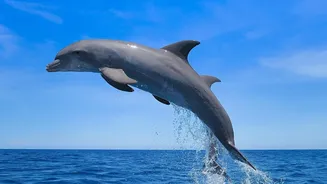
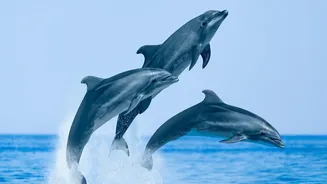
On the vast, slow-moving expanses of the Ganga and its tributaries, searching for the Gangetic river dolphin is an exercise in stillness. You won’t see the acrobatic leaps of their marine cousins. Instead, you wait for a subtle disturbance, a fleeting
glimpse of a long snout or a rounded back. Locally known as ‘Susu’ for the sound they make when they breathe, these creatures are shy and unobtrusive. They surface for only a second or two, taking a quick breath before disappearing back into the opaque, sediment-rich water. This elusive nature is precisely what makes a sighting so profound. It’s a reward not for speed or technology, but for the quiet, watchful patience that modern life so often asks us to discard. These dolphins are typically seen alone or in very small groups, making each encounter feel personal and rare.
A Life Lived in Sound
The Gangetic dolphin navigates a world of near-total darkness. Living in muddy river systems where sunlight cannot penetrate, they are functionally blind, with tiny eyes that can likely only detect the presence or absence of light. Instead of sight, they have perfected the art of echolocation, emitting a constant stream of high-frequency clicks and interpreting the echoes to build a sonic map of their surroundings. This allows them to hunt for prawns and fish in the murky depths. They are one of the oldest dolphin species in existence, a living fossil that has adapted perfectly to its environment. With a highly flexible neck and large flippers, they often swim on their sides, trailing a flipper along the riverbed to feel for prey hiding in the mud. This unique adaptation showcases an incredible evolutionary journey, a creature shaped entirely by the river it calls home.
An Endangered Existence
Despite its remarkable adaptations, the Gangetic dolphin is in grave danger. Classified as ‘Endangered’ by the IUCN, its population has dwindled to just a few thousand individuals. The threats are almost entirely man-made. The construction of dams and barrages has been the most devastating, fragmenting their habitat and isolating populations, which prevents them from breeding and finding food. The river, their lifeblood, is increasingly choked with industrial effluents, chemical pesticides, and plastic waste. Furthermore, these dolphins often get accidentally entangled in fishing nets set for other species, leading to drowning. The constant noise from cargo vessels and river traffic also interferes with their vital echolocation, leaving them disoriented in their own homes.
The Slow Current of Conservation
Recognising its importance as a barometer for river health, India declared the Gangetic dolphin its National Aquatic Animal in 2009. This designation has galvanised conservation efforts. The Vikramshila Gangetic Dolphin Sanctuary, a 60-kilometre stretch of the Ganga in Bihar, stands as the only protected area in the country specifically for this species. More recently, the government launched 'Project Dolphin' in 2020, a comprehensive initiative to protect both riverine and oceanic dolphins. This project focuses on scientific population monitoring, reducing pollution, and involving local communities. Programmes training 'Dolphin Mitras'—local volunteers who aid in conservation and awareness—are helping to build a grassroots defence network for the species. The establishment of the National Dolphin Research Centre in Patna is another significant step, providing a hub for the scientific study needed to guide these efforts.