





The Instability of Ice and Rock
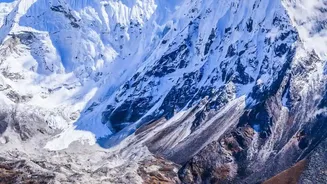
One of the most visible and dangerous impacts of a warming planet in Nepal is the rapid melting of its glaciers. The Himalayas are warming at a rate nearly twice the global average, causing ancient ice to retreat and thin at an alarming pace. This isn't
just about losing scenic ice caps; it has profound and immediate consequences. As glaciers shrink, they leave behind unstable terrain and vast amounts of meltwater that collect in mountain valleys, forming new and often precarious glacial lakes. At the same time, the permafrost—the frozen soil and rock that acts like a natural cement holding steep slopes together—is thawing. This degradation weakens the structural integrity of the mountains themselves, making them far more susceptible to catastrophic rock and ice avalanches. Scientists note that this thawing exposes ground that has been frozen for thousands of years, fundamentally altering the stability of the landscape.
The Threat of Glacial Lake Outburst Floods
The combination of melting glaciers and thawing permafrost has given rise to a specific and deadly hazard: Glacial Lake Outburst Floods, or GLOFs. These events occur when the natural dams, often made of loose rock and sediment (moraines), that contain glacial lakes suddenly fail. The trigger can be a landslide, an avalanche crashing into the lake, or simply the immense pressure of the growing body of water. When these dams burst, they unleash a torrent of water, ice, and debris that rushes down narrow mountain valleys at incredible speeds. Nepal has already experienced numerous GLOFs, which have destroyed villages, wiped out critical infrastructure like roads and hydropower plants, and claimed lives. Scientific bodies have identified at least 21 potentially dangerous glacial lakes in Nepal alone, highlighting a risk that is escalating as temperatures continue to climb.
Erratic Weather and Cascading Hazards
Climate change is also disrupting weather patterns, making them more extreme and unpredictable. The reliable rhythm of the monsoon is being replaced by erratic rainfall, characterized by periods of intense, concentrated downpours followed by long dry spells. This volatility wreaks havoc on agriculture, making it difficult for farmers to plan their planting and harvesting seasons. The intense rainfall on slopes already destabilized by melting ice and permafrost dramatically increases the frequency and severity of landslides and flash floods. These are not isolated incidents but part of a chain reaction of cascading hazards. A recent catastrophic flood in August 2026 that killed over 1,300 people was attributed by scientists to a complex series of climate-linked factors, including record heat, unusual preceding snowfall, and the collapse of a mountain slope preconditioned for failure by long-term warming.
A Crisis for Communities and Economies
The environmental instability translates directly into a human and economic crisis. Mountain communities, many of them indigenous and with limited resources, are on the front lines, facing threats to their homes, livelihoods, and cultural practices. Agriculture, a cornerstone of the rural economy, is threatened by both water scarcity during droughts and crop destruction from floods and landslides. The vital hydropower sector, which Nepal relies on for electricity and revenue, is also at risk, with infrastructure vulnerable to damage from powerful floods. Beyond the mountains, the impacts ripple downstream. The Himalayan glaciers are the source of major rivers that provide water for hundreds of millions of people across South Asia. Changes in meltwater patterns threaten water security for vast populations far beyond Nepal's borders, making this a regional issue of critical importance.