



Meet PRIMA, NASA's New Cosmic Detective
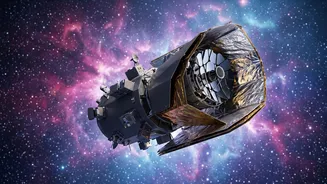
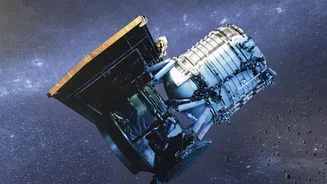
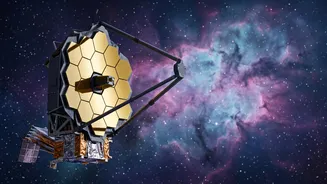
NASA recently announced it is moving forward with the PRobe far-Infrared Mission for Astrophysics, or PRIMA. This new space telescope is designed to peer into the universe in far-infrared light, a spectrum that is largely invisible to other telescopes,
including the famed James Webb Space Telescope (JWST). PRIMA's core objective is to unravel some of the biggest mysteries of cosmic evolution. It will investigate how stars and planetary systems are born, trace the growth of galaxies and their supermassive black holes, and understand how essential elements like water are distributed across the cosmos. By studying the faint heat signals from cold dust and gas, PRIMA will essentially look at the raw materials that build planets and stars, providing a more complete picture of how the universe came to be.
A New 'Middle Class' of Mission
PRIMA is not just another telescope; it represents the first of a new category of missions for NASA called 'Probe Explorers'. This new class was created to fill a strategic gap between the agency's smaller, more focused 'Explorer' missions and its massive, multi-billion-dollar 'flagship' observatories like the JWST. The idea for the Probe-class missions came from a recommendation in the 2020 Decadal Survey, a report where the scientific community outlines its top priorities for the coming decade. These missions are intended to be ambitious and scientifically powerful, but with a firm cost cap that prevents them from consuming too much of the agency’s budget. PRIMA was selected over another concept, the Advanced X-ray Imaging Satellite (AXIS), to pioneer this new approach.
The $1.2 Billion Perspective
The mission's project cost is capped at $1.2 billion, a figure that does not include the expense of launching it into space. While certainly a colossal sum of money, it is significantly more constrained than the budgets of NASA's most famous observatories. The James Webb Space Telescope, for example, had a final development and operations cost to NASA of around $10 billion. The Hubble Space Telescope, launched in 1990, had an initial cost of $1.5 billion, but its total lifetime cost, including servicing missions and adjusted for inflation, is estimated to be closer to $16 billion. Even the Perseverance rover, currently exploring Mars, came with a price tag of around $2.7 billion. In this context, PRIMA's budget appears far more modest.
Scientific Bang for the Buck
PRIMA's value proposition lies in its ability to answer critical questions that other telescopes cannot. Its 1.8-meter (5.9-foot) mirror will survey the sky in far-infrared wavelengths, bridging a crucial gap between what the JWST can see in the near- and mid-infrared and what ground-based radio telescopes like ALMA can detect. This specific capability will allow scientists to quantify the role of water in the formation of planets and measure the building blocks of life, like carbon and oxygen, in the disks where new worlds are born. As one expert noted, these are science questions that JWST simply cannot address because the necessary spectral lines only appear in the far-infrared part of the spectrum. PRIMA is therefore not a replacement or competitor to Webb, but a vital and complementary partner in exploration. Scheduled to launch no earlier than 2033 for a five-year mission, it promises to deliver high-impact science without the budget-breaking costs of a flagship mission.