



The Foundation: Stability vs. Instability
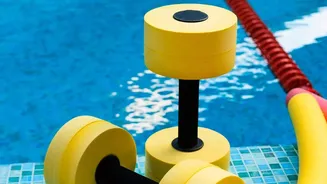
The most significant difference in body position comes down to the surface you're on. In aqua yoga, you are immersed in water, often in a pool. The water's natural buoyancy supports your body, reducing the impact on your joints. This creates a stable,
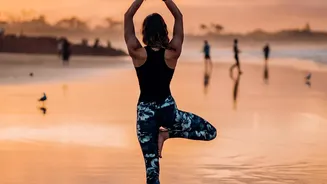
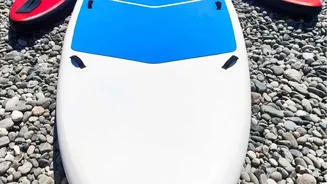
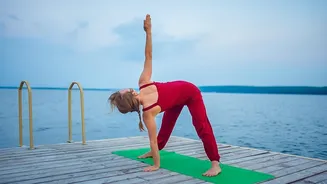
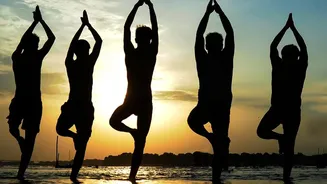
forgiving environment. Your body position is about working with the water's gentle, 360-degree resistance. You can explore deeper stretches and hold poses with less strain because the water helps hold you up. Poses are often modified to leverage the pool walls or floor for support, allowing for greater range of motion without fear of falling. In contrast, stand-up paddleboarding (SUP) and SUP yoga place you on top of the water on an unstable board. Your body's primary goal is to create stability where there is none. This requires constant, subtle adjustments in your posture, from your feet to your head, just to stay balanced.
Core Engagement: Resistance vs. Reaction
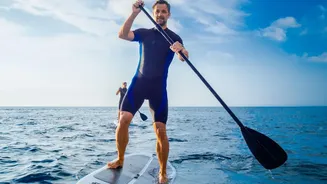
Both activities are fantastic for core strength, but they engage it differently. During aqua yoga, your core works against the hydrostatic pressure of the water. Every movement you make is met with gentle, consistent resistance, which helps to build strength and tone your muscles in a low-impact way. Think of it as a constant, supportive challenge. On a paddleboard, your core is in a constant state of reaction. It fires relentlessly to stabilize your body against the board's wobble and the water's movement. Even the most basic standing position requires significant engagement of your abdominal muscles, obliques, and lower back to maintain balance. When you add yoga poses to the mix, this demand for core stability intensifies dramatically, as any imbalance can send you into the water.
Stance and Alignment: Grounded vs. Responsive
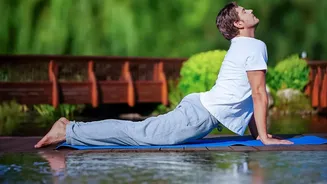
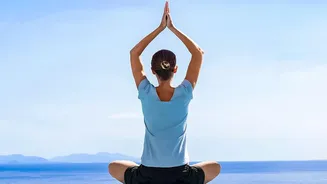
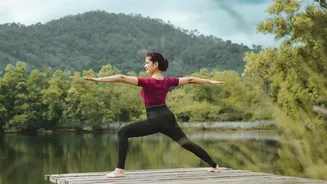
In aqua yoga, your stance can be similar to land-based yoga, but you have the freedom to move more fluidly. The water supports your spine and reduces gravitational pull, which can make achieving certain alignments easier and more comfortable, especially for those with joint pain or limited mobility. You can sink deeper into poses like Warrior II, feeling more flexible and relaxed. On a paddleboard, proper alignment is critical for balance. A key change in body position is adopting a wider stance than you would on land. For example, poses like Mountain Pose or warrior stances are modified to have feet at least hip-width apart to create a more stable base. Your body must learn to find its center of gravity over the board, constantly making micro-adjustments in your feet, knees, and hips to stay upright.
Focus of the Body: Full-Body Support vs. Dynamic Control
Aqua yoga offers a holistic, full-body workout where every limb works against the water's resistance. The buoyancy reduces body weight, allowing you to focus on mobility and flexibility in the joints with minimal pressure. It's a practice that emphasizes gentle strength-building and a greater range of motion throughout the entire body. Paddleboarding, especially when paddling, places a heavy emphasis on the upper body and core. The power for each paddle stroke should come from torso rotation and core engagement, not just the arms. In SUP yoga, the focus shifts to the legs and feet, which are your primary connection to the board. They must constantly grip and adjust to maintain balance, while the core acts as the central stabilizer for every pose you attempt. This makes it a powerful combination of balance, core strength, and concentration.