



The Weight of a Legend
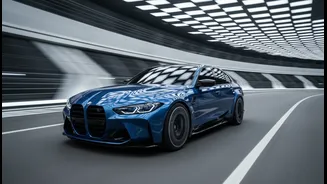
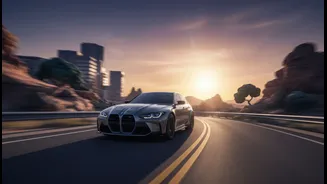
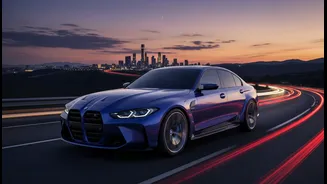
The letters ‘M3’ carry more weight than almost any other nameplate in the automotive world. Since the first model debuted, it has stood for a specific kind of performance. It wasn't just about being the fastest in a straight line; it was about balance,
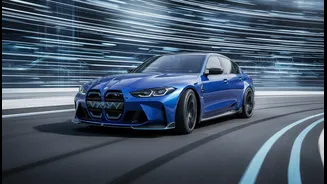
feedback, and the connection between the driver, the car, and the road. The sound of a high-revving inline-six, the feel of the chassis rotating perfectly through a corner—these are the sensory experiences that built the M3 legend. Any successor, regardless of its powertrain, must be measured against this incredibly high bar. For enthusiasts, a car that simply posts impressive acceleration numbers but lacks this tangible character wouldn't be a true M3.
The Challenge of Electric Performance
Early performance electric vehicles (EVs) have often been criticized for feeling one-dimensional. Their instant, brutal acceleration is thrilling, but it can come at the cost of driver engagement. The immense weight of batteries often compromises agility, and the lack of a traditional engine sound can leave the experience feeling sterile. This is the core challenge BMW M faces. Simply dropping powerful electric motors into a car would be easy, but it wouldn't create an M3. In fact, BMW M's CEO, Frank van Meel, has openly stated they are not interested in chasing absurd four-digit horsepower figures, as control and sustained performance are far more important. The mission is not just to make a fast EV, but to engineer the soul of M Division into a completely new format.
A Blank Slate Opportunity
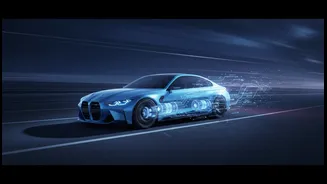
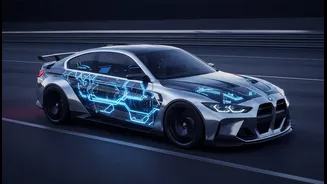
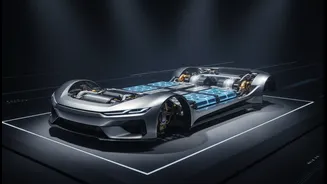
Instead of a limitation, BMW sees the shift to electric as a chance to redefine performance from the ground up. This starts with the 'Neue Klasse' (New Class) platform, a dedicated EV architecture launching in 2027 that is not compromised by the needs of a combustion engine. This clean-sheet design allows for radical new solutions. The most significant is a quad-motor setup, with one electric motor powering each wheel independently. This eliminates the need for traditional driveshafts and differentials, allowing for instantaneous and infinitely variable torque distribution. This level of control is simply not possible with a gasoline-powered car and is the key to making a heavy EV feel impossibly agile.
Software Is the New Soul
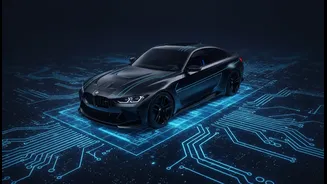
The hardware is only half the story. The true magic behind the electric M3 will be its software. At the center of it all is a new centralized control unit that BMW has dubbed the 'Heart of Joy'. This super-computer integrates all driving dynamics—powertrain, braking, steering, and chassis control—into a single, cohesive system that can process information ten times faster than previous systems. This allows the quad-motors to react in milliseconds, managing traction, stability, and rotation with a precision that was previously unimaginable. This software will be responsible for creating the car's character, allowing engineers to program a sense of rear-wheel-drive playfulness, unshakable all-wheel-drive grip, and everything in between. It's how BMW plans to engineer feeling and feedback back into the driving experience.
The Road Ahead
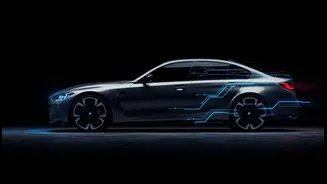
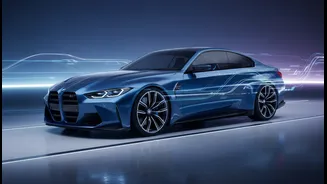
The first fully electric M3, previewed by the M Concept Neue Klasse, is expected to arrive around 2027. Interestingly, BMW has confirmed it will be sold alongside a new internal combustion M3, giving buyers a clear choice between two very different philosophies. The electric M3 will simply be called 'M3', not 'iM3', a deliberate choice by BMW to signal that it is not a lesser version but the next chapter for the iconic name. Its success will not be measured by its 0-to-100 km/h time, which will undoubtedly be spectacular. Instead, it will be judged by its ability to put a smile on a driver's face on a winding road—to prove that the soul of performance can survive, and even thrive, in an electric future.