

The Mystery of the Missing Minis
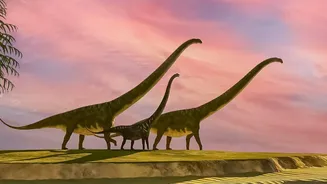
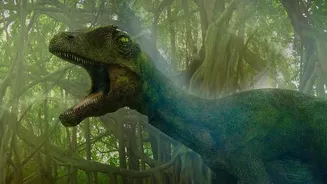
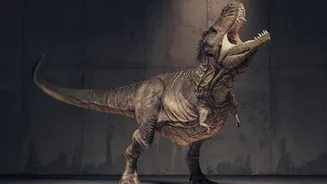
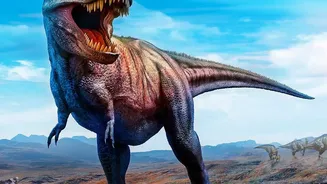
For over 150 million years, dinosaurs dominated nearly every corner of the Earth. They came in all shapes and sizes, from the colossal Argentinosaurus to swift predators like Tyrannosaurus rex. Yet, paleontologists have consistently noted a strange gap
in the fossil record. While modern ecosystems are dominated by small animals—think mice, sparrows, and lizards—the smallest known non-avian dinosaurs were surprisingly large, weighing around 400 grams, or roughly the size of a large rabbit. This absence is odd because, in most animal groups, small-bodied species are the most common. A new study published in the journal Evolution sought to understand why. Researchers used mathematical models based on how animals use energy to predict the range of possible body sizes. The models worked for mammals and birds, but failed for dinosaurs, consistently predicting that tiny, mouse-sized dinosaurs should have existed. The fact that they didn't suggests something other than their own biology was holding them back.
A World Already Occupied
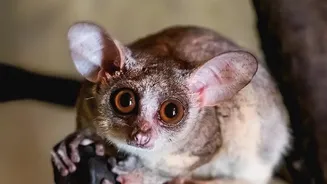
The study proposes a compelling new theory: dinosaurs never evolved to be tiny because those ecological niches were already taken. And who were these occupants? Our own furry, warm-blooded relatives. During the Mesozoic Era, while dinosaurs ruled the day as large herbivores and predators, early mammals were thriving in the undergrowth. Most were small, shrew-like creatures, many weighing less than 100 grams. They were likely nocturnal, insect-eating, and seed-gathering animals that were perfectly adapted to life at a miniature scale. The researchers suggest that these early mammals were so successful in these small ecological roles that they effectively locked dinosaurs out. There was simply too much competition for dinosaurs to shrink down and exploit the resources available to creatures the size of a mouse or shrew.
Flipping an Old Evolutionary Script
This idea turns a classic evolutionary story on its head. For decades, the prevailing theory was that mammals lived in the shadow of the dinosaurs, kept small and unspecialized by the giant reptiles that occupied all the major ecological roles. It was thought that only after an asteroid wiped out the non-avian dinosaurs 66 million years ago were mammals finally free to diversify into larger forms. While it is true that dinosaurs prevented mammals from becoming large, this new research suggests the reverse was also true: small mammals may have prevented dinosaurs from becoming small. It was a two-way street of competition. Dinosaurs controlled the 'large animal' jobs, and mammals had a firm grip on the 'small animal' market. This dynamic helps explain why we don't find fossils of hummingbird-sized dinosaurs, but we do find plenty of fossils of tiny, contemporaneous mammals in the same rock layers.
What This Means for Our Own Story
This reframing is more than just a piece of dinosaur trivia; it provides a richer context for the story of mammalian, and ultimately human, evolution. Our ancestors weren't just passively waiting for their turn. They were active participants in a complex global ecosystem, carving out their own successful way of life and holding their own against the most dominant animals the planet has ever seen. The traits that allowed them to thrive at a small size—like fast metabolisms and the ability to hide in burrows—were the very things that likely helped them survive the mass extinction that killed the dinosaurs. While the giants perished, the small, adaptable mammals that had been outcompeting tiny dinosaurs for millions of years were poised to inherit the Earth and embark on a new evolutionary journey, one that eventually led to the vast diversity of mammals we see today, including ourselves.