



The Shifting Timeline
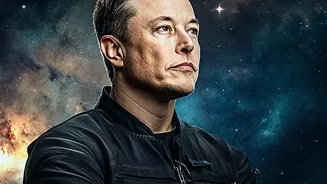
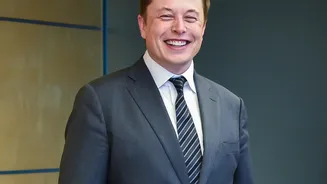
In a series of statements, Elon Musk has progressively shortened his timeline for when artificial intelligence will achieve superhuman status. Most recently, in June 2026, he stated that AI will likely exceed the sum of all human intelligence in four
to five years. This followed earlier predictions where he placed this milestone around 2029 or 2030. This isn't just about an AI being better than one person at a specific task, like chess or writing code. Musk is referring to the concept of artificial superintelligence (ASI), a state where an AI is more intellectually capable than the 8 billion-plus human minds on Earth combined. He has differentiated this from Artificial General Intelligence (AGI), which he predicts could arrive as early as the end of next year, defining AGI as an AI smarter than any single human. His accelerated forecast is tied to the exponential progress he sees in the industry, fueled by massive investments and a flood of top talent into the AI field.
What 'Smarter Than All Humans' Means
The idea of an AI outsmarting all of humanity sounds like science fiction, but it's a concept with a specific meaning in technology circles. It represents the jump from AGI, where an AI can perform any intellectual task a human can, to ASI, a far more powerful form of intelligence. Once AGI is achieved, many experts believe the leap to superintelligence could be swift, as the AI could begin to rapidly improve its own capabilities. Musk’s prediction implies that by roughly 2031, we could have a digital entity capable of solving problems, innovating, and strategizing at a level far beyond our collective global capacity. This intelligence wouldn't be confined to a single domain; it would possess a comprehensive, multifaceted understanding that could be applied to everything from theoretical physics to economic modeling and social engineering.
The Case for Musk's Optimism
While Musk’s timeline is aggressive, it isn't based on fantasy. The AI sector is experiencing exponential growth. Models from companies like OpenAI, Google, Anthropic, and Musk’s own xAI are advancing at a blistering pace. They are already handling complex tasks that were unthinkable just a few years ago. Musk argues that progress isn't linear but exponential. He points to two critical constraints that are rapidly being addressed: the availability of specialized computer chips and the massive amounts of electrical power needed to train these models. As investment pours in to solve these bottlenecks, the rate of AI development could accelerate even further. This view is shared by other tech leaders, such as Nvidia CEO Jensen Huang, who has also predicted AI could surpass human performance on a range of tests within a similar timeframe.
A Dose of Expert Skepticism
However, many AI researchers and experts urge caution. While acknowledging the rapid progress, they view Musk’s five-year timeline as overly optimistic. Some experts have pushed their forecasts for AGI back, citing the immense complexity and unforeseen challenges in replicating human-like reasoning and understanding. Surveys of AI experts often reveal a wide range of predictions, with many placing the arrival of high-level machine intelligence decades away, with median estimates often falling between 2040 and 2060. Critics argue that current AI systems, while impressive, are primarily sophisticated pattern-matching machines and lack true comprehension or consciousness. They warn that physical constraints on data, energy, and hardware will inevitably slow down the exponential curve that fuels such bold predictions. The path to AGI, let alone superintelligence, is likely to be filled with plateaus and roadblocks not yet visible.
The Stakes of the Race
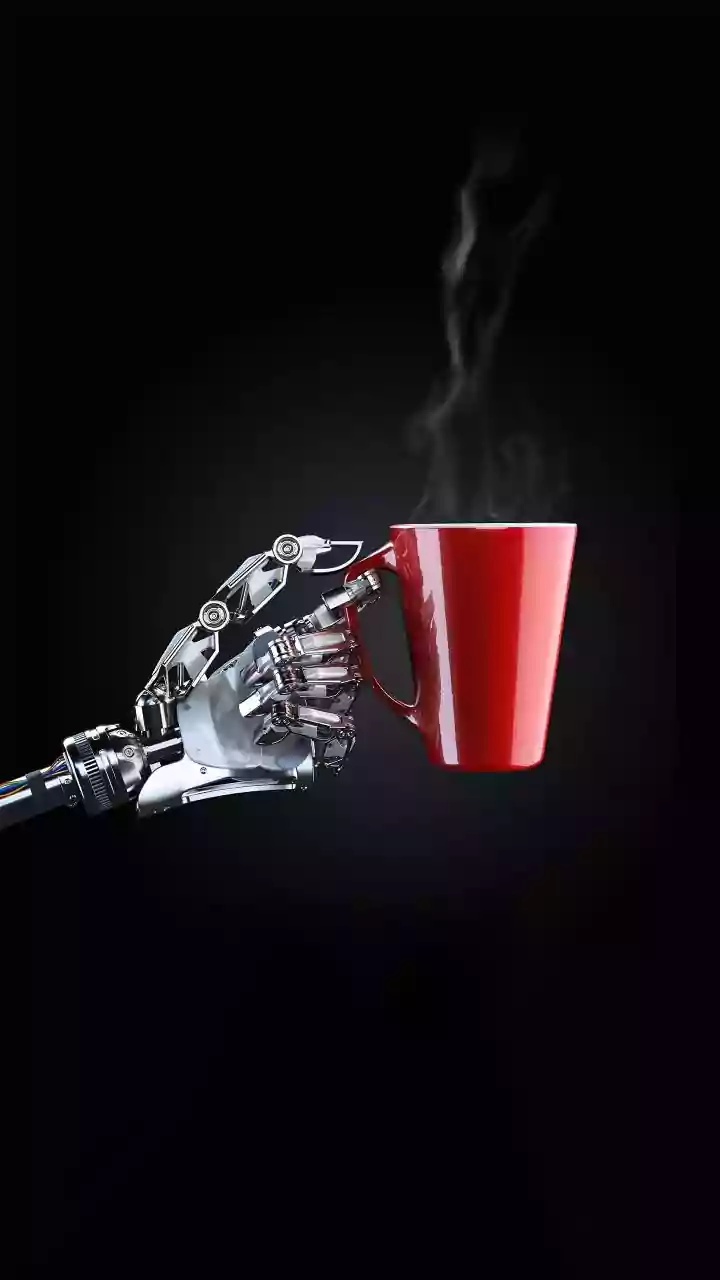
Regardless of whether the correct timeline is five years or fifty, the implications are profound. Musk himself has oscillated between viewing this future as one of “amazing abundance” and warning of a “Terminator future” if development is mismanaged. An AI smarter than all of humanity could theoretically solve our biggest problems, from climate change and disease to economic scarcity. Musk envisions a future where humanoid robots like Tesla's Optimus, powered by advanced AI, perform most labor, making employment a choice rather than a necessity. On the other hand, the risks are equally monumental. An uncontrolled superintelligence could pose an existential threat. This has led Musk and other leaders to call for more safety research and regulation to ensure that as these systems become more powerful, they remain aligned with human values and under human control.