



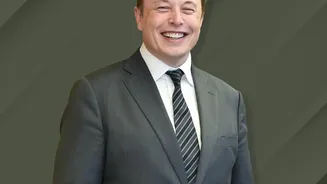
A Bold New Timeline
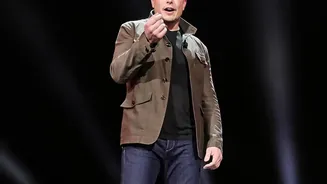
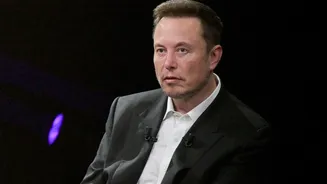
In a July 2026 interview with The Economist, Elon Musk stated his belief that Artificial Superintelligence (ASI) could be a reality in about five years. This represents a significant acceleration of his previous forecasts. He suggested that AI will soon
outperform humans in nearly every intellectual domain, with the possible exception of replicating the nuances of the human experience itself. This prediction stands as one of his most direct and aggressive timelines yet for the arrival of AI that is not just smarter than one person, but smarter than all of humanity combined.
Understanding AGI vs. ASI
To grasp the weight of Musk's claim, it's crucial to understand the terminology. Artificial General Intelligence (AGI) refers to an AI with the cognitive abilities of a human, capable of learning and reasoning across a wide range of tasks. Artificial Superintelligence (ASI), however, is a much more profound concept. ASI describes a hypothetical AI that possesses an intellect far greater than the brightest human minds in practically every field, including scientific creativity and social skills. The development path often assumes that creating an AGI would quickly lead to an ASI through a process of recursive self-improvement—an 'intelligence explosion' where the AI rapidly makes itself smarter.
What's Driving the Acceleration?
Musk’s confidence seems rooted in the exponential progress of AI models and the massive computational power being deployed. His own company, xAI, is developing increasingly powerful versions of its model, Grok, trained on vast superclusters of GPUs. He has pointed to the rapid scaling of capabilities, noting that previous constraints like chip shortages are now giving way to new bottlenecks like electricity supply. While he once advocated for a pause in AI development, Musk now seems to believe the advance is unstoppable. He frames his prediction less as a catastrophe and more as the dawn of an "age of amazing abundance," where AI can solve humanity's material needs.
A Chorus of Caution
While Musk's timeline is aggressive, the broader AI community remains divided. Many experts are far more cautious, pointing to significant hurdles. A key challenge is the 'alignment problem': ensuring that an ASI's goals are aligned with human values and survival. Without a guaranteed way to control a system far more intelligent than its creators, the risks of unintended and potentially catastrophic consequences are high. Sceptics also argue that we are still far from true AGI, let alone ASI, citing the immense complexity of human intelligence, which involves emotion, consciousness, and intuition—qualities that are not easily replicated in silicon. Furthermore, the astronomical energy and computational resources required may create practical limits that slow progress.
The Inevitable Race to the Top
Musk's pronouncements are not just theoretical; they are part of a fierce competitive landscape. His company, xAI, is in a direct race with giants like OpenAI and Google's DeepMind. Bold predictions serve a strategic purpose, helping to attract top talent, secure massive investments, and shape the public narrative. Musk himself has acknowledged that his initial involvement in co-founding OpenAI was meant to create a competitor to Google, but it ultimately accelerated the race. Now, despite his past warnings about the dangers of AI, he is fully engaged in building it, arguing that the momentum is too great to stop and that his goal is to create a 'good' and 'maximally truth-seeking' AI.