








Understanding the New Rules
India's automotive sector is governed by a set of regulations known as the Corporate Average Fuel Economy (CAFE) norms. Think of these as a report card for carmakers, but instead of grades, they measure fuel efficiency and CO2 emissions. The rules don't
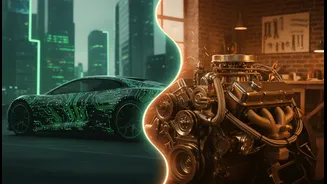
target individual car models but require each manufacturer to meet a specific average across their entire fleet of vehicles sold in a year. The goal is to push the whole industry towards greater efficiency, reduce the nation's reliance on imported oil, and cut down on pollution. Recently, the government has proposed the third phase of these regulations, known as CAFE-III, which are set to apply from April 2027. These new norms are even stricter, compelling manufacturers to invest heavily in more efficient engines, lightweight materials, and electric or hybrid technologies.
The Small-Volume Exemption
Amid these tightening regulations, there's a specific carve-out for 'small-volume manufacturers'. According to the draft rules, any manufacturer that produces or imports fewer than 1,000 cars in a year in India is exempt from these fleet-wide efficiency targets. This is not about the size of the car itself—a topic that has been heavily debated in India regarding tax structures—but about the number of vehicles a company sells. This exemption effectively applies to the upper echelon of the automotive world: ultra-luxury and high-performance supercar brands. Companies like Lamborghini, Ferrari, Rolls-Royce, and Aston Martin, whose sales volumes in India are exclusive by nature, fall squarely into this category.
Why Niche Brands Get a Pass
The rationale behind this exemption is a blend of pragmatism and economic reality. First, the environmental impact of these low-volume brands is statistically negligible. The total emissions from all supercars sold in India in a year are a tiny fraction of what a single mass-market manufacturer produces. Forcing them to comply would yield minimal environmental benefit. Secondly, the engineering and financial burden to meet these standards would be immense for such specialised companies. Their business model is built on high-performance, internal combustion engines, not mass-market efficiency. The cost to develop market-specific, compliant engines could make their products prohibitively expensive or even drive them out of the Indian market entirely. The exemption, therefore, protects consumer choice and maintains a diverse automotive market.
A Different Story for 'Small Cars'
It is crucial to distinguish this 'small-volume' exemption from previous discussions about 'small cars'. In the past, there have been debates about giving regulatory concessions to small, lightweight cars, which would have primarily benefited mass-market leaders like Maruti Suzuki. However, after objections from other automakers like Tata Motors and Mahindra & Mahindra, who argued it created an uneven playing field, these concessions for small cars were scrapped from recent drafts of the CAFE-III norms. The government's message is clear: efficiency is a mandate for everyone in the mass market, regardless of vehicle size. The only exception is for those whose sales volumes are too small to make a meaningful difference to national emissions averages.
Impact on the Indian Market
For the average car buyer, this exemption has little direct impact. The focus of CAFE norms is on the mainstream market, where the push for efficiency is expected to lead to more hybrid and electric vehicle options, as well as more fuel-efficient petrol and diesel cars over time. For enthusiasts and high-net-worth individuals, however, the exemption is significant. It ensures that India remains a viable market for some of the world's most desirable and technologically advanced performance cars. It allows the top end of the market to continue celebrating automotive passion, while the mainstream industry focuses on the practical goals of sustainability and energy security. This dual approach allows the Indian government to pursue its ambitious environmental targets without completely closing the door on the aspirational world of high-performance automobiles.